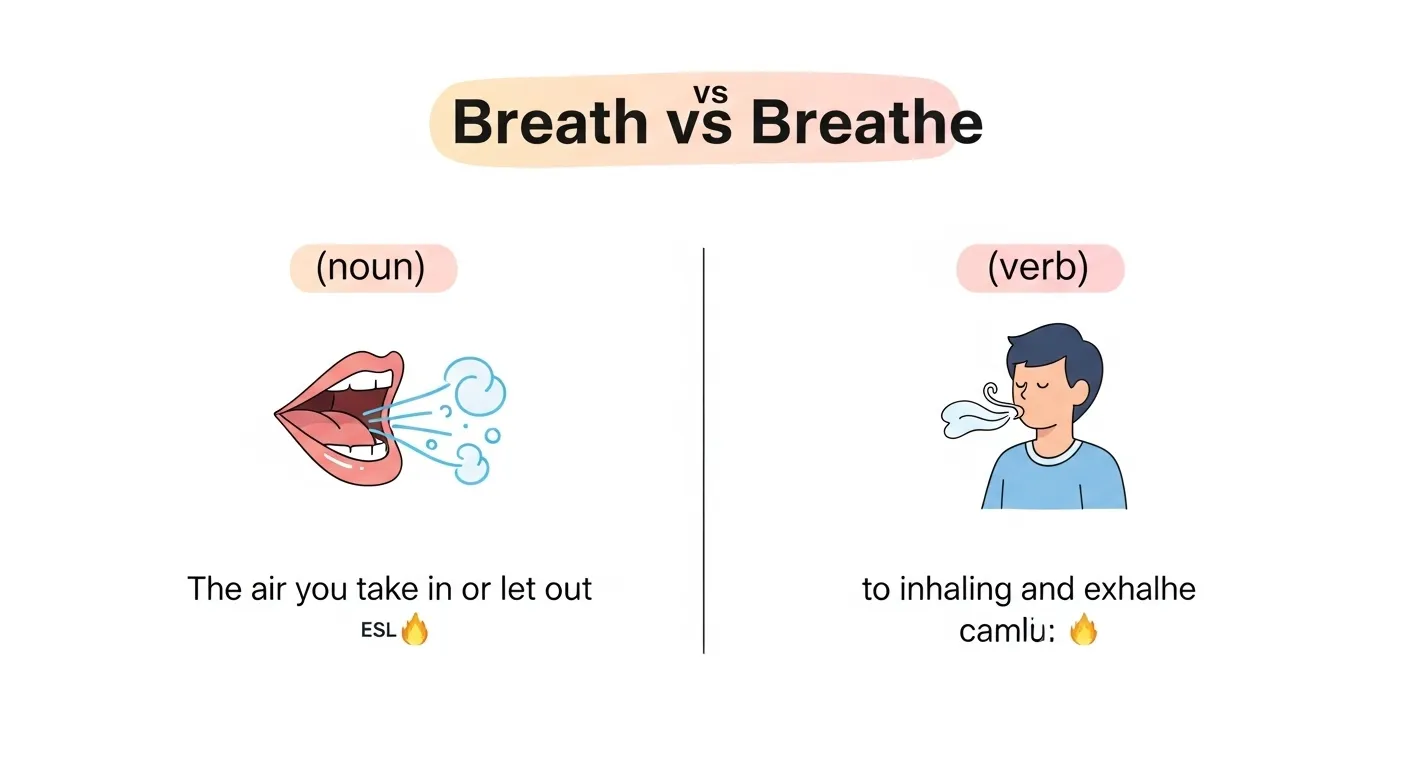
Breath is a noun, while breathe is a verb, and this single rule answers the main confusion straight away. Many people search for “breath or breathe” because the two words look
almost the same, sound similar when spoken quickly, and are often mixed up in writing. This confusion appears in emails, school assignments, exams, social media posts, and even
professional documents. Spellcheck does not always catch the mistake, which makes writers even more unsure. This article explains the difference in very simple language, shows
correct usage with real-life examples, explores word origins, compares British and American English, highlights common mistakes, and gives clear advice so you can always choose the right word with confidence.
Breath or Breathe: Quick Answer
Breath is a noun. It means the air you take into your lungs or release from them.
Breathe is a verb. It means the action of taking air in and out of your lungs.
Simple Examples
- Take a deep breath. ✅
- Please breathe slowly. ✅
❌ Take a deep breathe. ❌ I need some fresh breath.
Easy rule:
If it is a thing → breath. If it is an action → breathe.
The Origin of Breath or Breathe
Origin of “Breath”
The word breath comes from Old English brǣth, meaning odor, scent, or exhalation. Over time, its meaning became more specific and focused on the air that goes in and out of the lungs. Because it refers to a thing or result, it became a noun in modern English.
Early meanings included:
- A smell or scent
- Air coming from the mouth
- Life force or spirit
Today, breath is firmly established as a noun.
Origin of “Breathe”
The verb breathe developed from the same Old English root but evolved to describe the action rather than the thing. The added -e at the end helped distinguish the verb form in written English.
Breathe has always been linked to action:
- To inhale
- To exhale
- To stay alive
Why the Spelling Difference Exists
The confusion exists because:
- Both words share the same root
- They look almost identical
- They are pronounced similarly in fast speech
However, English kept two spellings to separate noun and verb meanings clearly.
British English vs American English Spelling
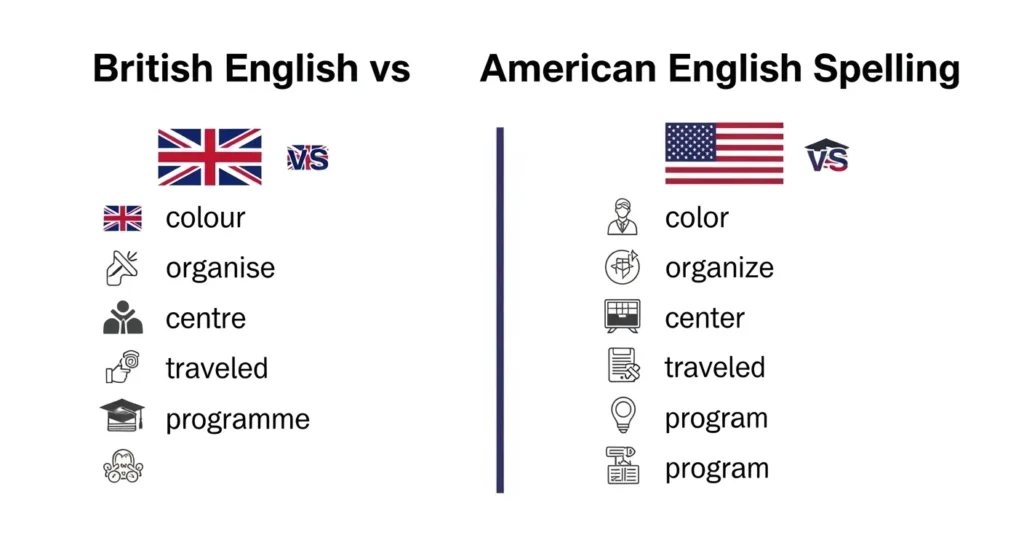
There is no spelling difference between British and American English for breath and breathe. Both follow the same rules in all major English varieties.
British English Usage
- Take a deep breath.
- Remember to breathe properly.
American English Usage
- He held his breath.
- She tried to breathe calmly.
Comparison Table
| Feature | Breath | Breathe |
| Word type | Noun | Verb |
| British English | Same spelling | Same spelling |
| American English | Same spelling | Same spelling |
| Meaning | Air taken in or out | Action of inhaling/exhaling |
Which Spelling Should You Use?
For US Audiences
Use breath when naming the air itself and breathe when describing the action. The rule is strict in formal writing.
For UK and Commonwealth Audiences
The same distinction applies. Exams, newspapers, and academic writing expect correct usage.
For Global English Users
If you write for an international audience, follow the noun-versus-verb rule. It is understood worldwide and avoids confusion.
Professional Tip
If you can add can, should, must, or to before the word, you usually need breathe.
Common Mistakes with Breath or Breathe
Mistake 1: Using “Breath” as a Verb
❌ Try to breath slowly. ✅ Try to breathe slowly.
Mistake 2: Using “Breathe” as a Noun
❌ Take a deep breathe. ✅ Take a deep breath.
Mistake 3: Confusing Pronunciation
Some learners pronounce both words the same. In careful speech:
- Breath ends with a soft th sound
- Breathe ends with a voiced th sound
Mistake 4: Relying Only on Spellcheck
Spellcheck may not flag the error because both words are correct English words.
Breath or Breathe in Everyday Examples
Emails
- Please take a deep breath before responding.
- Remember to breathe and stay calm.
News Writing
- The runner struggled to catch his breath.
- Pollution makes it hard to breathe in the city.
Social Media
- Just breathe 💙
- That moment took my breath away.
Formal and Academic Writing
- Controlled breathing improves oxygen flow.
- Shallow breath patterns affect performance.
Breath or Breathe – Google Trends & Usage Data
Search data shows that “breath or breathe” is a highly popular grammar query.
Top Countries Searching This Term
- United States
- United Kingdom
- India
- Pakistan
- Canada
- Australia
Why People Search for It
- Exam preparation
- Professional email writing
- Social media captions
- English learning and ESL studies
Usage by Context
- Breath appears more in descriptive writing and idioms
- Breathe appears more in instructions, advice, and health content
This shows strong global interest and frequent confusion between the two forms.
Comparison Table: Breath vs Breathe
| Word | Part of Speech | Meaning | Example |
| breath | Noun | air taken in or out | Take a deep breath |
| breathe | Verb | to inhale or exhale | Please breathe slowly |
FAQs About Breath or Breathe
Is “breath” a verb?
No. Breath is only a noun.
Is “breathe” a noun?
No. Breathe is a verb.
Why do they look so similar?
They come from the same Old English root.
Which one is used with “deep”?
Use breath: a deep breath.
Can pronunciation help me choose?
Yes. Breathe has a longer sound.
Are both words used in medical English?
Yes, but with different roles.
Do exams mark this mistake wrong?
Yes. It is considered a basic grammar error.
Conclusion
The difference between breath and breathe is small in spelling but very important in meaning. Breath is a noun that names the air you inhale or exhale, while breathe is a verb
that describes the action of taking that air in and out. This distinction explains almost every correct usage you will see in English.
The confusion happens because the words look similar, sound alike in fast speech, and share the same origin.
However, English clearly separates them to avoid misunderstanding. There is no British or American spelling difference, and the rule stays the same in all forms of English.
If you remember one thing, remember this: if the word names something, use breath; if it describes an action, use breathe. Using the wrong form can make writing look careless, especially in exams, emails, and professional documents.
With this clear rule, real examples, and simple tips, you can now use breath and breathe correctly every time and write with confidence.
Related posts!
Ensure or Insure: Quick Answer