Defense and defence are both correct spellings of the same word, but the choice depends on region.
Defense is used in American English, while defence is used in British English. Many writers search for this difference because spelling affects professionalism, clarity, and audience trust.
Using the wrong version may look like a mistake to readers from certain countries. Students, bloggers, and professionals often struggle when writing for international audiences.
This guide explains spelling differences, origin, examples, common mistakes, and practical advice so you can confidently choose the right form in any context.
Defense or Defence: Quick Answer
- Defense = American English spelling.
- Defence = British English spelling.
Both words have the same meaning. They refer to protection, guarding, or resisting attack.
Examples:
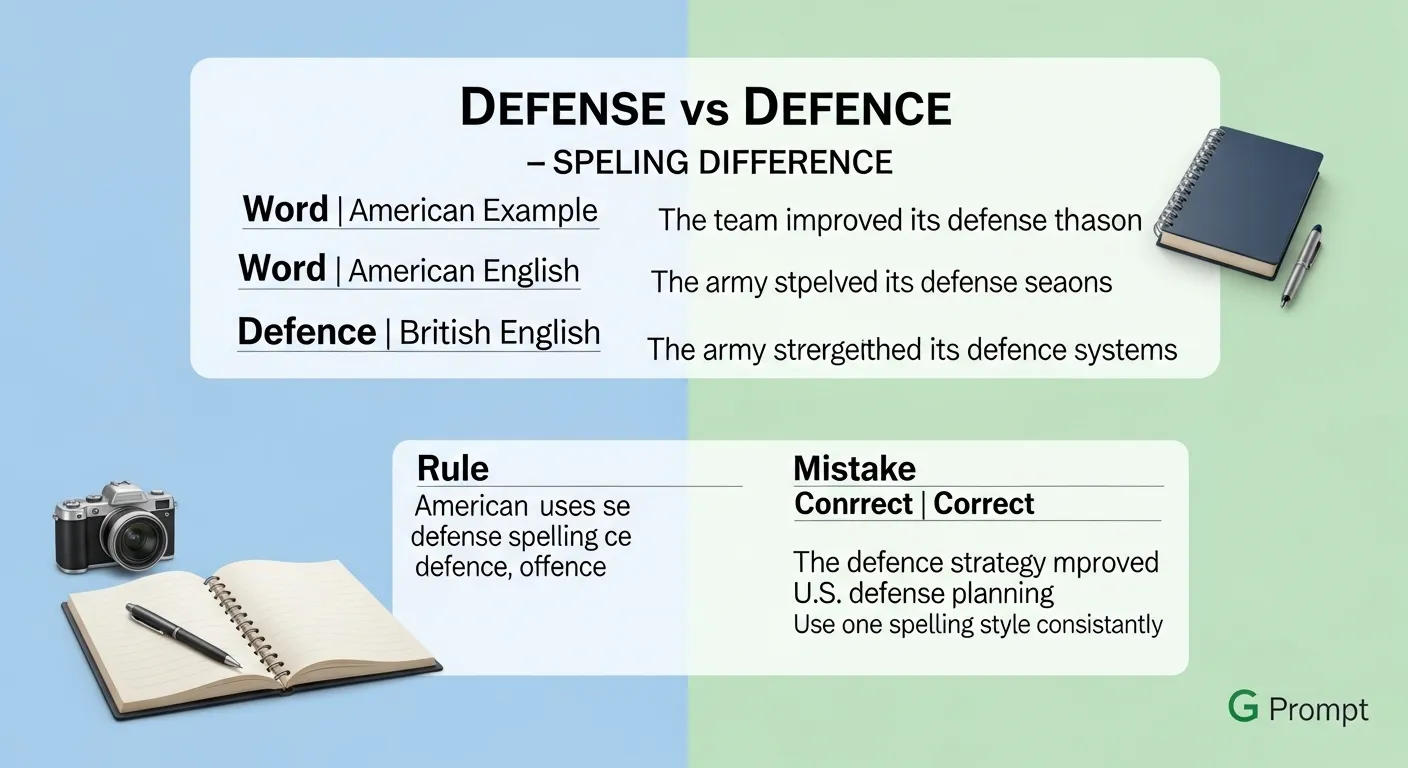
- American usage: “The team improved its defense this season.”
- British usage: “The army strengthened its defence systems.”
Quick rule:
- Writing for U.S. readers → use defense.
- Writing for UK/Commonwealth readers → use defence.
The Origin of Defense or Defence
The word comes from Latin defendere, meaning “to ward off” or “protect.”
Old French introduced the spelling defense into English. Over time, spelling patterns changed.
British English kept the ce ending for many nouns:
- defence
- licence
- offence
American English simplified many spellings in the 18th and 19th centuries. Noah Webster promoted simpler forms. This led to:
- defense
- license
- offense
Both spellings stayed correct, but regional standards formed.
British English vs American English Spelling
| Feature | American English | British English |
| Spelling | Defense | Defence |
| Ending Style | se | ce |
| Usage Regions | United States | UK, Canada, Australia, New Zealand |
| Meaning | Same | Same |
| Examples | national defense | national defence |
Pattern Tip:
American English often uses se endings.
British English often uses ce endings.
Examples:
- offense / offence
- pretense / pretence
- defense / defence
Which Spelling Should You Use?
Choose based on audience and context.
Use defense when:
- Writing for U.S. readers.
- Creating American academic content.
- Writing for U.S. companies or government.
Use defence when:
- Writing for UK or Commonwealth readers.
- Publishing in British media.
- Following British style guides.
Global writing tip:
- Pick one version.
- Stay consistent throughout the article.
Consistency improves clarity and professionalism.
Common Mistakes with Defense or Defence
- Mixing both spellings in the same article.
- Incorrect: “The defence strategy improved U.S. defense planning.”
- Incorrect: “The defence strategy improved U.S. defense planning.”
- Assuming one is wrong.
- Both are correct depending on region.
- Both are correct depending on region.
- Changing spelling without changing audience style.
- Using British spelling with American grammar rules in formal writing.
- Copy pasting text from different sources without editing spelling.
Correct examples:
- American article → defense everywhere.
- British article → defence everywhere.
Defense or Defence in Everyday Examples
Emails:
- American: “Our defense strategy needs review.”
- British: “Our defence strategy needs review.”
News headlines:
- U.S.: “Defense budget increases this year.”
- UK: “Defence spending rises across Europe.”
Social media:
- “Strong defense wins championships.”
- “Good defence is key to success.”
Academic writing:
- Choose spelling based on journal guidelines.
Defense or Defence: Google Trends & Usage Data
Search data shows clear regional patterns:
- Defense dominates searches in the United States.
- Defence is more popular in the UK, Australia, Canada, and other Commonwealth countries.
International readers recognize both forms. However, readers prefer spelling that matches local standards.
Sports content often uses:
- Defense (NBA, NFL coverage).
- Defence (UK football coverage).
Military topics show similar regional differences.
Comparison Table: Defense vs Defence
| Feature | Defense | Defence |
| Region | United States | UK & Commonwealth |
| Meaning | Protection or guarding | Same meaning |
| Style Guide | American English | British English |
| Common Contexts | U.S. military, sports, law | UK military, sports, law |
| Ending | se | ce |
| Pronunciation | Same | Same |
FAQs About Defense or Defence
1. Is defense or defence correct?
Both are correct. The choice depends on regional spelling rules.
2. Which spelling is American?
Defense is American English.
3. Which spelling is British?
Defence is British English.
4. Do they have different meanings?
No. Meaning and pronunciation are the same.
5. Can I use both in one article?
Avoid mixing. Choose one style.
6. Why does American English use defense?
Spelling reforms simplified many words to se endings.
7. Which spelling should global writers choose?
Match your target audience or follow publication guidelines.
Conclusion
Understanding the difference between defense and defence helps writers communicate clearly. The words share the same meaning and pronunciation. The only difference is regional spelling.
American English uses defense with an se ending. British English uses defence with a ce ending. Always think about your audience first. U.S.
readers expect defense. UK and Commonwealth readers expect defence. Consistency matters more than personal preference. Switching between styles can confuse readers and reduce professionalism.
Writers who choose the correct spelling show attention to detail and respect for language standards. In sports, military writing, law, and everyday communication, the correct spelling helps maintain clarity.
Use this simple rule: match the spelling to the audience. Once you choose, stay consistent throughout your writing for the best results.
Related More Posts!
Too Late or To Late: Meaning and Examples With In 30 Seconds
Something to That Effect or Affect: Correct Usage Explained Simply
Something to That Effect or Affect: Correct Usage Explained Simply

**Emily R. Dawson** I am a English language writer and editor i specializes in grammar clarity, sentence structure, and common writing mistakes.I focuses on helping readers write correct, natural-sounding English through simple explanations and practical examples. Emily mainly creates beginner-friendly and intermediate-level language guidesmy writing style is clear, supportive, and easy to follow.