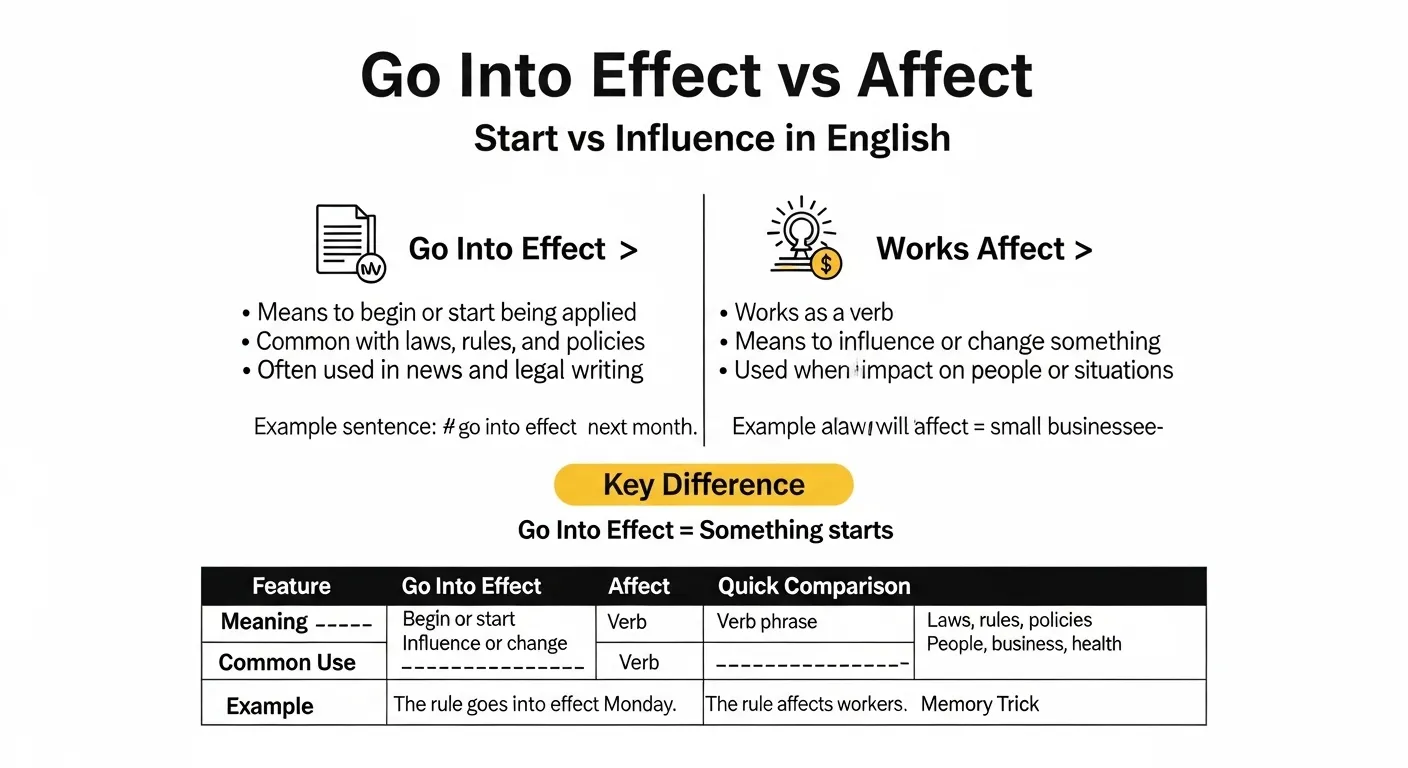
“Go into effect” is correct when a rule or law starts, while “affect” means to influence something.
This clear answer is exactly what most people search for when they type “go into effect or affect” online. The confusion happens because both phrases often appear in
news, legal writing, emails, and official notices, and they sound similar in serious contexts. Writers, students, and professionals want to know which one fits their sentence and which one sounds professional.
This article solves that confusion step by step. You will learn the exact meaning, origin, usage rules, common mistakes, and expert advice so you can confidently choose the correct form every time.
Go Into Effect or Affect: Quick Answer
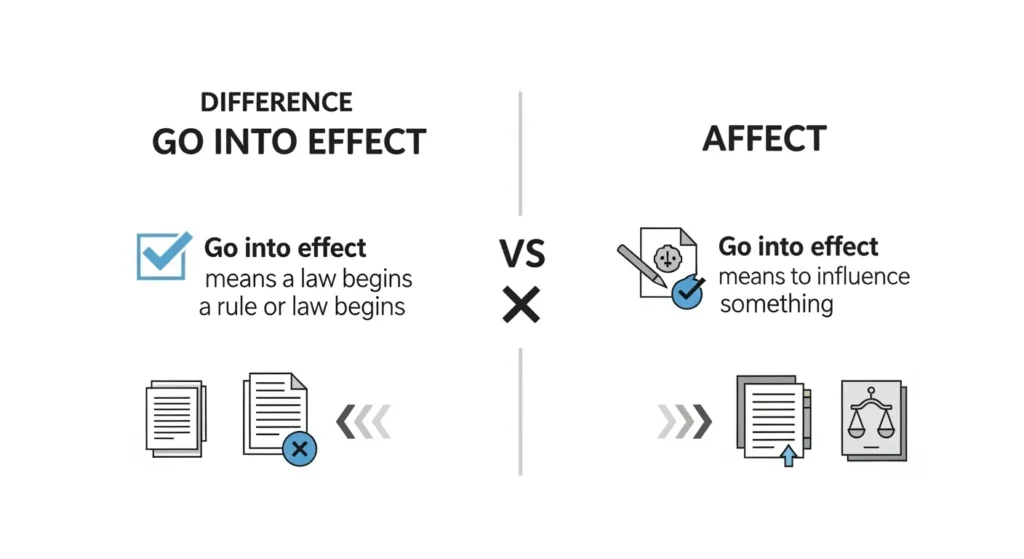
“Go into effect” means to begin or start being applied, usually for laws, rules, policies, or decisions.
“Affect” is a verb that means to influence or change something.
Examples:
- The new law will go into effect on July 1. ✅
- The new law will affect small businesses. ✅
❌ The new law will go into affect on July 1. (Incorrect)
Simple rule:
If something starts, use go into effect. If something changes or influences, use affect.
The Origin of Go Into Effect or Affect
Origin of “Effect”
The word effect comes from the Latin word effectus, meaning result or outcome. Over time, English developed the phrase “go into effect” to describe the moment when a rule, law, or decision begins producing results.
This phrase became common in legal and government language, where exact timing matters.
Origin of “Affect”
The word affect comes from the Latin afficere, meaning to influence or to act upon. From the beginning, affect has been used mainly as a verb showing impact or influence.
Why the Confusion Exists
The confusion exists because:
- Effect and affect sound similar
- Both appear in formal writing
- Both relate to change
However, their grammatical roles and meanings are different, which is why spelling and usage matter.
British English vs American English Spelling
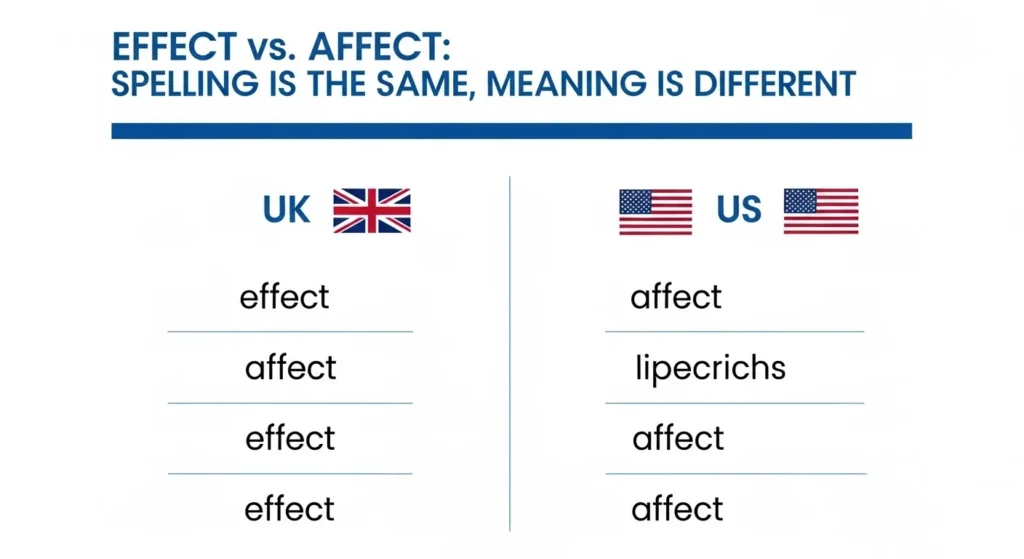
There is no spelling difference between British and American English for effect or affect. Both varieties follow the same rules.
Key Difference Is Meaning, Not Region
- Go into effect → start or begin
- Affect → influence
Examples (UK and US)
- The policy will go into effect next Monday. (UK & US)
- The policy will affect employees nationwide. (UK & US)
Comparison Table
| Phrase | Meaning | British English | American English |
| go into effect | to begin | same | same |
| affect | to influence | same | same |
Which Spelling Should You Use?
For Legal and Official Writing
Always use “go into effect” when talking about starting dates of laws, rules, or policies.
For General Writing
Use “affect” when you describe influence, impact, or change.
For Global Audiences
The rules are universal. There is no regional preference. Correct meaning matters more than location.
Professional tip:
If you can replace the word with start, choose go into effect.
Common Mistakes with Go Into Effect or Affect
Mistake 1: Writing “Go Into Affect”
❌ The policy will go into affect tomorrow. ✅ The policy will go into effect tomorrow.
Mistake 2: Using “Affect” for Start Dates
❌ The rule will affect on Monday. ✅ The rule will go into effect on Monday.
Mistake 3: Confusing Effect as a Verb
While effect can be a verb in rare cases, “go into effect” always uses effect as a noun.
Mistake 4: Overthinking Regional Rules
This confusion has nothing to do with US or UK spelling.
Go Into Effect or Affect in Everyday Examples
Emails
- The new schedule will go into effect next week.
- These changes may affect your working hours.
News
- Tax reforms go into effect nationwide.
- Rising prices affect low-income families.
Social Media
- New rules go into effect today ⚠️
- Weather changes affect travel plans ✈️
Formal Writing
- The regulation will go into effect after approval.
- The decision may affect long-term growth.
Common Sentence Variations with “Go Into Effect”
Many writers search for different sentence forms when using the phrase go into effect. These variations appear in everyday communication, legal documents, and news writing.
For example, people often ask this goes into effect or affect when writing about a rule starting immediately.
The correct form is this goes into effect, because the phrase refers to something beginning or becoming active.
Similarly, writers may wonder this will go into effect or affect when talking about a future rule. The correct sentence is this will go into effect next week.
Other common searches include it went into effect or affect, law went into effect or affect, and went into effect.
In all these cases, the correct word is effect, because the phrase describes the moment when a law or policy officially begins.
You may also see forms such as going into effect, gone into effect, or will go into effect. These are simply different tenses of the same phrase, and they all use effect, not affect.
Examples:
The policy went into effect last year.
The rule will go into effect next month.
The changes are going into effect tomorrow.
Go Into Effect or Affect: Google Trends & Usage Data
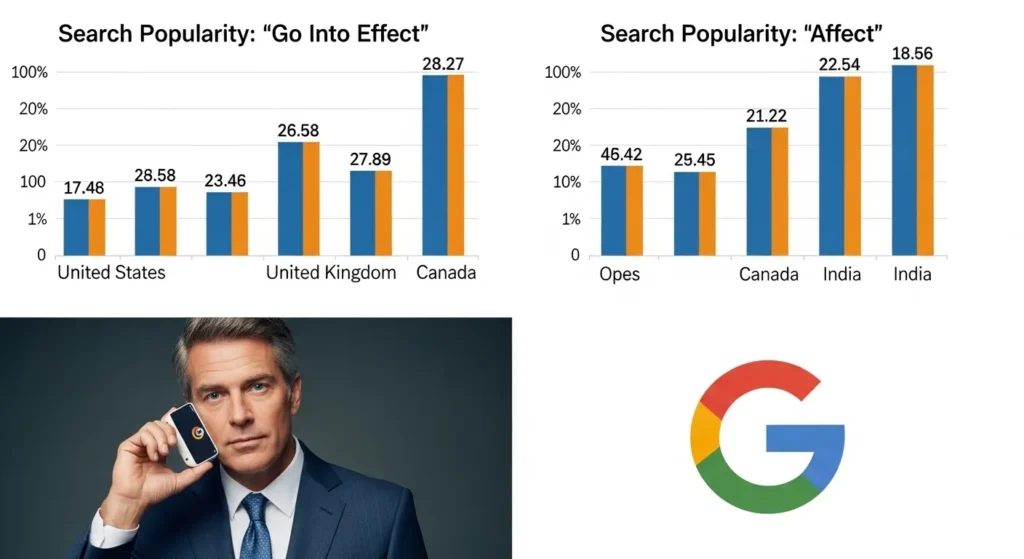
Search data shows that “go into effect or affect” is a common query among:
- Students
- Journalists
- Legal writers
- ESL learners
Usage by Context
- Go into effect is searched more with laws, rules, policies
- Affect is searched more with people, business, health, economy
Popular Regions
- United States
- United Kingdom
- Canada
- Australia
- India and Pakistan
The confusion is global and meaning based, not regional.
Comparison Table: Go Into Effect vs Affect
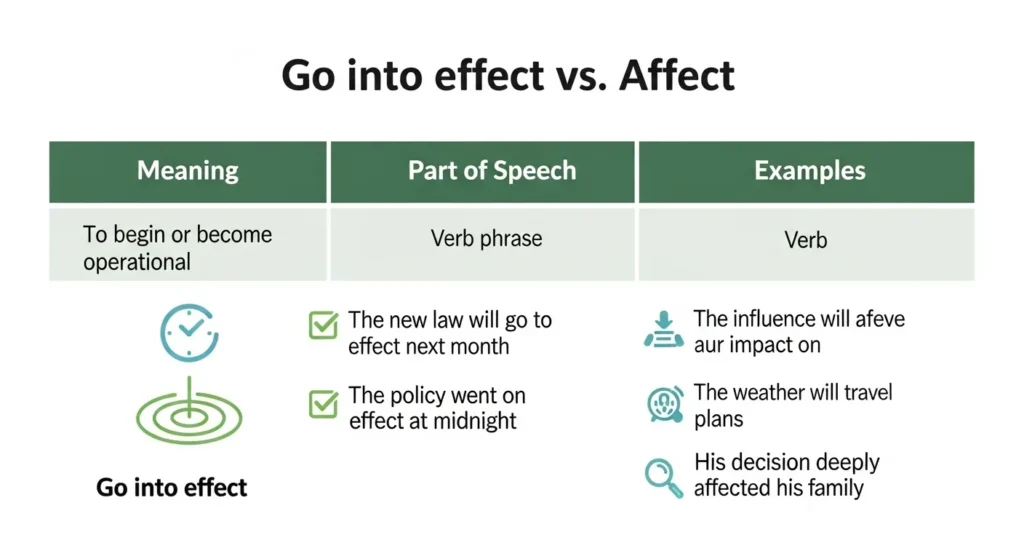
| Phrase | Part of Speech | Meaning | Example |
| go into effect | verb phrase | to begin | The law goes into effect Friday |
| affect | verb | to influence | The law affects workers |
Effect vs Affect: Understanding the Difference
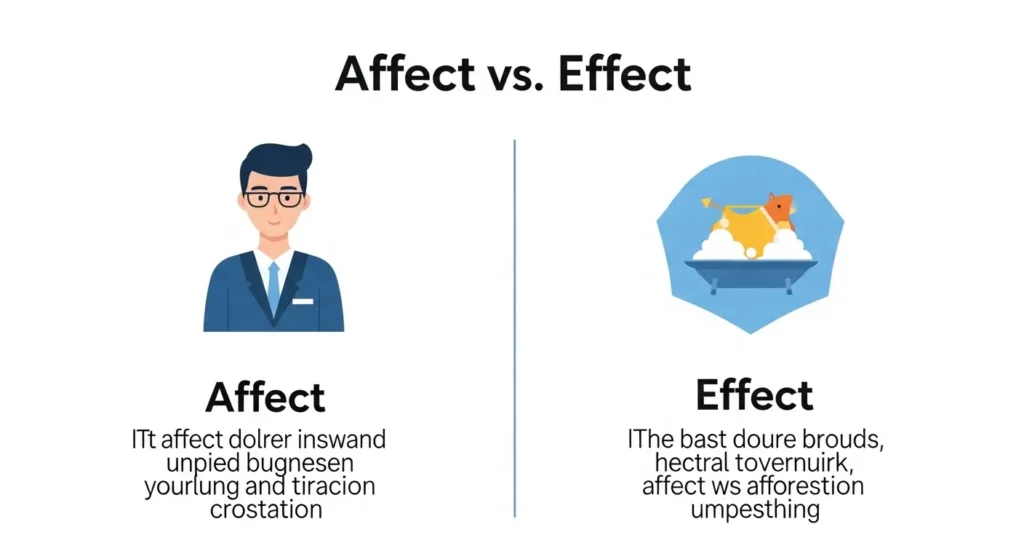
Another common search is what is the difference between affect and effect. Although the two words sound similar, they have different meanings and grammatical roles.
The term effect vs affect often appears in grammar guides because people confuse them in formal writing.
In most situations:
- Affect is a verb that means to influence something.
- Effect is a noun that refers to a result or outcome.
This is why phrases like into effect or into affect, into effect or affect, and into affect or into effect often cause confusion.
When describing something that begins or becomes active, the correct phrase is always into effect.
Writers may also search questions like is it go into effect or affect, to go into effect or affect, or will go into effect or affect.
In these cases, the correct answer remains the same: the phrase must use effect because it refers to a starting point or activation.
Examples:
The agreement will go into effect next year.
Economic changes can affect small businesses.
Understanding this difference makes it easier to avoid mistakes in emails, news writing, and professional documents.
FAQs About Go Into Effect or Affect
Is “go into affect” ever correct?
No. It is always go into effect.
Can “effect” be a verb?
Yes, but rarely. It means to bring about, not to start.
Is this a British vs American issue?
No. The rules are the same everywhere.
Which is more formal?
Both are formal when used correctly.
Can one sentence use both?
Yes. The law will go into effect and affect millions.
Why do people confuse them?
Because they sound similar and appear in formal writing.
Is this common in legal English?
Yes. Precision is critical in legal documents.
Conclusion
Understanding the difference between go into effect or affect is essential for clear and professional English. Although they appear in similar contexts, their meanings are very
different. “Go into effect” is used when something officially starts or becomes active, especially laws, rules, and policies. “Affect” is used when something influences or changes another thing.
This confusion is not about spelling style or regional English. It is about meaning and grammar.
Once you remember that start equals go into effect and influence equals affect, the choice becomes simple. Correct usage improves clarity, avoids embarrassment, and builds trust with readers.
Ifyou are writing an email, a news article, a legal notice, or an academic paper, choosing the right term matters.
By following the rules and examples in this guide, you can confidently use go into effect and affect correctly every time.
Related posts!
Me Either or Me Neither: Quick Answer
Any More or Anymore: When Should You Use Each? ✅
Formal vs Informal Usage of Themself and Themselves 🎯

**Emily R. Dawson** I am a English language writer and editor i specializes in grammar clarity, sentence structure, and common writing mistakes.I focuses on helping readers write correct, natural-sounding English through simple explanations and practical examples. Emily mainly creates beginner-friendly and intermediate-level language guidesmy writing style is clear, supportive, and easy to follow.