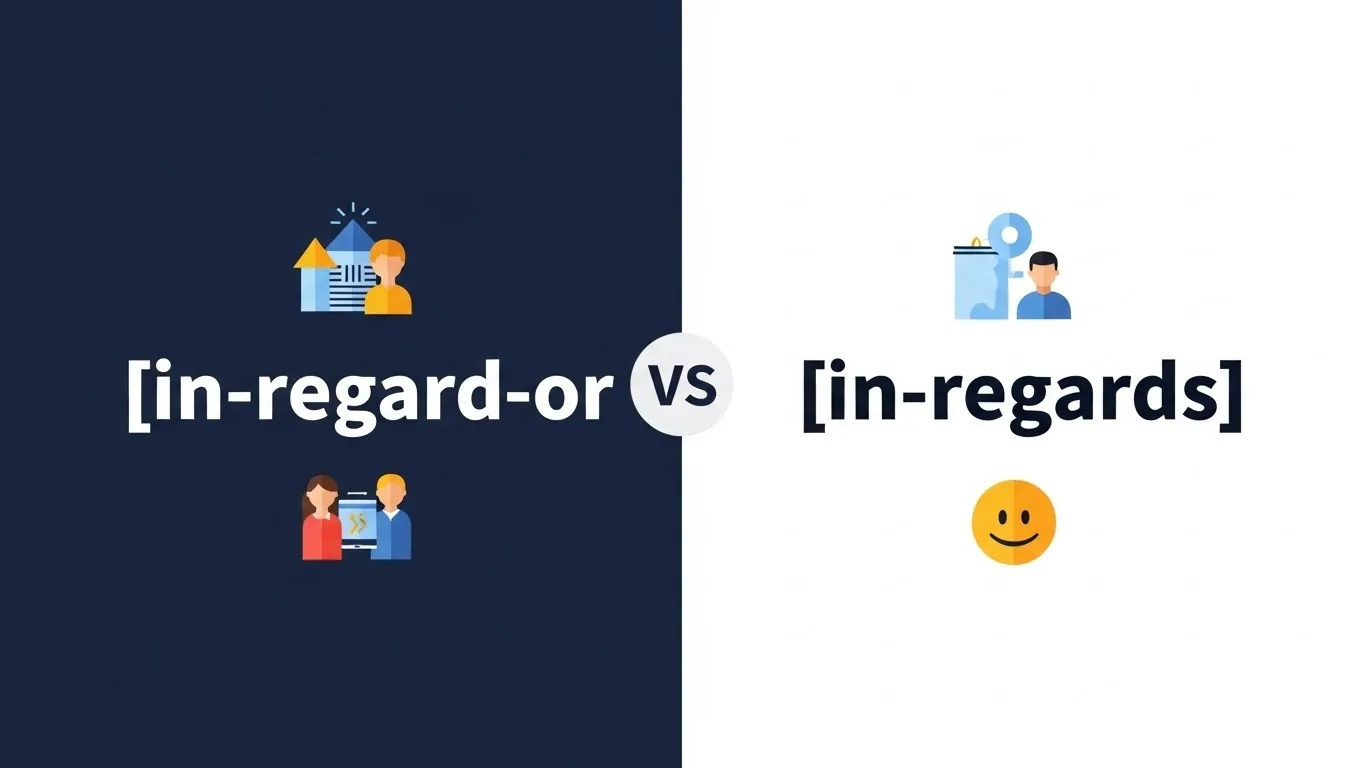
“In regard” is grammatically correct in standard English, while “in regards” is usually incorrect in formal writing. Many people search for “in regard or in regards” because both phrases appear online, in emails, and even in business communication.
Spellcheck rarely flags the mistake, which makes the confusion worse. Writers, students, and professionals want to know which form sounds natural, which one is accepted, and which one should be avoided. This article solves that confusion clearly.
You will learn the exact difference between in regard and in regards, their origins, regional usage, common mistakes, real-life examples, usage trends, and expert advice so you can choose the correct form with confidence every time.
In Regard or In Regards: Quick Answer
In regard (or more commonly in regard to) is the correct and accepted form in standard English.
In regards is generally considered incorrect in formal writing, though it appears in casual speech.
Correct examples:
- In regard to your email, we will respond shortly.
- I am writing in regard to the job application.
Incorrect example:
- ❌ In regards to your request, we agree.
Simple rule:
Use in regard to. Avoid in regards to in professional writing.
The Origin of In Regard or In Regards
Meaning of “Regard”
The word regard comes from Old French regarder, meaning to look at or to consider. In English, regard developed into a noun meaning attention, respect, or concern.
Why “In Regard” Exists
The phrase in regard to literally means with reference to or concerning. Here, regard works as a singular abstract noun, not something countable.
Why “In Regards” Appeared
The plural form regards already exists in English, mainly in expressions like:
- Give my regards to your family.
Because people often hear the plural form regards in greetings, they mistakenly extend it to in regards to. Over time, this incorrect form spread in casual speech, especially in business emails.
Why the Difference Matters
In standard grammar, regard in this phrase is not plural. That is why in regards to is considered nonstandard.
British English vs American English Usage
Unlike many spelling issues, this is not a British vs American spelling difference. Both varieties of English follow the same rule.
American English
- Correct: in regard to, with regard to, regarding
- Incorrect: in regards to
Example:
- In regard to the policy change, employees were informed.
British English
- Correct: in regard to, with regard to, regarding
- Incorrect: in regards to
Example:
- We are writing in regard to your complaint.
Comparison Table
| Feature | American English | British English |
| In regard to | ✅ Correct | ✅ Correct |
| In regards to | ❌ Incorrect (formal) | ❌ Incorrect (formal) |
| With regard to | ✅ Correct | ✅ Correct |
| Regarding | ✅ Correct | ✅ Correct |
Which Spelling Should You Use?
For US Audiences
Always use in regard to, with regard to, or regarding. Avoid in regards to, especially in emails and reports.
For UK & Commonwealth Audiences
Follow the same rule. In regard to and with regard to are standard and professional.
For Global or Professional Writing
Use regarding or with regard to if you want the safest option worldwide.
Professional advice:
If the sentence sounds formal, never use in regards to.
Common Mistakes with In Regard or In Regards
Mistake 1: Using “In Regards To” in Emails
❌ In regards to your message, we will reply soon.
✅ In regard to your message, we will reply soon.
Mistake 2: Thinking “Regards” Is Always Plural
- Regards is plural only in greetings.
- It should not be plural in reference phrases.
Mistake 3: Mixing Correct Forms
❌ With regards to the meeting…
✅ With regard to the meeting…
Mistake 4: Overusing Long Phrases
Sometimes regarding is clearer and simpler.
In Regard or In Regards in Everyday Examples
Emails
- In regard to your application, we will contact you.
- Regarding your payment, please see the attached file.
News Writing
- The minister spoke in regard to economic reforms.
Social Media
- Just a quick note in regard to today’s event.
Formal & Legal Writing
- This document is issued in regard to the contract terms.
In Regard or In Regards: Google Trends & Usage Data
Search interest in “in regard or in regards” is high among ESL learners, professionals, and students.
Popular Search Regions
- United States
- United Kingdom
- India
- Pakistan
- Canada
Usage Patterns
- In regards to appears frequently in casual emails and speech.
- In regard to dominates in academic, legal, and professional texts.
Context-Based Popularity
- Formal writing → in regard to
- Informal speech → in regards to (still discouraged)
Google search data shows that people often search this keyword to avoid embarrassment in professional writing.
Comparison Table: In Regard vs In Regards
| Phrase | Correct? | Usage Level | Example |
| in regard to | ✅ Yes | Formal / Standard | In regard to your request |
| with regard to | ✅ Yes | Formal | With regard to the issue |
| regarding | ✅ Yes | Neutral | Regarding the meeting |
| in regards to | ❌ No | Informal / Nonstandard | ❌ In regards to your email |
Frequently Asked Questions
Is “in regards to” ever correct?
In casual speech, people use it, but it is not correct in formal writing.
Is “in regard” correct without “to”?
Yes, but “in regard to” is far more common and natural.
What is the safest alternative?
Regarding or with regard to are always safe.
Do British people use “in regards to”?
No. It is considered incorrect in British English as well.
Why do so many people use “in regards to”?
Because regards is common in greetings and sounds natural in speech.
Is this an American English mistake?
No. It appears worldwide, especially among non-native speakers.
Which form should I use in exams?
Always use in regard to or regarding.
Conclusion
The confusion between in regard or in regards is very common, but the rule is simple once you understand it. In regard especially in regard to is the correct and grammatically accepted form in both American and British English.
The plural form in regards to may sound natural in conversation, but it is considered nonstandard and should be avoided in professional, academic, and formal writing.
Language clarity matters, especially in emails, reports, and official documents. Small grammar mistakes can affect credibility and professionalism. That is why choosing the
correct form is important. If you ever feel unsure, remember that regarding and with regard to are excellent alternatives that sound natural and correct in all contexts.
By following the guidance in this article, you can confidently choose the right phrase, avoid common mistakes, and communicate clearly with any audience. Good writing is not about sounding complex it is about being clear, correct, and respectful of standard usage.
Related posts!

I am Oliver H. Grant. I am a English language writer and editor my focuses on grammar, word usage, and common English mistakes.
I specializes in explaining the differences between British and American English in a clear and practical way.
my writing style is simple, learner-friendly, and designed to help readers understand English with ease.
My work is also SEO-focused, making it especially useful for online learners and readers.