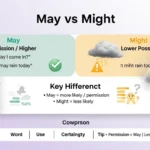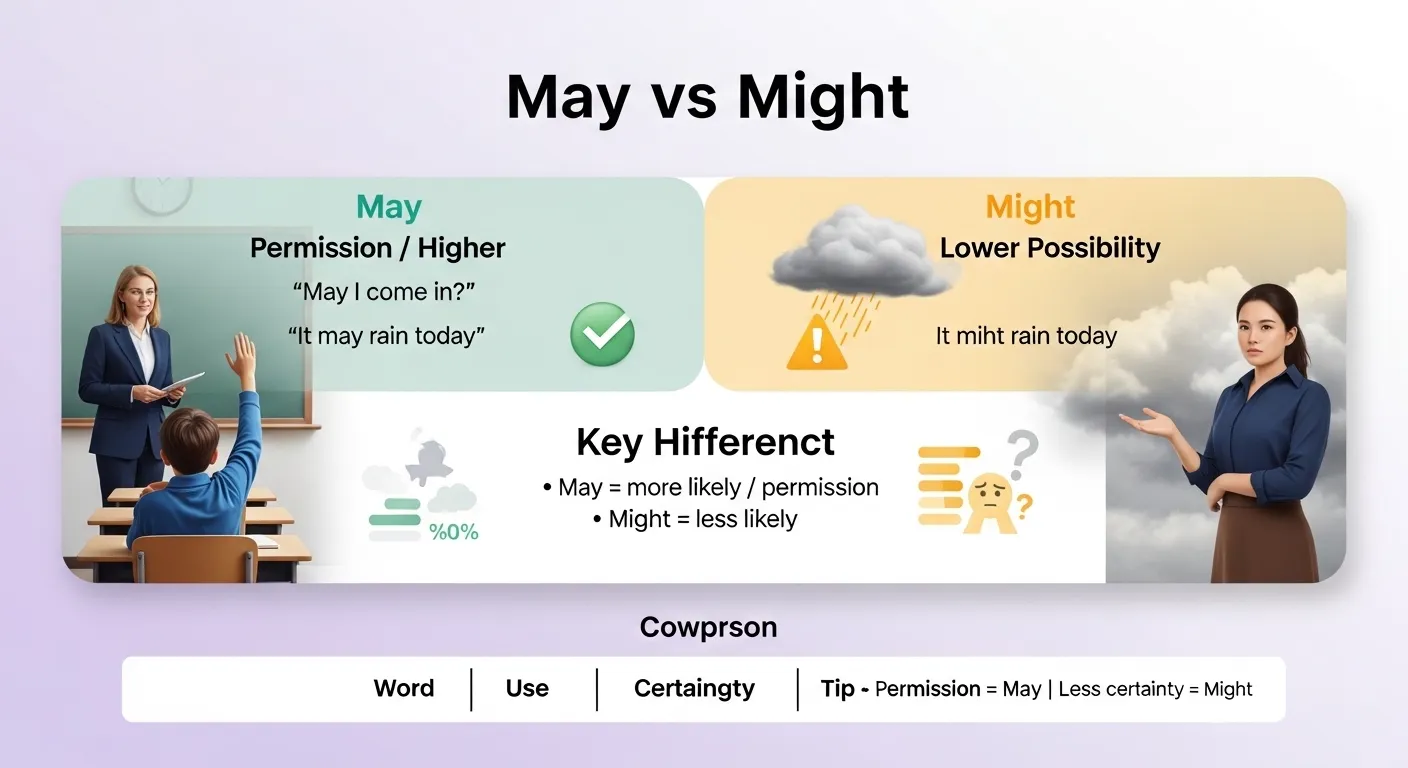
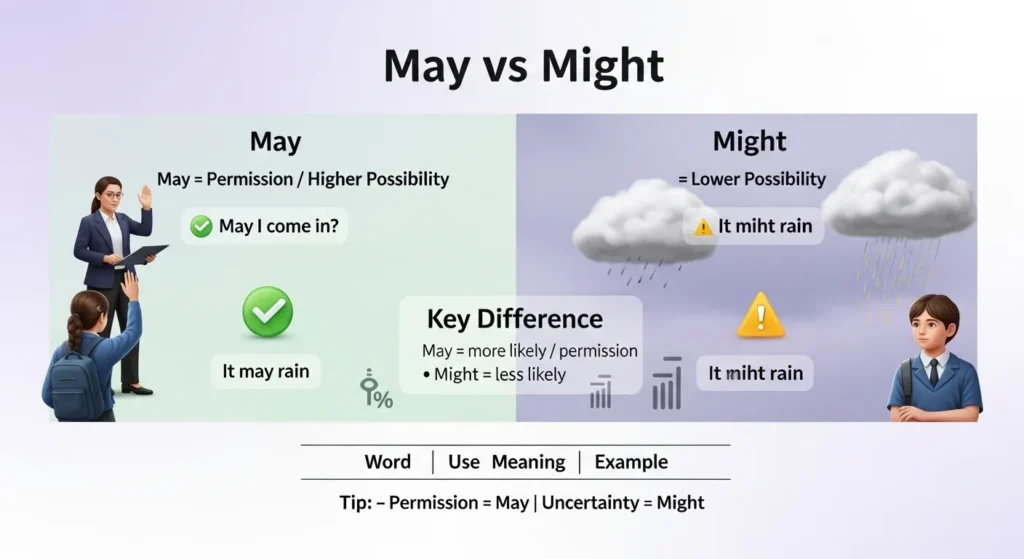
“May” is used for permission or a strong possibility, while “might” is used for a weaker or less certain possibility.
Many people search for may vs might because both words talk about possibility and often seem interchangeable. This creates confusion in speaking, writing, and exams. The difference is small but important.
Using the wrong word can change how certain or polite you sound. “May” is also used to ask for permission, while “might” usually is not.
This guide explains the rules, meanings, examples, common mistakes, and tips so you can confidently use “may” and “might” in everyday and formal English.
⚡ May vs Might: Quick Answer
The main rule is:
- May = permission or strong possibility
- Might = weak or less certain possibility
Examples
- You may leave now. (permission)
- It may rain today. (possible)
- It might rain today. (less certain)
Simple Explanation
- More sure → may
- Less sure → might
📜 The Origin of May and Might
Origin of “May”
“May” comes from Old English mæg, meaning to be able or allowed.
Origin of “Might”
“Might” is the past form of “may,” from Old English mihte.
Why They Are Confusing
- Both express possibility
- Both sound similar
- Both are used in similar sentences
🇬🇧🇺🇸 British English vs American English Spelling
There is no spelling difference between British and American English.
| Word | British English | American English | Meaning |
| May | May | May | Permission / possibility |
| Might | Might | Might | Less certain possibility |
🌍 Which One Should You Use?
Your choice depends on meaning.
Use May
- For Permission
- May I come in?
- You may start the test.
- For Strong Possibility
- It may rain today.
- She may arrive soon.
Use Might
- For Weak Possibility
- It might rain later.
- He might come to the party.
- For Polite Suggestions
- You might want to check this.
Quick Tip
👉 If you are more sure → use may
👉 If you are less sure → use might
❌ Common Mistakes with May vs Might
1. Using “Might” for Permission
Incorrect:
- Might I come in?
Correct:
- May I come in?
2. Ignoring Level of Certainty
Incorrect:
- It may rain (when unsure)
Better:
- It might rain
3. Using Randomly
Incorrect:
- No clear meaning
Correct:
- Choose based on certainty
📘 Understanding the Rule Clearly
| Word | Use | Meaning | Example |
| May | Permission / possibility | More certain | It may rain |
| Might | Possibility | Less certain | It might rain |
✍️ May vs Might in Everyday Examples
📧 Email Example
“You may submit the report today.”
📰 News Example
“The storm might affect the area.”
📱 Social Media Example
“I might go out tonight.”
📄 Formal Writing Example
“The results may vary.”
🏠 Daily Life Example
- You may sit here.
- I might call you later.
📊 May vs Might: Google Trends & Usage Data
This is a common grammar search.
Popular Search Queries
- may vs might difference
- when to use may or might
- may meaning
- might meaning
- may vs might examples
- may vs might rules
Usage Pattern
- Both used worldwide
- Common confusion in learners
📋 Comparison Table: May vs Might
| Feature | May | Might |
| Meaning | Permission / possibility | Less certain possibility |
| Certainty | Higher | Lower |
| Example | It may rain | It might rain |
🧠 Easy Memory Tricks
1: May = More Sure
- May → more certainty
2: Might = Maybe
- Might → maybe
3: Permission Rule
- Permission → always may
📖 Advanced Usage Examples
Using May
- You may leave early.
- She may join us.
Using Might
- He might visit tomorrow.
- They might cancel the event.
Combined Example
- It may rain today, but it might stop soon.
🧾 Might vs May in Professional Writing
Correct usage improves clarity.
Correct
- Employees may take leave.
- The plan might change.
Incorrect
- Might I leave? (informal or uncommon)
Why It Matters
- Shows clarity
- Improves tone
- Avoids confusion
🌎 Why This Confusion Happens
1. Both show possibility
2. Same sentence use
3. Small difference in meaning
4. Same pronunciation style
👉 Understanding certainty solves it.
❓ FAQs About May or Might
1. What is the difference?
May = more certain
Might = less certain
2. Which is used for permission?
May.
3. Can I use might for permission?
Not usually.
4. Is “might” past of “may”?
Yes.
5. Which is more polite?
May (for permission)
6. Is this confusion common?
Yes.
7. What is the easiest rule?
More sure → may
Less sure → might
🏁 Conclusion:
The difference between may and might is small but important in English. Both words are used to talk about possibility, but they show different levels of certainty.
“May” is used when something is more likely or when asking for permission, while “might” is used when something is less certain or only a small possibility.
Understanding this difference helps you express your ideas more clearly. If you want to sound more confident or formal, use “may.”
If you are unsure or want to show doubt, use “might.” A simple way to remember this is that “may” shows stronger possibility, while “might” shows weaker possibility.
Using these words correctly can improve your speaking and writing. It also helps you sound more natural and professional. With regular practice, choosing between “may” and “might” will become easy and automatic.
Discover More Articals!
Practice vs Practise: What Is the Difference?
Traveler vs Traveller: What Is the Difference?(2026)
To vs Too: What Is the Difference?(2026)

**Emily R. Dawson** I am a English language writer and editor i specializes in grammar clarity, sentence structure, and common writing mistakes.I focuses on helping readers write correct, natural-sounding English through simple explanations and practical examples. Emily mainly creates beginner-friendly and intermediate-level language guidesmy writing style is clear, supportive, and easy to follow.