“Me neither” is correct in negative sentences, while “me either” is informal and regional, and this simple answer clears the confusion right away. Many people search for “me either or me neither” because they hear both phrases in conversation, movies, and
social media, yet grammar books often say only one is correct. Learners want to know which phrase is proper, which sounds natural, and which is acceptable in exams, emails, or professional writing. This article solves that confusion completely.
You will learn the correct usage, history, British vs American preferences, common mistakes, real-life examples, and expert advice so you can use me either and me neither with confidence.
Me Either or Me Neither: Quick Answer
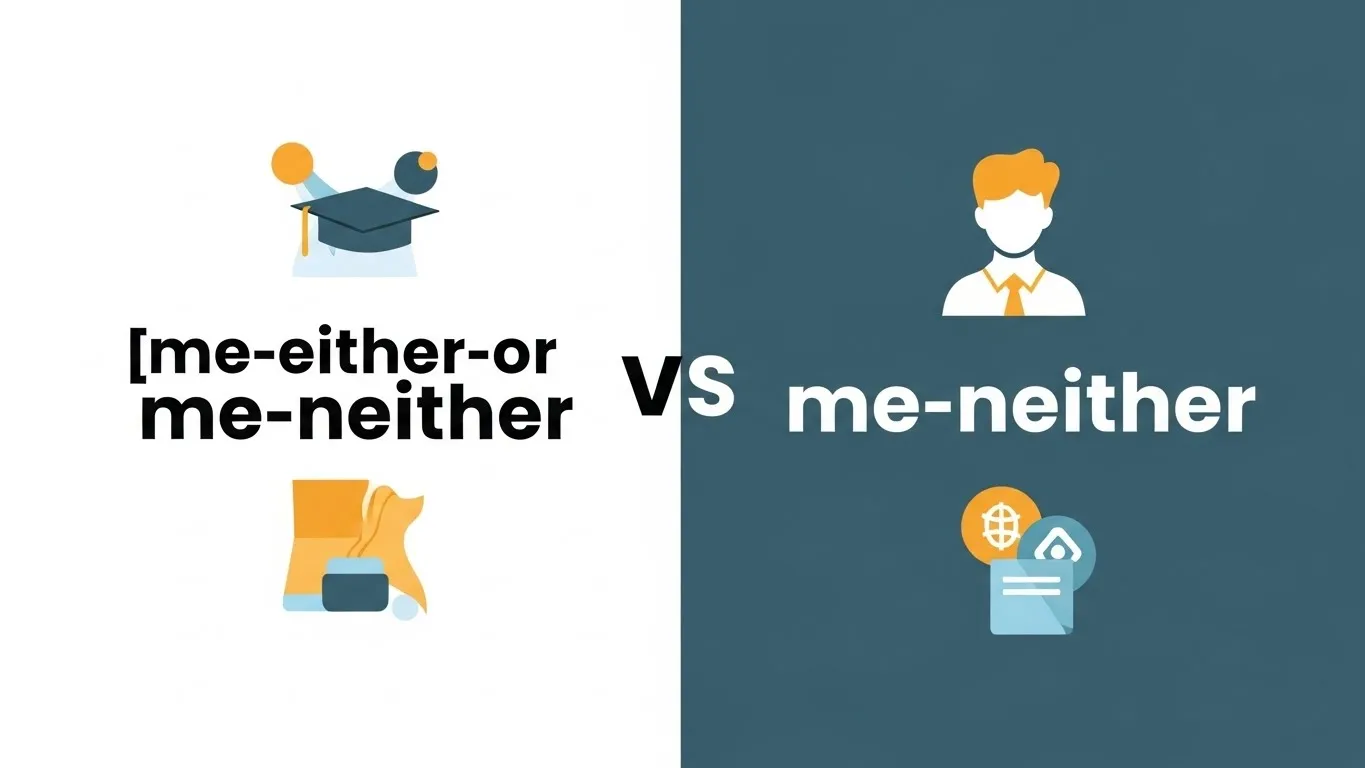
Me neither is the grammatically correct and formal response to a negative statement.
Me either is informal, common in spoken American English, but often considered non‑standard in formal writing.
Examples:
- “I don’t like coffee.” → Me neither. ✅ (correct)
- “I don’t like coffee.” → Me either. ⚠️ (informal, spoken)
Simple rule:
After a negative statement, me neither is correct in standard English.
The Origin of Me Either or Me Neither
Historical Background
The phrase “me neither” comes from older English structures where neither was used to agree with negative statements. It follows a logical pattern similar to “neither do I” or “nor do I.” This construction has been part of English grammar for centuries and appears in formal writing and literature.
On the other hand, “me either” developed later through spoken language. As English evolved, especially in American speech, speakers began using either instead of neither in casual conversation. This shift was influenced by simplification and speed in spoken English rather than strict grammar rules.
Why Two Forms Exist
The difference exists because:
- Neither traditionally pairs with negatives
- Either traditionally pairs with positives
Over time, spoken English blurred this rule, leading to me either becoming common in casual speech, especially in the United States.
British English vs American English Spelling and Usage
This topic is more about usage than spelling, but regional differences still matter.
British English
- Strongly prefers me neither
- Me either is usually considered incorrect
- Formal and informal speech both favor me neither
Example:
- “I don’t agree.” → Me neither.
American English
- Me neither is grammatically correct
- Me either is common in casual spoken English
- Formal writing still prefers me neither
Example:
- “I don’t want to go.” → Me neither. (formal)
- “I don’t want to go.” → Me either. (casual speech)
Comparison Table
| Feature | British English | American English |
| Formal usage | me neither | me neither |
| Casual speech | me neither | me either / me neither |
| Exams & writing | me neither | me neither |
| Spoken preference | me neither | me either common |
Which Spelling Should You Use?
For US Audiences
Use me neither in writing, exams, and professional content. Me either may be used only in casual conversation or dialogue.
For UK & Commonwealth Audiences
Always use me neither. Me either may sound incorrect or uneducated.
For Global or ESL Writing
Choose me neither. It is universally accepted and safe in all contexts.
Professional advice:
When in doubt, always choose me neither.
Common Mistakes with Me Either or Me Neither
Mistake 1: Using “Me Either” in Formal Writing
❌ I don’t agree with the plan. Me either. ✅ I don’t agree with the plan. Me neither.
Mistake 2: Using Either After Negatives in Grammar Tests
Many exams mark me either as incorrect.
Mistake 3: Confusing “Me Too” with Negative Responses
- Positive: “I like tea.” → Me too.
- Negative: “I don’t like tea.” → Me neither.
Mistake 4: Overusing Informal Speech in Professional Settings
Casual phrases should not appear in emails or reports.
Me Either or Me Neither in Everyday Examples
Emails
- “I don’t think this approach will work.” → Me neither.
News & Media
- Many interviews use me neither to show agreement with criticism.
Social Media
- “I don’t trust that update.” → Me either 😅 (casual)
Formal Writing
- “The committee did not support the proposal. Me neither was expressed by the staff.”
Me Either or Me Neither: Google Trends & Usage Data
Search trends show consistent interest in “me either or me neither”, especially among ESL learners.
Popular Regions
- United States (mixed usage)
- United Kingdom (me neither dominant)
- Canada & Australia (me neither dominant)
- India, Pakistan, Philippines (learning-focused searches)
Usage by Context
- Spoken American English: me either common
- Academic and professional writing: me neither dominant
This confirms that me neither remains the standard form worldwide.
Comparison Table: Me Either vs Me Neither
| Phrase | Correctness | Usage Level | Example |
| me neither | Correct | Formal & informal | I don’t agree. Me neither. |
| me either | Informal | Casual speech | I don’t agree. Me either. |
Frequently Asked Questions
Is “me either” grammatically correct?
It is informal and acceptable in casual American speech, but not standard grammar.
Is “me neither” always correct?
Yes, after negative statements, me neither is correct in all forms of English.
Can I use “me either” in exams?
No. Exams usually expect me neither.
Why do Americans say “me either”?
It developed through spoken usage and informal language habits.
Is “me neither” British English only?
No. It is correct in both British and American English.
What is the safest option for writing?
Always use me neither.
Can I say “neither me” instead?
No. That structure is incorrect in this context.
Conclusion
Understanding the difference between me either or me neither helps you sound clear, confident, and correct in English. While both phrases are heard in everyday conversation, only me neither follows traditional grammar rules and works in all contexts.
It correctly agrees with negative statements and is accepted in British English, American English, exams, professional writing, and global communication.
Me either, although popular in casual American speech, should be used carefully. It fits informal conversations, movie dialogue, or social media, but it can look incorrect in formal writing. For learners, writers, and professionals, choosing me neither avoids mistakes and confusion.
Language changes over time, but standard grammar still matters when clarity and credibility are important. By following the simple rules and examples in this guide, you can confidently respond to negative statements without hesitation. Remember: when correctness matters, me neither is always the right choice.
Related posts!

I am Oliver H. Grant. I am a English language writer and editor my focuses on grammar, word usage, and common English mistakes.
I specializes in explaining the differences between British and American English in a clear and practical way.
my writing style is simple, learner-friendly, and designed to help readers understand English with ease.
My work is also SEO-focused, making it especially useful for online learners and readers.