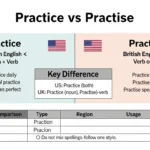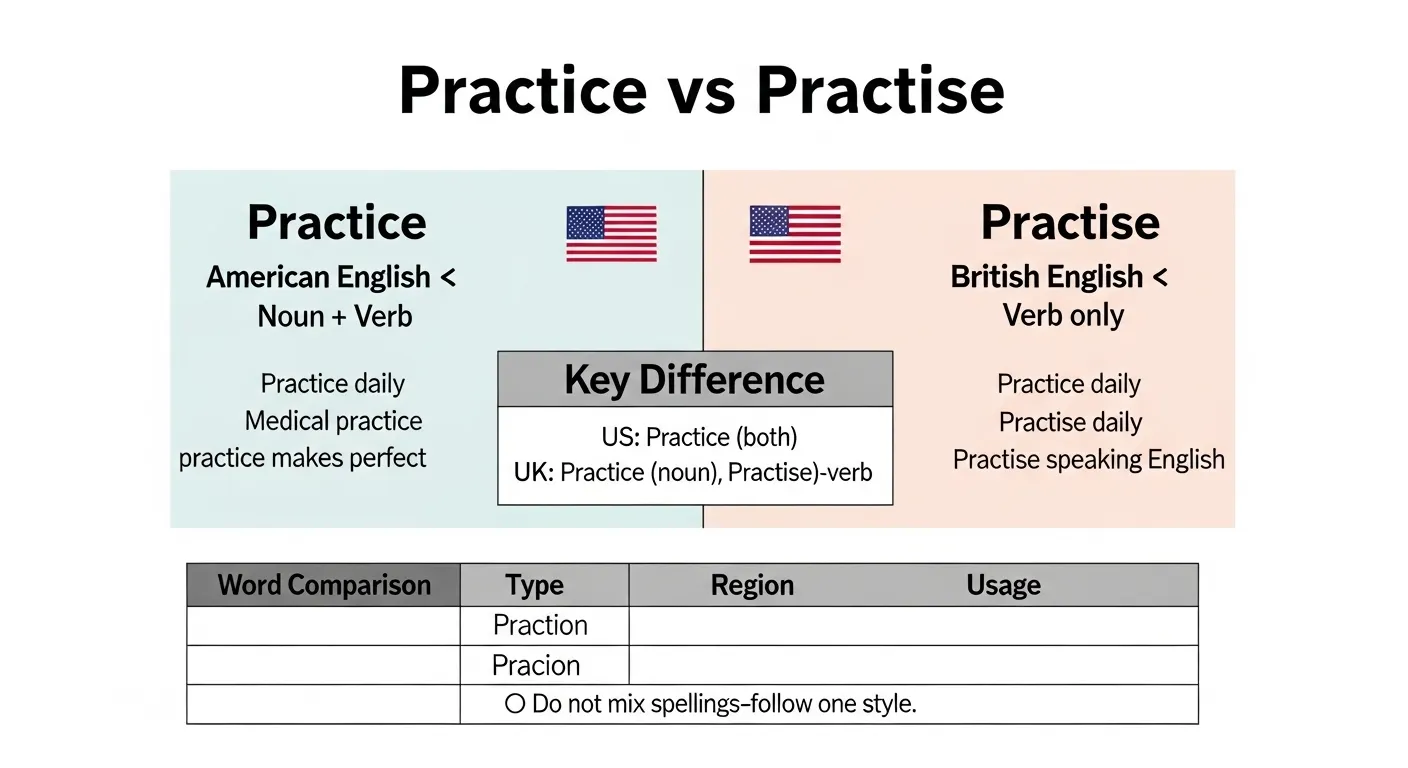
Practice is a noun in British English and both noun and verb in American English, while practise is a verb in British English.
Many people search for practice vs practise because these words look almost the same but follow different rules depending on region and grammar. The confusion often appears in writing, exams, and professional communication.
In American English, only one spelling is used, while British English uses two forms based on If the word is a noun or a verb. This makes it tricky for learners.
Understanding this difference helps you write clearly and correctly. This guide explains the rules, origin, usage, examples, and tips so you can use both forms confidently.
⚡ Practice vs Practise : Quick Answer
The main rule is:
- Practice = noun (UK) + noun & verb (US)
- Practise = verb (UK only)
Examples
- I need more practice. (noun)
- I practise every day. (verb : UK)
- I practice every day. (verb : US)
Simple Explanation
- UK: two spellings
- US: one spelling (practice)
📜 The Origin of Practice and Practise
Both words come from the same root.
Origin
They come from Greek praktikos, meaning to do or perform, through Latin and French.
In early English, both spellings were used, but later British English separated them by function.
🇬🇧🇺🇸 British English vs American English Spelling
This is where the main difference appears.
| Form | British English | American English | Usage |
| Noun | Practice | Practice | Thing |
| Verb | Practise | Practice | Action |
Examples
- UK: I need more practice.
- UK: I practise daily.
- US: I need more practice.
- US: I practice daily.
🌍 Which Spelling Should You Use?
Your choice depends on region and grammar.
Use Practice (Noun)
Examples:
- This takes a lot of practice.
- Good practice improves skills.
- She runs a medical practice.
Use Practise (Verb : UK Only)
Examples:
- I practise every morning.
- He practises guitar daily.
- They practise speaking English.
Use Practice (Verb : US)
Examples:
- I practice every morning.
- She practices piano.
- They practice daily.
❌ Common Mistakes with Practice vs Practise
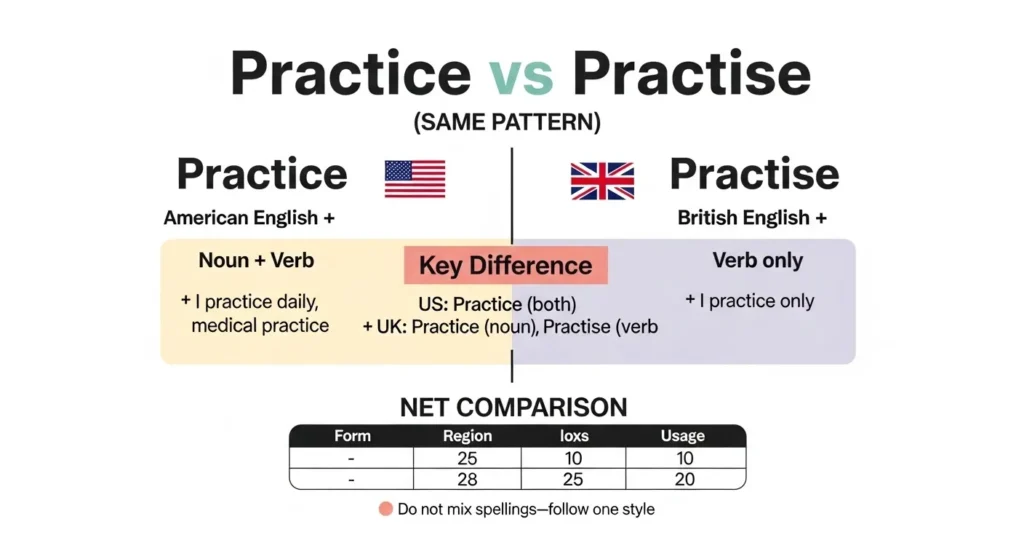
These mistakes are very common.
1. Using Practice as Verb in UK Writing
Incorrect (UK):
- I practice every day.
Correct:
- I practise every day.
2. Using Practise in US English
Incorrect:
- I practise every day.
Correct:
- I practice every day.
3. Mixing Both Forms
Incorrect:
- I practise every day to improve my practice skills. (US context)
Correct:
- Keep spelling consistent with region.
📘 Understanding the Grammar Rule
Here is a clear comparison.
| Word | Type | Region | Example |
| Practice | Noun | UK & US | Good practice |
| Practise | Verb | UK only | Practise daily |
| Practice | Verb | US only | Practice daily |
✍️ Practice vs Practise in Everyday Examples
📧 Email Example
“I need more practice before the presentation.”
📰 News Example
“The team practises daily to improve performance.” (UK)
📱 Social Media Example
“I practice every day!” (US)
📄 Formal Writing Example
“Regular practice improves results.”
These examples show real usage.
📊 Practice vs Practise: Google Trends & Usage Data
Search data shows that practice vs practise is a common grammar query.
Popular related searches include:
- practice vs practise difference
- practise or practice UK
- practice vs practise examples
- when to use practise
- practice meaning and usage
Usage by Region
- United States → Practice (only form)
- United Kingdom → Practice + Practise
- Pakistan / India → Often follow British style
📋 Comparison Table : Practice vs Practise
| Feature | Practice | Practise |
| Type | Noun / Verb (US) | Verb (UK) |
| Region | US & UK | UK only |
| Meaning | Activity or action | Action |
| Example | Good practice | Practise daily |
🧠 Easy Memory Tricks
Simple tricks help you remember.
Trick 1: C = Noun
- Practice (C) → like ice (noun)
Trick 2: S = Verb
- Practise (S) → like advise (verb)
3: US Uses One
- America → only practice
📖 Advanced Usage Examples
Using Practice
- Practice makes perfect.
- He owns a dental practice.
Using Practise (UK)
- She practises yoga daily.
- They practise speaking English.
Practice (US Verb)
- She practices yoga daily.
- They practice English.
🧾 Practice vs Practise in Professional Writing
Right usage improves clarity.
Correct (UK):
- The doctor runs a private practice.
- He practises medicine.
Correct (US):
- The doctor runs a private practice.
- He practices medicine.
Incorrect:
- Mixing both styles in one document.
🌎 Why This Confusion Happens
This confusion happens because:
- The words look almost identical
- US and UK use different rules
- Pronunciation is the same
Understanding region-based rules solves the problem.
❓ FAQs About Practice vs Practise
1. What is the difference between practice and practise?
Practice is a noun, while practise is a verb in British English.
2. Which spelling is used in the US?
Only “practice” is used.
3. Which spelling is used in the UK?
Both are used: practice (noun) and practise (verb).
4. Can I use practise in American English?
No. It is not used in US English.
5. What is the easiest rule?
UK: practice (noun), practise (verb)
US: practice for both
6. Is this mistake common?
Yes. Many learners confuse these forms.
7. Should I mix both spellings?
No. Always stay consistent.
🏁 Conclusion:
The difference between practice and practise depends on both grammar and region. In British English, “practice” is used as a noun, while “practise” is used as a verb.
In American English, the rule is simpler because “practice” is used for both noun and verb forms.
This difference often causes confusion, especially for learners who switch between UK and US styles.
The key to using these words correctly is understanding your audience and the type of writing you are doing. If you are following British English rules, remember to use “practice” for things and “practise” for actions.
If you are using American English, simply use “practice” in all cases. Consistency is very important in writing, so avoid mixing both forms in the same text.
With regular use and practice, this distinction becomes easy. Mastering it will improve your grammar, writing clarity, and overall confidence in English communication.
Discover More Articals!
Can vs May: What Is the Difference?(2026)
Since vs For: What Is the Difference?
Potato vs Potatoe: What Is the Difference?

englifiy.com is my English grammar comparison website where I simplify confusing words, spelling differences, and usage rules through clear explanations and examples. My goal is to help learners, writers, and students understand English easily and use correct grammar with confidence.