“That” is used for essential information, and “which” is used for extra information that can be removed without changing the main meaning.
Many learners struggle with these two words because they look similar and both connect ideas in a sentence.
Writers often feel unsure about punctuation, meaning, and formal writing rules.
This confusion leads to mistakes in essays, emails, and professional content.
People search for clear explanations because small grammar differences can change clarity and tone.
This guide explains the difference step by step using simple examples.
You will learn when to use each word, how regional styles affect usage, and how to avoid common errors in daily writing.
That vs Which: Quick Answer
The basic rule is simple:
- That introduces essential information. The sentence needs it to make full sense. No commas are used.
- Which adds extra information. The sentence still makes sense without it. Commas are usually needed.
Examples
✅ The book that I bought yesterday is amazing.
(Important detail. Without it, we do not know which book.)
✅ The book, which I bought yesterday, is amazing.
(Extra detail. The main idea remains clear.)
Easy Memory Tip
- That = necessary detail.
- Which = additional detail.
Short sentences help:
- Use that when the information limits or defines.
- Use which when adding extra description.
The Origin of That and Which
Both words come from Old English and have long histories in grammar.
Origin of “That”
“That” comes from Old English þæt. It served many roles, such as demonstrative pronoun, conjunction, and relative pronoun. Over time, it became common in defining clauses. Writers used it to identify specific people or things.
Origin of “Which”
“Which” comes from Old English hwilc. It was linked to questions and choices. Later, it became common in descriptive clauses that provide additional information.
Why Differences Developed
Early English writers often used both words more freely. Strict rules about separating essential and non essential clauses became more popular during later grammar standardization. Style guides encouraged clearer sentence structure, especially in formal writing.
Language evolves, but modern usage often follows clarity based guidelines. These help readers quickly understand which information is necessary and which is optional.
British English vs American English Spelling
Unlike spelling differences in some words, “that” and “which” remain the same in both varieties. The difference lies more in style preference than spelling.
In some formal American writing, strict separation between essential and non-essential clauses is emphasized. British usage may allow more flexibility, especially in informal contexts.
Comparison Table
| Feature | American Style | British Style |
| Essential clause | Prefer “that” | Often “that,” but sometimes flexible |
| Non-essential clause | Prefer “which” with commas | Also uses “which,” sometimes less strict |
| Comma use | Strong emphasis | Slightly more relaxed in informal writing |
| Formal guides | Encourage clear distinction | May allow variation |
Examples
US-style: The car that has a blue door is mine.
UK-style informal: The car which has a blue door is mine.
Both may be understood, but many modern guides recommend keeping the distinction for clarity.
Which Spelling Should You Use?
Here, spelling is not the issue. Instead, focus on audience expectations and writing goals.
For US Readers
Follow the clear distinction:
- Essential information → that
- Extra information → which
This matches many professional writing standards.
For UK or Commonwealth Readers
You may see more flexibility. Still, using the clear distinction improves clarity and avoids confusion.
For Global Writing
Use the structured approach:
- That for defining details.
- Which for added comments.
This makes writing easy for international readers.
Simple Rule for All Writers
Ask one question:
Can the sentence work without this part?
- Yes → use which with commas.
- No → use that without commas.
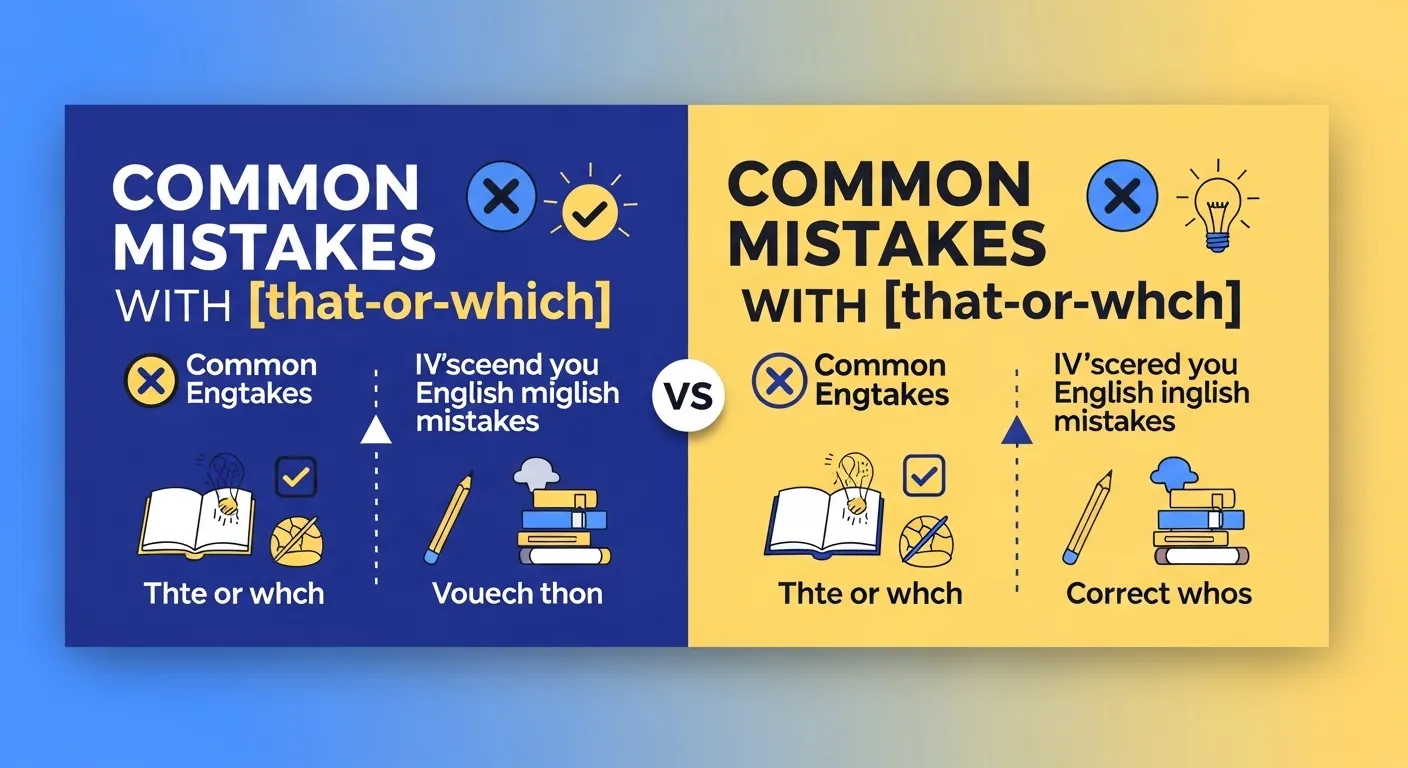
Common Mistakes with That or Which
Many errors happen because writers focus on sound instead of meaning.
1. Using “which” without commas for essential information
❌ The phone which has a broken screen is mine.
Better: The phone that has a broken screen is mine.
2. Using “that” for extra information
❌ My car, that I bought last year, is fast.
Correct: My car, which I bought last year, is fast.
3. Forgetting commas
Non-essential clauses need commas.
Correct: The cake, which looks amazing, is ready.
4. Overthinking
Some learners try to memorize complex grammar terms. Instead, focus on meaning.
5. Mixing formal and informal styles
Consistency matters. Choose one style and stay consistent throughout your writing.
That or Which in Everyday Examples
Understanding real-life usage helps more than theory.
Emails
- Please send the file that contains the final report.
- I received your message, which was very helpful.
News Writing
- The policy that affects students begins next year.
- The new law, which passed yesterday, has many supporters.
Social Media
- I love movies that make me think.
- The post, which went viral, reached millions.
Formal Writing
- The method that improves accuracy is recommended.
- The results, which were unexpected, changed the study direction.
Short and clear sentences improve readability.
That or Which – Google Trends & Usage Data
Search behavior shows that many learners want quick clarity between these two words. Usage patterns vary by region.
United States
Writers often follow strict grammar guides. Educational materials emphasize clear separation between essential and non-essential clauses.
United Kingdom
Usage may appear more flexible, especially in journalism and informal writing. However, clarity-focused rules are still common.
Global Context
English learners worldwide often learn structured rules first. This helps reduce confusion when reading international content.
Context-Based Popularity
- Academic writing favors clear distinctions.
- Technical writing prefers precise rules.
- Casual online writing may mix styles.
Understanding audience expectations helps writers choose the best approach.
Comparison Table: That vs Which
| Feature | That | Which |
| Clause type | Essential | Non-essential |
| Commas | No | Yes |
| Purpose | Defines meaning | Adds extra detail |
| Example | The shirt that fits is blue. | The shirt, which fits well, is blue. |
| Formal preference | Strong in many guides | Used for added information |
FAQs About That or Which
1. Can both words be correct sometimes?
Yes. Some sentences allow either word, especially in informal contexts. Still, clarity improves when you follow the essential vs extra rule.
2. Is one more formal than the other?
Not exactly. The difference is about function, not formality.
3. Do I always need commas with “which”?
Usually yes, when it introduces non-essential information.
4. Can I avoid the problem completely?
Sometimes you can rewrite the sentence to remove the relative pronoun. Example: “The book I bought is great.”
5. Why do people confuse them?
Both words connect clauses, and spoken language often sounds similar.
6. Is the rule strict?
Many professional style guides recommend it because it improves clarity.
7. Does everyday speech follow this rule?
Speech is more flexible. Writing often follows clearer structure.
Conclusion
Understanding the difference between “that” and “which” improves clarity and confidence in writing.
The key idea is simple: use “that” for essential information and “which” for additional details that can be removed without changing the main meaning.
This distinction helps readers quickly understand the message.
While regional styles may vary slightly, the clarity-focused approach works well for global communication.
Writers benefit from asking a simple question: is the information necessary or extra? This small step prevents many common mistakes.
Practice with short sentences and real examples from daily writing. Over time, choosing between these words becomes natural.
Clear grammar supports strong communication, making your writing easier to read, more professional, and more effective across different audiences and contexts.
Related More Posts!
Deep-Seated or Deep-Seeded: Meaning and Examples 🔍
Realize or Realise: Which Spelling Is Correct and When to Use Each?
Theatre or Theater: Which One Is Correct and When to Use Each?

**Emily R. Dawson** I am a English language writer and editor i specializes in grammar clarity, sentence structure, and common writing mistakes.I focuses on helping readers write correct, natural-sounding English through simple explanations and practical examples. Emily mainly creates beginner-friendly and intermediate-level language guidesmy writing style is clear, supportive, and easy to follow.