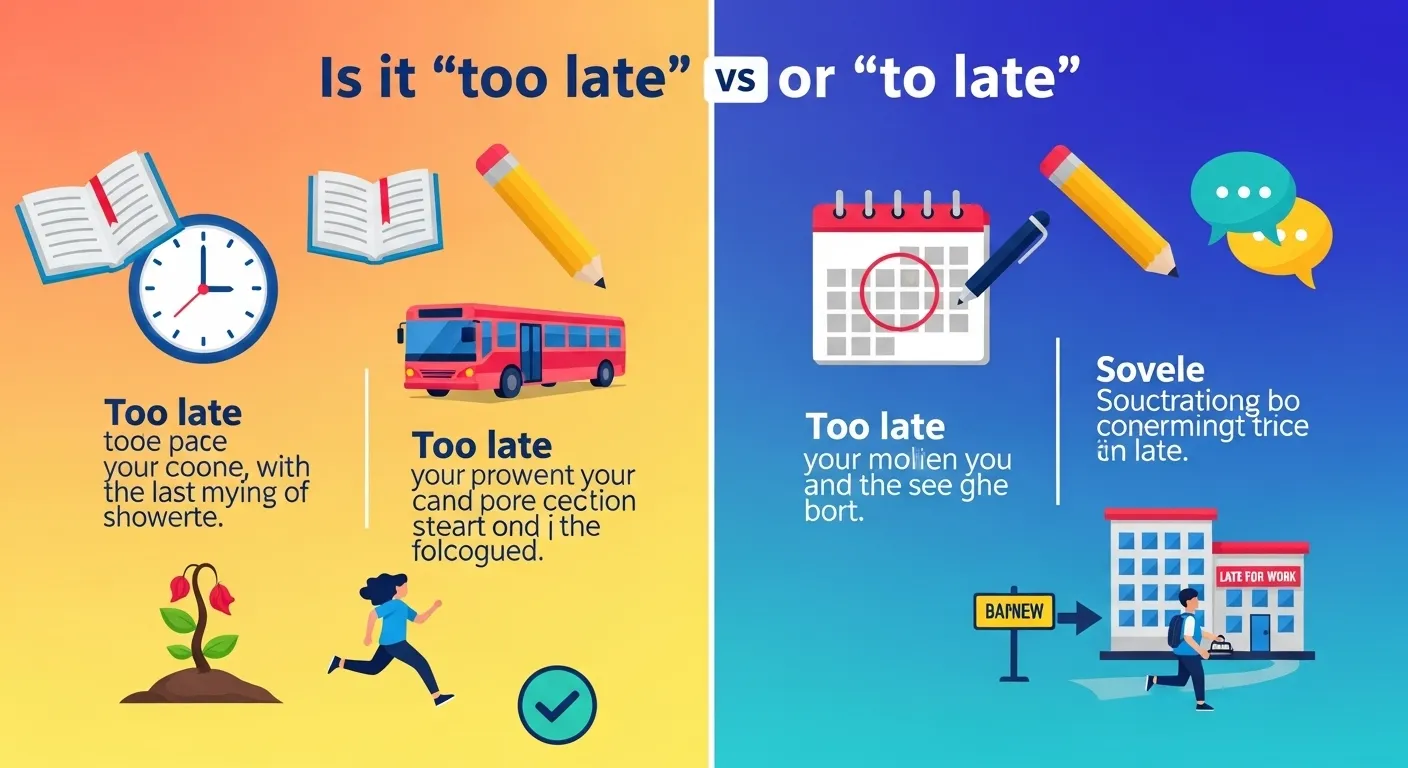
“Too late” is correct, and “to late” is incorrect in standard English. This simple answer solves the main confusion that sends thousands of people searching for “to late or too
late” every month. Many learners, students, bloggers, and even fluent speakers mix these forms because they sound the same when spoken.
English spelling often creates trouble when words look similar but work differently in grammar.
People want to know which one is right for exams, emails, social media posts, and professional writing.
This article clears that confusion fully. You will learn the quick rule British vs American common mistakes, real-life examples, and written in very simple English.
To Late or Too Late: Quick Answer
Too late is the correct phrase.
To late is grammatically incorrect in standard English.
Why?
- Too means excessively or more than needed
- Late means after the expected time
When combined, too late means after the correct or allowed time
Examples:
- I arrived too late for the meeting. ✅
- It is too late to change the plan. ✅
❌ I arrived to late for the meeting. (Incorrect)
Simple rule:
If you mean “more than late,” always use too late.
The Origin of To Late or Too Late
Origin of “Too”
The word too comes from Old English tō, meaning also or excessively. Over time, it developed a clear meaning of more than enough.
Examples:
- too much
- too fast
- too late
Origin of “To”
The word to is a preposition. It shows direction, purpose, or movement.
Examples:
- go to school
- talk to her
- close to home
Why the Confusion Exists
The confusion happens because:
- to and too sound the same
- English learners rely on sound, not spelling
- Auto-typing and fast writing cause mistakes
But grammatically, to late has no meaning unless late is a verb, which it is not.
British English vs American English Spelling
There is no difference between British English and American English when it comes to too late.
Both varieties follow the same rule.
British English Examples
- I realized it was too late to apologize.
- The train arrived too late.
American English Examples
- We were too late for the movie.
- It is too late to turn back now.
Comparison Table
| Aspect | British English | American English |
|---|---|---|
| Correct form | Too late | Too late |
| “To late” accepted? | No | No |
| Formal usage | Too late | Too late |
Key point:
“To late” is wrong in both British and American English.
Which Spelling Should You Use?
For US Audiences
Always use too late. Any other form looks incorrect and unprofessional.
For UK and Commonwealth Audiences
Use too late in all writing styles, including exams and formal documents.
For Global English
If your audience is international, too late is the only safe and correct option.
In Exams and Professional Writing
Using to late can:
- Reduce marks
- Look careless
- Harm credibility
Professional advice:
If you ever hesitate, remember: Too = extra → too late.
Common Mistakes with To Late or Too Late
Mistake 1: Using “To Late” in Sentences
❌ It is to late to call him. ✅ It is too late to call him.
Mistake 2: Confusing “Too” with “To”
❌ She arrived to late again. ✅ She arrived too late again.
Mistake 3: Thinking Both Are Correct
❌ “To late” is informal but correct. ✅ Only too late is correct.
Mistake 4: Auto-correct Errors
Typing fast on phones often causes to instead of too. Always proofread.
To Late or Too Late in Everyday Examples
Emails
- Sorry, I replied too late.
- The request came too late to process.
News Headlines
- Aid arrived too late for many victims.
- Doctors say treatment started too late.
Social Media
- Oops! I saw this too late 😅
- Never say sorry too late 💔
Formal Writing
- The policy change came too late to affect results.
- Action was taken too late to prevent damage.
To Late or Too Late – Google Trends & Usage Data
Search engines show that “to late or too late” is a very common grammar query.
Popular by Country
- United States: High search volume
- United Kingdom: High search volume
- India & Pakistan: Very high search volume
- Canada & Australia: Consistent searches
Why People Search It
- Exam preparation
- Email and office writing
- Social media posting
- Spoken vs written confusion
Context of Usage
- Apologies
- Missed chances
- Deadlines
- Regret statements
- insight:
Users want a fast answer, then a clear explanation.
Comparison Table: To Late vs Too Late
| Feature | To Late | Too Late |
|---|---|---|
| Grammatically correct | ❌ No | ✅ Yes |
| Used in standard English | ❌ No | ✅ Yes |
| Accepted in exams | ❌ No | ✅ Yes |
| Professional writing | ❌ No | ✅ Yes |
Frequently Asked Questions
Is “to late” ever correct?
No. “To late” is always incorrect in standard English.
Why do people write “to late”?
Because to and too sound the same when spoken.
Is “too late” formal or informal?
It works in both formal and informal writing.
Can “late” be used with “to”?
No. Late is not a verb, so to late makes no sense.
Is “too late” one word?
No. It is two separate words.
Can I use “too late” in exams?
Yes. It is the only correct form.
Does British English allow “to late”?
No. British English also rejects it.
Conclusion
The confusion between to late or too late is very common, but the rule is simple and strict. “Too late” is correct, and “to late” is wrong in all forms of standard English.
The mistake happens because both words sound the same, but grammar depends on meaning, not sound. The word too shows excess, and late describes time.
Together, they clearly mean after the acceptable time. That is why English only accepts too late.
This rule does not change across regions. British English, American English, and global English all follow the same standard.
In exams, professional emails, news writing, and social media, using too late shows clarity and correctness.
Using to late can harm your credibility and make your writing look careless.
If you remember just one thing, remember this: whenever you mean more than late, always choose too late.
With this understanding, you can write with confidence and communicate clearly in every situation.
Related posts!
Aluminum or Aluminium: Quick Answer