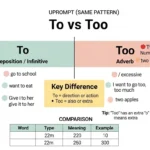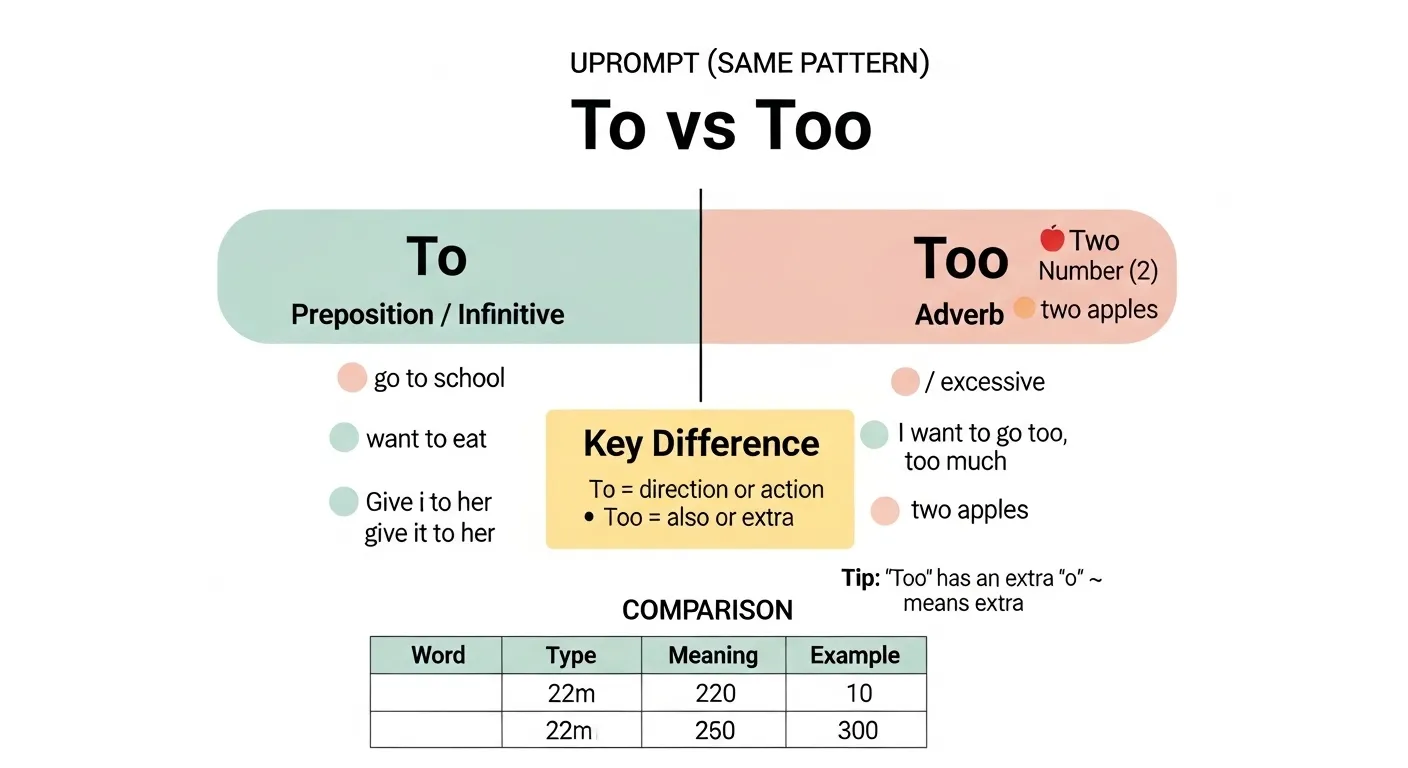
“To” is used for direction, purpose, or as part of a verb, while “too” means “also” or “excess.”
Many people search for to vs too because these two words look very similar but have different meanings and uses. This confusion is common in emails, social media, and exams.
A small spelling mistake can change the meaning of a sentence. The good news is that the rule is simple once you understand it.
This guide will help you learn the difference, avoid common mistakes, and use both words correctly with clear examples and easy tips.
⚡ To vs Too: Quick Answer
The main rule is:
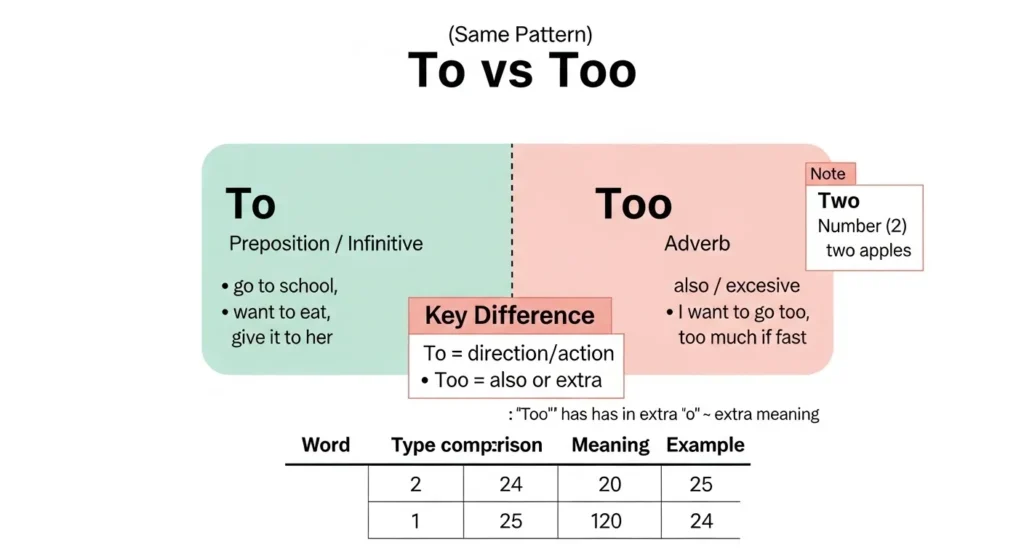
- To = direction, purpose, or part of a verb
- Too = also or more than needed
Examples
- I am going to school.
- I want to eat.
- I am going too. (also)
- This bag is too heavy. (excess)
📜 The Origin of To and Too
Origin of “To”
“To” comes from Old English tō, meaning toward or in the direction of.
Origin of “Too”
“Too” comes from Old English tō, but later gained an extra “o” to show a different meaning, like also or excessively.
🇬🇧🇺🇸 British English vs American English Spelling
There is no spelling difference between British and American English for these words.
| Word | British English | American English | Meaning |
| To | To | To | Direction / purpose |
| Too | Too | Too | Also / excess |
🌍 Which Spelling Should You Use?
The choice depends on meaning, not region.
Use To
- For movement: go to school
- For purpose: want to eat
- Before verbs: to run, to read
Use Too
- To mean “also”
- To show excess
Examples:
- I want to go too.
- It is too hot.
❌ Common Mistakes with To vs Too
1. Using “To” Instead of “Too”
Incorrect:
- I want to go to.
Correct:
- I want to go too.
2. Using “Too” Instead of “To”
Incorrect:
- I am going too school.
Correct:
- I am going to school.
3. Forgetting the Meaning
Incorrect:
- This is to much.
Correct:
- This is too much.
📘 Understanding the Grammar Rule
| Word | Function | Meaning | Example |
| To | Preposition / infinitive | Direction / purpose | Go to school |
| Too | Adverb | Also / excess | Too hot |
✍️ To vs Too in Everyday Examples
📧 Email Example
“I want to join the meeting too.”
📰 News Example
“The temperature is too high today.”
📱 Social Media Example
“I want to come too!”
📄 Formal Writing Example
“The results are too important to ignore.”
📊 To vs Too: Google Trends & Usage Data
Search data shows that to vs too is one of the most common grammar searches.
Popular related searches include:
- to vs too difference
- too meaning
- how to use too
- too vs to examples
- to vs too grammar rules
Usage by Region
- Used equally in all English-speaking countries
- Confusion is common worldwide
📋 Comparison Table: To and Too
| Feature | To | Too |
| Meaning | Direction / purpose | Also / excess |
| Type | Preposition / infinitive | Adverb |
| Example | Go to school | Too hot |
🧠 Easy Memory Tricks
1: Too Has Extra “O”
- Too = extra → means excess
2: Also Meaning
- If you can replace it with “also,” use too
3: Verb Rule
- Before verbs → always to
📖 Advanced Usage Examples
Using “To”
- She wants to learn English.
- He is going to the market.
Using “Too”
- She is coming too.
- The bag is too heavy.
Combined Example
- I want to go too.
🧾 To or Too in Professional Writing
Correct usage improves clarity.
Correct:
- The cost is too high to ignore.
- I want to attend the meeting too.
Incorrect:
- The cost is to high.
- I want too attend the meeting.
🌎 Why This Confusion Happens
This confusion happens because:
- Words sound the same
- Spelling difference is small
- Both are used very often
Understanding meaning solves the problem.
❓ FAQs About Too vs To
1. What is the difference between to and too?
“To” shows direction or purpose, while “too” means also or excess.
2. When should I use “too”?
Use it for “also” or “more than needed.”
3. When should I use “to”?
Use it before verbs or for direction.
4. Is “to much” correct?
No. Correct form is “too much.”
5. Can “too” mean “also”?
Yes.
6. Is this mistake common?
Yes. Very common worldwide.
7. What is the easiest rule?
“Too” has extra “o” → means extra.
🏁 Conclusion:
The difference between “to” and “too” is small but very important in English writing. Both words sound the same, but their meanings are completely different.
“To” is used for direction, purpose, or before verbs, while “too” is used to mean “also” or to show that something is more than needed.
Many learners confuse these words because of their similar pronunciation, but the rules are easy to remember.
If you are talking about movement or action, use “to.” If you mean “also” or “extra,” use “too.” A simple memory trick is that “too” has an extra “o,” which reminds you of “extra.”
Using the correct word helps make your writing clear and professional. With regular practice and attention, you can avoid this common mistake and improve your English skills. Over time, choosing between “to” and “too” will become natural and automatic.
Discover More Articals!
Color vs Colour: What Is the Difference?(2026)
Practice vs Practise: What Is the Difference?

englifiy.com is my English grammar comparison website where I simplify confusing words, spelling differences, and usage rules through clear explanations and examples. My goal is to help learners, writers, and students understand English easily and use correct grammar with confidence.