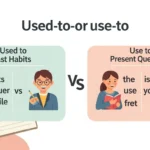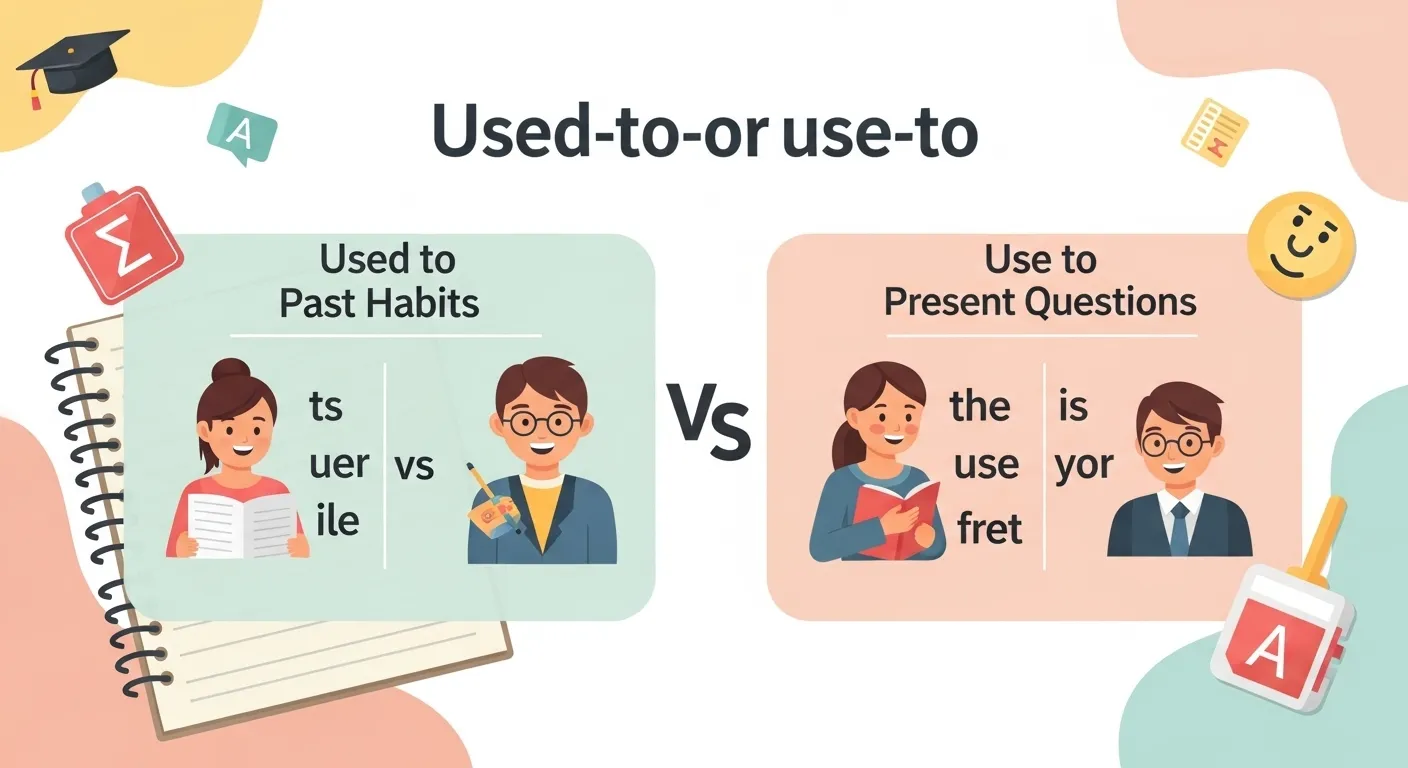
“Used to” is correct for past habits and states, while “use to” appears mainly after “did” in negative or question forms.
Many English learners and even native speakers get confused between “used to” and “use to” because both sound almost identical in speech.
When speaking quickly, the “d” sound is often soft or silent, which makes people unsure about the right spelling in writing.
People search for this topic because grammar rules about past habits, negatives, and questions can feel tricky.
Understanding the difference helps improve writing clarity, avoid common mistakes, and communicate ideas about past routines and changes more accurately. This guide explains everything in simple steps.
Used To or Use To: Quick Answer
The difference between used to and use to depends on grammar structure.
👉 Used to is used for past habits, repeated actions, or past situations that are no longer true.
Examples:
- I used to play football every weekend.
- She used to live in London.
- They used to wake up early.
👉 Use to appears after auxiliary verbs like did in negatives and questions.
Examples:
- Did you use to play football?
- I did not use to drink coffee.
- Did she use to work here?
Simple Rule:
- Positive past habit → used to
- Negative or question with “did” → use to
Why? Because “did” already shows past tense, so the main verb returns to its base form.
The Origin of Used To or Use To
Understanding history makes this easier.
The phrase “used to” comes from the older English verb “use,” which once meant “to be accustomed” or “to be familiar with.”
Over time, English speakers began using “used to” as a fixed expression describing past habits or repeated actions.
In earlier English, phrases like:
- “He was used to working hard.”
showed familiarity or habit. Gradually, the meaning expanded to include past routines that no longer happen.
The spelling difference between used to and use to comes from grammar development. English introduced auxiliary verbs like “did” to form questions and negatives.
When “did” entered the sentence, the verb returned to its base form:
- Did + use + to
Even though pronunciation stayed similar, grammar rules created two different written forms.
This historical change explains why people hear “used to” but sometimes need to write “use to.”
British English vs American English Spelling
One important point is that there is no spelling difference between British and American English for this phrase. Both follow the same grammar rules.
However, pronunciation differences may cause confusion.
British English
- Often drops the “d” sound softly.
- Sounds like “yoosta.”
Example:
- I used to go there often.
American English
- Sometimes clearer “d” sound, but still reduced in fast speech.
Example:
- Did you use to work here?
Comparison Table
| Form | British English | American English | Example |
| Used to | Same spelling | Same spelling | I used to run daily |
| Use to (after did) | Same rule | Same rule | Did you use to travel? |
| Pronunciation | Softer “d” | Slightly clearer | Sounds similar in speech |
Because pronunciation is nearly identical, writers often make mistakes when typing.
Which Spelling Should You Use?
Choosing between “used to” and “use to” depends on grammar structure, not region.
If you write for US readers:
Follow standard grammar rules:
- Positive sentence → used to
- Negative/question with did → use to
If you write for UK or Commonwealth readers:
Exactly the same rules apply.
If you write for a global audience:
Use the grammar rule instead of worrying about location.
Simple guide:
✔ Past habit statement → used to
✔ Question with did → use to
✔ Negative with did → use to
Examples:
- I used to eat spicy food.
- Did you use to eat spicy food?
- I did not use to eat spicy food.
Common Mistakes with Used To or Use To
Many learners make the same errors. Here are the most frequent ones.
1. Writing “used to” after “did”
❌ Did you used to go there?
✔ Did you use to go there?
Reason: “Did” already shows past tense.
2. Writing “use to” in positive sentences
❌ I use to play cricket every day.
✔ I used to play cricket every day.
3. Confusing with “be used to”
This is different.
- I am used to waking early. (meaning: accustomed to)
4. Mixing present and past meaning
“Used to” describes something no longer true.
✔ I used to smoke. (but not now)
5. Adding extra verbs incorrectly
❌ I did used to go there.
✔ I used to go there.
Quick Correction Guide
| Incorrect | Correct |
| Did you used to… | Did you use to… |
| I use to go… | I used to go… |
| I did used to… | I used to… |
Used To or Use To in Everyday Examples
Seeing real-life situations helps understanding.
Emails
- I used to work in your department.
- Did you use to attend these meetings?
News Writing
- The city used to be a fishing village.
- Residents did not use to travel by train.
Social Media
- I used to watch this show every night!
- Did anyone else use to play this game?
Formal Writing
- Researchers used to believe this theory was correct.
- Participants did not use to receive training before.
Conversations
- We used to live near the beach.
- Did you use to visit often?
Used To or Use To: Google Trends & Usage Data
Search data shows that many people look up this topic because of grammar confusion.
Common patterns:
- “Used to vs use to”
- “Did you use to or used to”
- “I use to or used to”
English learners around the world frequently struggle with this pair because pronunciation hides the spelling difference.
Popularity by region
- South Asia: High search interest due to English learning.
- United States: Students researching grammar rules.
- United Kingdom: Writing accuracy concerns.
- Global audience: Learners improving writing skills.
Context matters too. Educational websites, language courses, and grammar blogs often discuss this topic because it represents a common mistake even among advanced learners.
Comparison Table: Used To vs Use To
| Feature | Used To | Use To |
| Main meaning | Past habit or state | Base form after “did” |
| Grammar form | Past expression | Appears in negatives/questions |
| Example | I used to run daily | Did you use to run daily? |
| Positive sentences | Yes | No |
| Negative sentences | No | Yes (with did) |
| Questions | No | Yes (with did) |
| Pronunciation | Same | Same |
FAQs About Used To or Use To
1. Why do “used to” and “use to” sound the same?
In spoken English, the “d” sound is often reduced or silent, making both forms sound similar.
2. Can I always write “used to”?
No. In questions and negatives with “did,” you must use “use to.”
3. Is “did you used to” ever correct?
No. Standard grammar uses “did you use to.”
4. What is the difference between “used to” and “be used to”?
- Used to → past habit no longer true.
- Be used to → accustomed to something.
Example:
- I used to wake late.
- I am used to waking early.
5. Do British and American writers use different rules?
No. Both follow the same grammar pattern.
6. Can “used to” describe feelings?
Yes.
Example:
- I used to love that movie.
7. Is “use to” correct without “did”?
Usually no. It appears mainly after auxiliary verbs like “did.”
Conclusion
The difference between “used to” and “use to” becomes simple once you understand the grammar pattern behind them.
“Used to” describes past habits, repeated actions, or situations that are no longer true today. It helps people talk about change and compare the past with the present.
On the other hand, “use to” appears mainly when forming questions and negative sentences with the auxiliary verb “did.”
Since “did” already marks past tense, the main verb stays in its base form, which explains the spelling change.
Pronunciation often hides this difference, leading many writers to make mistakes, but applying the basic rule solves most problems quickly.
Remember to check sentence structure first: if the sentence is a positive statement about the past, choose “used to.” If it includes “did” in a question or negative form, choose “use to.”
With practice and careful proofreading, anyone can master this small but important grammar detail and write more clearly and confidently.
Related More Posts!
Deep-Seated or Deep-Seeded: Meaning and Examples 🔍
Realize or Realise: Which Spelling Is Correct and When to Use Each?
Theatre or Theater: Which One Is Correct and When to Use Each?