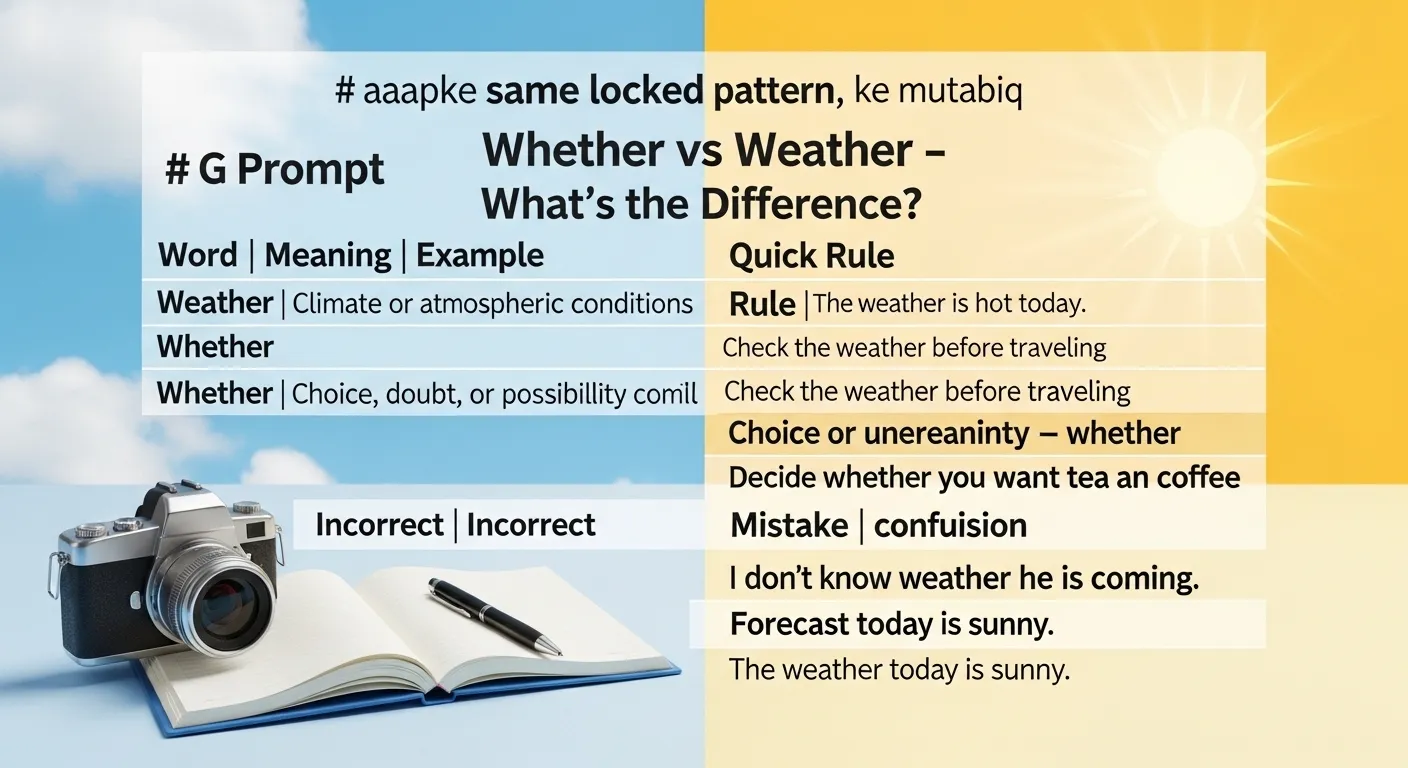
Weather refers to climate conditions like rain or sun, while whether is used to show choice or uncertainty. Many learners mix these two words because they sound the same.
This confusion appears in online searches, and even professional documents. People search this topic because one small spelling change can alter meaning completely.
Using the wrong word may make sentences unclear or unprofessional. This guide solves that problem with clear rules, short explanations, and easy examples. You will learn how to choose the right word quickly.
We will explore origin, spelling differences, common mistakes, real-life usage, and trends so you can write with confidence every time without second-guessing.
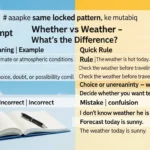
Whether or Weather: Quick Answer
Both words sound the same but have very different meanings.
Weather = climate or atmospheric conditions.
Examples:
- The weather is hot today.
- Rainy weather can delay flights.
- Check the weather forecast before traveling.
Whether = used when talking about choice, possibility, or doubt.
Examples:
- I don’t know whether he will come.
- She asked whether the meeting was canceled.
- Decide whether you want tea or coffee.
Simple Memory Tip
- If the sentence talks about rain, sun, wind, or temperature → use weather.
- If the sentence shows a choice or uncertainty → use whether.
Short rule: climate vs choice.
The Origin of Whether or Weather
Understanding origin helps you remember meaning.
Origin of Weather
The word comes from Old English weder, which meant air, storm, or climate. Early Germanic languages used similar forms.
Over time, the spelling became standardized as “weather.” Its meaning stayed linked to natural conditions like wind, rain, heat, and cold.
People in farming societies depended on climate. Because of that, the word became common in daily speech. Weather reports, seasonal planning, and travel all use it.
Origin of Whether
This word comes from Old English hwæther, meaning “which of two.” It was used when asking about alternatives or uncertainty.
Over centuries, pronunciation changed, but spelling kept the silent “h.” That is why it looks different from how it sounds.
Why Confusion Exists
- Both words are homophones (same sound, different meaning).
- English borrowed from many language sources.
- Pronunciation simplified faster than spelling.
- Learners rely on sound more than context.
Knowing the roots makes it easier to remember: one connects to nature; the other connects to decision or doubt.
British English vs American English Spelling
Unlike many words, these spellings remain the same in British and American English. Still, usage style may vary slightly.
| Feature | British English | American English | Example |
| Climate word | weather | weather | The weather is cold. |
| Choice word | whether | whether | I wonder whether she agrees. |
| Formal tone | often keeps full clauses | sometimes shorter phrasing | Decide whether you agree. |
| Everyday usage | similar | similar | Check weather updates. |
Key Point
There is no spelling difference between US and UK versions for these words. The confusion is not regional. It comes from meaning, not dialect.
Example Comparison
- UK: “I’m not sure whether it will rain.”
- US: “I’m not sure whether it will rain.”
Both correct. Same spelling.
Which Spelling Should You Use?
Choosing depends on meaning, not location.
For US Audience
Use weather when discussing climate reports, forecasts, or outdoor conditions. Use whether for choices, decisions, or uncertainty.
Example:
- Check the weather before driving.
- Decide whether you want to join.
For UK or Commonwealth Audience
Rules stay identical. Clarity matters more than style preference.
Example:
- The weather may change quickly.
- Tell me whether you agree.
For Global Readers
Keep sentences simple. Many readers learn English as a second language. Clear context helps avoid mistakes.
Tips:
- Replace confusing sentences with shorter ones.
- Ask: “Is this about climate or choice?”
- Read sentence aloud to test meaning.
Common Mistakes with Whether or Weather
These mistakes appear often in writing.
Mistake 1: Using the climate word for decisions
❌ I don’t know weather he is coming.
✅ I don’t know whether he is coming.
Mistake 2: Using the choice word for forecasts
❌ The whether today is sunny.
✅ The weather today is sunny.
Mistake 3: Autocorrect errors
Phones may replace words incorrectly. Always re-check final text.
Mistake 4: Mixing meaning in long sentences
❌ We discussed the weather we should travel.
✅ We discussed whether we should travel.
Mistake 5: Overthinking spelling
Many writers pause because both sound identical. Focus on meaning first. Spelling becomes easier.
Quick Correction Strategy
- Find main idea of sentence.
- Ask: climate or decision?
- Replace with correct word.
Whether or Weather in Everyday Examples
These words appear in many contexts.
Emails
- “Please confirm whether you can attend.”
- “The weather may affect delivery time.”
Short sentences reduce confusion.
News Writing
- “Severe weather warnings issued today.”
- “Officials debate whether new rules are needed.”
Journalists choose words carefully to avoid misunderstanding.
Social Media
- “Love this rainy weather!”
- “Not sure whether I should go out tonight.”
Online writing moves fast. Mistakes happen often. Proofreading helps.
Academic Writing
- “The study examined whether results were consistent.”
- “Extreme weather events increased over time.”
Formal writing needs precise meaning.
Business Communication
- “We will decide whether to expand next year.”
- “Bad weather caused delays.”
Clear language improves professionalism.
Whether or Weather: Google Trends & Usage Data
Search patterns show strong interest in this topic. Many learners look for quick answers because confusion is common.
Popular Countries
- United States
- United Kingdom
- India
- Pakistan
- Philippines
These regions have many English learners or mixed spelling influences.
Context of Searches
- Grammar learning.
- Writing correction tools.
- School homework.
- Professional email editing.
- Social media content writing.
Search spikes often appear during school seasons or exam periods. Writers want fast rules. Short explanations help most.
Why People Search Frequently
- Homophones create errors.
- Pronunciation hides spelling difference.
- Autocorrect changes words unexpectedly.
Understanding meaning solves most issues quickly.
Comparison Table: Word Differences Side by Side
| Feature | Weather | Whether |
| Meaning | Climate or atmosphere | Choice, doubt, or condition |
| Part of speech | Noun | Conjunction |
| Example | The weather is hot. | I wonder whether he agrees. |
| Related topics | Rain, sun, storms | Decisions, alternatives |
| Memory tip | Think “wet” or “wind” | Think “which one” |
| Common mistake | Used for choices | Used for forecasts |
FAQs
1. Why do these words sound the same?
English has many homophones. Pronunciation changed over time, but spelling stayed linked to old language roots.
2. Can both words appear in one sentence?
Yes. Example: “I don’t know whether bad weather will cancel the event.”
3. Is one more formal than the other?
No. Each has its own meaning. Formality depends on sentence style, not the word itself.
4. How can I remember quickly?
Climate = weather. Choice or doubt = whether. Repeat this rule until it becomes natural.
5. Do native speakers confuse them?
Yes. Even experienced writers make mistakes, especially when typing quickly.
6. Can I replace whether with “if”?
Sometimes, but not always. “If” works in some situations, but “whether” is clearer when presenting alternatives.
7. Are there regional differences in spelling?
No. Both words stay the same across English varieties.
Conclusion
Understanding the difference between these two words becomes simple once you focus on meaning. One relates to climate and natural conditions. The other connects to decisions, uncertainty, or alternatives.
Because they sound identical, confusion is common among learners and native speakers alike. The best strategy is to pause and ask a short question:
Is the sentence about atmosphere or about choice? Short sentences help reduce mistakes. Reading examples from real life and news articles, strengthens memory.
Practice also improves confidence. Over time, you will recognize correct usage without thinking. Clear writing builds trust with readers.
Correct word choice makes communication easier, more professional, and more precise. Keep the simple rule in mind and review your text before publishing or sending.
With regular practice, this confusion will disappear, and your writing will feel natural and accurate in any situation.
Related More Posts!
Too Late or To Late: Meaning and Examples With In 30 Seconds
⚡ Clearer or More Clear: Quick Rules for Correct Usage
📚Defense or Defence: Which Spelling Is Correct?