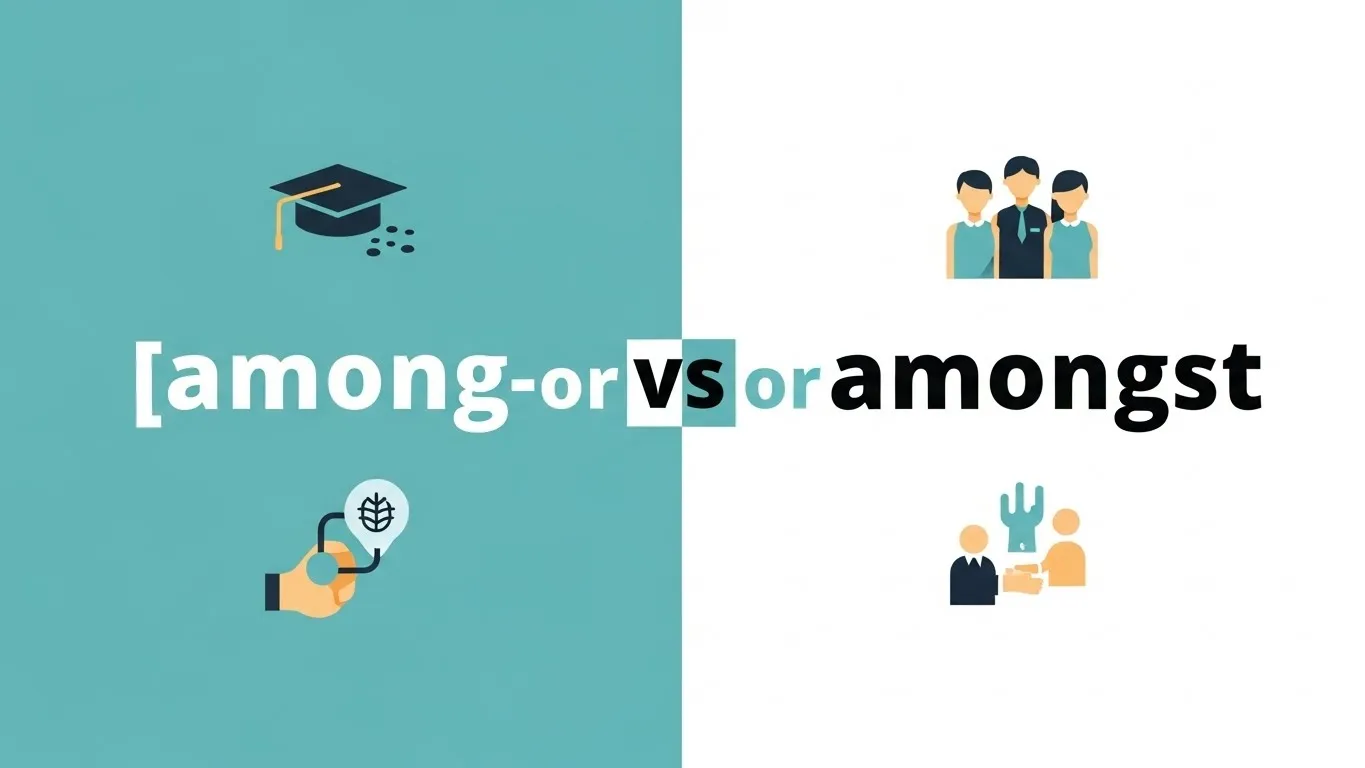
Both among and amongst are correct English words, but they are used in different styles of English. This clear answer solves the confusion immediately. Many people search for “among or amongst” because they see both forms in books, news articles, exams, and
online content. Spellcheck tools accept both, which makes writers unsure about which one sounds natural or professional. The confusion becomes stronger for students, bloggers, and non-native speakers who want to write correct English for global audiences.
This article explains the exact difference between among and amongst, their origin, regional usage, common mistakes, real-life examples, trends, and expert advice so you can confidently choose the right word every time.
Among or Amongst: Quick Answer
Among and amongst have the same meaning. Both mean in the middle of, surrounded by, or part of a group.
- Among is the most common and modern form.
- Amongst is a traditional form, mainly used in British English.
Examples:
- She was sitting among her friends. (Modern, common)
- He felt comfortable amongst his colleagues. (British style)
Simple rule:
Use among everywhere for safety. Use amongst if you prefer a British or formal tone.
The Origin of Among or Amongst

Historical Background
The word among comes from Old English ongemang, meaning in a crowd or mixed with. Over time, this word was shortened and simplified into among. The word amongst developed later as a variation, adding the suffix -st, which was common in older English forms.
Why Two Forms Exist
In earlier stages of English, many words ended with -st, such as whilst and amidst. Over centuries, English began to simplify. The shorter forms, like while and amid, became more common in everyday usage. However, the longer forms never disappeared completely.
Language Evolution
American English favored simpler and shorter forms, which is why among became dominant. British English kept both forms, though among is still more common today. Amongst now sounds slightly formal, literary, or traditional.
British English vs American English Spelling
The difference between among and amongst is not about correctness, but about regional preference and tone.
American English
- Among is standard and expected
- Amongst is rare and may sound old-fashioned
Examples:
- The secret was shared among the team.
- He stood among the crowd.
British English
- Among is very common
- Amongst is acceptable and sometimes preferred in formal writing
Examples:
- The prize was divided amongst the winners.
- She felt lost among strangers.
Comparison Table
| Feature | American English | British English |
| Preferred form | among | among / amongst |
| Formal tone | among | amongst |
| Everyday usage | among | among |
| Academic writing | among | among / amongst |
Which Spelling Should You Use?
For US Audiences
Always use among. It sounds natural, modern, and correct in all contexts.
For UK and Commonwealth Audiences
You can use among in all situations. Use amongst if you want a slightly formal or traditional tone.
For Global and Writing
Use among. It is universally understood, more frequently searched, and preferred in modern English.
Expert advice:
If unsure, choose among. It is never wrong.
Common Mistakes with Among or Amongst
Mistake 1: Thinking One Is Incorrect
Both words are correct. The mistake is believing that amongst is wrong.
Mistake 2: Mixing Styles
❌ The decision was shared among managers and discussed amongst staff. ✅ The decision was shared among managers and discussed among staff.
Mistake 3: Using Among/Amongst for Two Items
❌ A dispute among two people. ✅ A dispute between two people.
Mistake 4: Overusing “Amongst”
Using amongst too often can make writing sound unnatural or outdated.
Among or Amongst in Everyday Examples
Emails
- Please share this update among your team.
- The tasks were divided amongst the staff. (British tone)
News Writing
- Trust is low among voters.
- The funds were distributed amongst local groups.
Social Media
- Love and support among friends ❤️
- Happiness grows amongst kind people ✨
Formal Writing
- The responsibility lies among senior members.
- The agreement was reached amongst the parties involved.
Among or Amongst: Google Trends & Usage Data
Search data shows that “among” is far more popular than “amongst” worldwide.
Popularity by Region
- United States: among (overwhelmingly dominant)
- United Kingdom: among (dominant), amongst (secondary)
- Australia & Canada: among (dominant)
- India & Pakistan: among (dominant)
Usage by Context
- Among: blogs, articles, academic writing, everyday speech
- Amongst: literature, formal British writing, historical texts
This shows that among is the safer and more practical choice.
Comparison Table: Among vs Amongst
| Word | Meaning | Tone | Common Region |
| among | in the middle of | neutral, modern | global |
| amongst | in the middle of | formal, traditional | UK |
FAQs About Among or Amongst
Are “among” and “amongst” interchangeable?
Yes. They have the same meaning. Choice depends on style and region.
Is “amongst” old-fashioned?
It sounds traditional, but it is still correct in British English.
Which one should students use in exams?
Use among, unless British English is required.
Is “amongst” wrong in American English?
It is not wrong, but it sounds unusual and outdated.
Which word is better for ?
Among is better because it is searched more often.
Can I mix among and amongst in one article?
No. Always stay consistent.
Do dictionaries accept both words?
Yes. All major dictionaries list both as correct.
Conclusion
Understanding the difference between among or amongst is simpler than it first appears. Both words share the same meaning and come from the same historical root.
The real difference lies in style, region, and tone, not grammar. Modern English strongly prefers among, especially in American English, global communication, and online writing. It sounds natural, clear, and professional in almost every context.
Amongst, on the other hand, carries a more traditional and slightly formal feel. It is mainly used in British English and is often seen in literature or formal documents. While it is not wrong, it is less common and may sound outdated to some readers.
For most writers, students, and content creators, among is the safest and smartest choice. It works everywhere, avoids confusion, and aligns with modern usage trends. By choosing the right word based on your audience, you improve clarity, confidence, and professionalism in your writing.
Related posts!
The Origin of Complement or Compliment