Many people search for “lieing or lying” because both spellings look possible, but only one is correct. This confusion appears in emails, exams, social media posts, and even professional writing. English spelling rules can be tricky, especially when verbs change form.
The verb lie drops a letter and adds another, which makes learners unsure about the correct spelling. People want a fast answer, but they also want to understand why one form is right
and the other is wrong. This article solves that problem clearly and simply. You will get a quick answer, history, spelling rules, British vs American usage, common mistakes, real examples, trends, FAQs, and expert adviceall in one place.
Lieing or Lying: Quick Answer
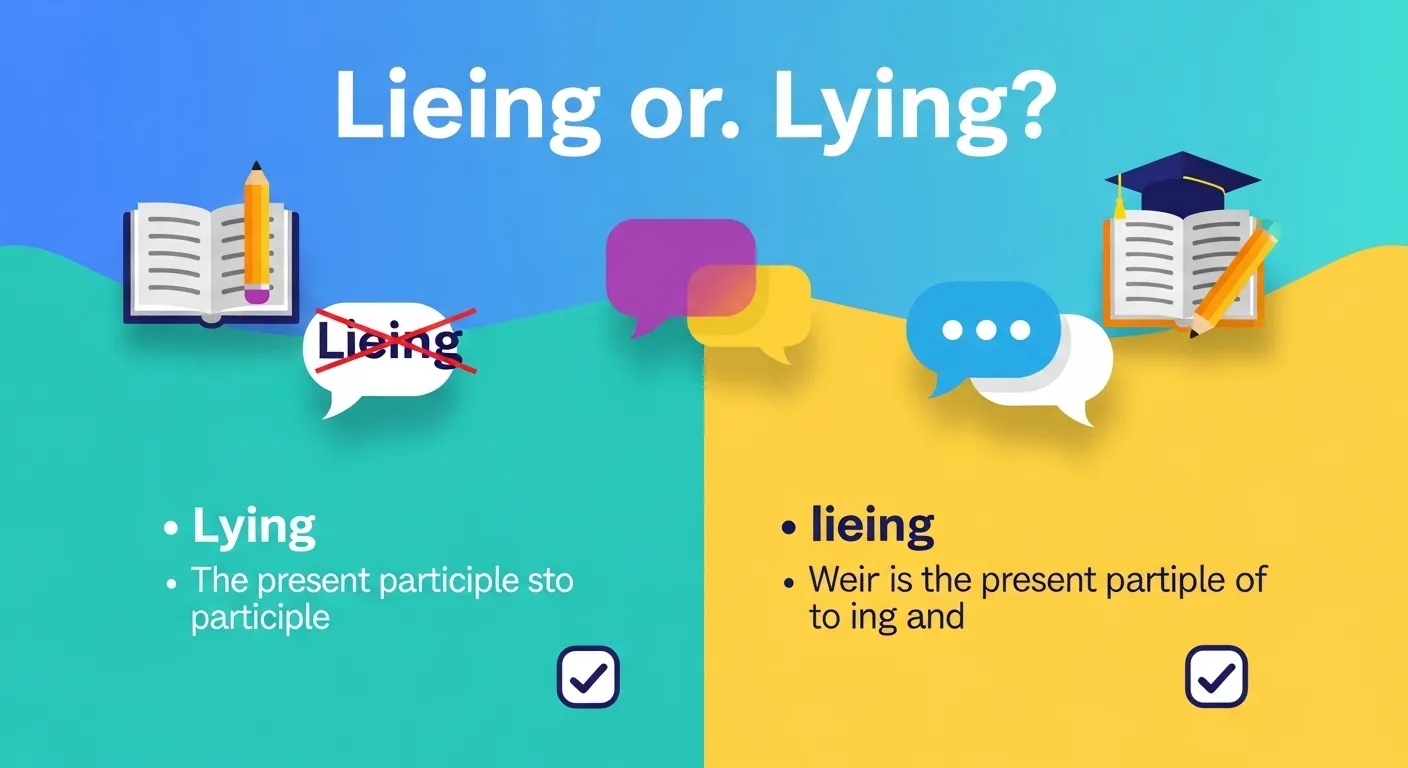
Lying is the correct spelling.
Lieing is incorrect and not accepted in standard English.
The verb lie drops the final -e and adds -ying to form lying.
Examples:
- He is lying on the bed. ✅
- She was lying about the story. ✅
- He is lieing on the bed. ❌
The Origin of Lieing or Lying
To understand why lying is correct, we need to look at the history of the verb lie.
Origin of “Lie”
The verb lie comes from Old English licgan, meaning to rest in a flat position. Over time, English simplified the spelling to lie. Another verb lie, meaning to tell an untruth, comes from Old English lēogan. Although the meanings are different, the spelling change rules are the same.
Why “Lieing” Does Not Exist
In English, when a verb ends in a silent -e, that -e is usually dropped before adding -ing. This rule applies to:
- make → making
- write → writing
- come → coming
The same rule applies to lie:
- lie → lying
The spelling lieing breaks this rule, which is why it is incorrect.
British English vs American English Spelling
There is no difference between British English and American English when it comes to lying.
Both follow the same spelling rule and both reject lieing.
Examples
- British English: He was lying on the sofa.
- American English: She is lying to her boss.
Comparison Table
| Aspect | British English | American English |
| Correct spelling | lying | lying |
| Incorrect spelling | lieing | lieing |
| Rule followed | Drop -e + ing | Drop -e + ing |
Which Spelling Should You Use?
No matter who your audience is, the answer is the same.
- US audience: Use lying
- UK/Commonwealth audience: Use lying
- Global audience: Use lying
There is no situation where lieing is correct in modern English.
Simple rule:
If the verb ends in silent -e, drop it before adding -ing.
Common Mistakes with Lieing or Lying
Mistake 1: Keeping the “e”
❌ He is lieing on the grass. ✅ He is lying on the grass.
Mistake 2: Confusing with “lying” vs “laying”
❌ She is laying on the bed. ✅ She is lying on the bed.
Mistake 3: Wrong tense use
❌ Yesterday, he is lying there. ✅ Yesterday, he lay there.
Lieing or Lying in Everyday Examples
Emails
- Sorry for the delay. The file was lying in my drafts.
News
- The suspect was lying during questioning.
Social Media
- Just lying here and enjoying the rain ☔
Formal Writing
- The documents were lying on the table for review.
Lieing or Lying: Google Trends & Usage Data
Search data shows that “lieing or lying” is a very common query in:
- ESL-learning countries
- South Asia
- Middle East
- Africa
Most searches happen during:
- Exam seasons
- Content writing work
- Social media usage
The word lying appears far more frequently in books, news, and online articles. The spelling lieing appears mainly in search queries, not in published writing. This shows users are unsure but want a quick correction.
Comparison Table: Lieing vs Lying
| Form | Correct? | Reason | Example |
| lieing | ❌ No | Breaks spelling rule | He is lieing ❌ |
| lying | ✅ Yes | Drop -e + ing | He is lying ✅ |
FAQs
Is “lieing” ever correct?
No. Lieing is never correct in standard English.
Why does “lie” become “lying”?
Because English drops the silent -e before adding -ing.
Is “lying” used for both meanings of lie?
Yes. It works for resting and telling an untruth.
Is “lying” a verb or adjective?
It can be both, depending on context.
What is the past tense of lie?
- lie (rest) → lay → lain
- lie (untruth) → lied → lied
Do British and American English differ here?
No. Both use lying.
Why do people still write “lieing”?
Because the spelling looks logical, but it breaks English rules.
Conclusion
The confusion between lieing or lying is very common, but the rule behind it is simple. English spelling often drops a silent -e before adding -ing, and the verb lie follows this rule exactly. That is why lying is the only correct spelling and lieing is always wrong.
This rule does not change between British and American English, which makes things easier for learners and writers around the world. If you are writing an email, a social media
post, an exam answer, or a professional document, using lying will always be correct. Understanding this small spelling rule can greatly improve your confidence and accuracy in English.
If you ever feel unsure, remember this: make → making, write → writing, lie → lying. With this simple comparison, the correct form will always come to you naturally. Mastering small details like this helps you write clearer, more professional English every day.
Related posts!

I am Oliver H. Grant. I am a English language writer and editor my focuses on grammar, word usage, and common English mistakes.
I specializes in explaining the differences between British and American English in a clear and practical way.
my writing style is simple, learner-friendly, and designed to help readers understand English with ease.
My work is also SEO-focused, making it especially useful for online learners and readers.