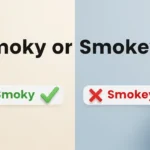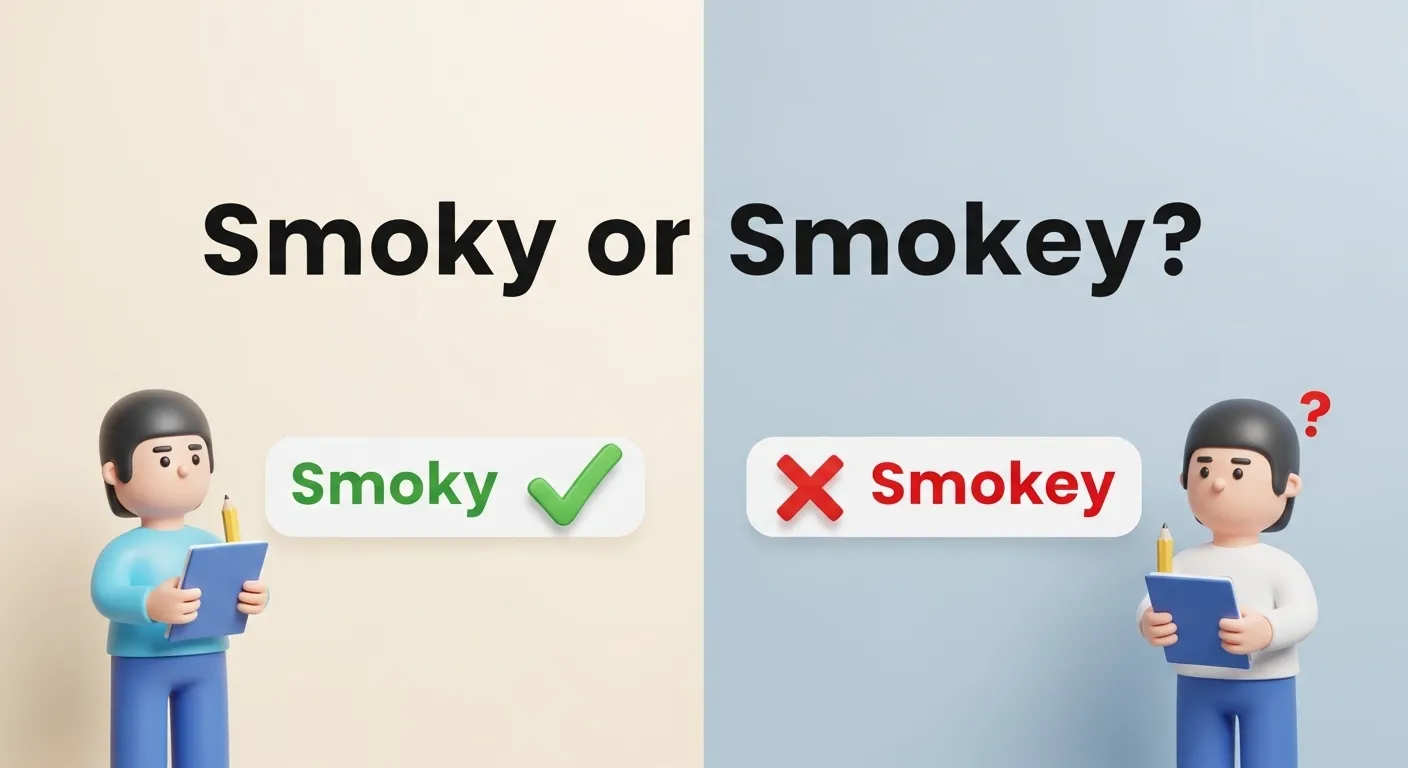
Smoky is the correct and most widely accepted spelling in modern English, though smokey is sometimes used informally, especially in names or brands.
Many people get confused because both versions appear in everyday language, media, and online content.
Understanding the difference can help you write accurately,If you are crafting an article, posting on social media, or editing formal documents.
In this guide, we will explain everything about smoky vs smokey, including origins, British and American differences, common mistakes, and real life examples.
Smoky or Smokey: Quick Answer
- Smoky → Standard spelling for something filled with smoke or having a scent or appearance of smoke.
Example: The kitchen was filled with a smoky aroma after cooking. - Smokey → Informal or variant spelling, often used in names or pop culture.
Example: The cartoon character Smokey Bear uses this spelling.
✅ Quick Tip: If you are unsure, always use smoky in formal writing.
The Origin of Smoky/Smokey
The word smoky comes from the noun “smoke” with the suffix “-y,” which means “full of or having the quality of.” This follows a long-standing English pattern for adjectives:
- smoke → smoky
- sun → sunny
- rain → rainy
The variant spelling smokey emerged later, mainly in informal contexts or as proper nouns. Historically, spelling rules were less standardized, so both forms occasionally appeared in older texts.
Over time, smoky became the preferred form in dictionaries and academic writing, while smokey persisted in branding, entertainment, and cultural references.
British English vs American English Spelling
When it comes to smoky vs smokey, the rules are similar across British and American English, but usage can differ slightly.
| Feature | Smoky | Smokey | Notes |
| Formal writing | ✅ Preferred | ❌ Rarely used | Dictionaries list smoky as standard. |
| Informal / Names | ❌ Rare | ✅ Often used | Example: Smokey Robinson, Smokey Bear |
| British English | ✅ Common | ❌ Unusual | Consistent with standard spelling rules. |
| American English | ✅ Standard | ✅ Acceptable in names | Mainly in pop culture and branding. |
Key takeaway: Use smoky for standard writing, especially in the UK. In the US, smokey is accepted for certain names but not formal content.
Which Spelling Should You Use?
Your choice depends on the audience and context:
- Formal Writing (Essays, Articles, Reports): Always use smoky.
- Social Media or Casual Posts: Smoky is safer; smokey is fine for style or emphasis.
- Brand Names or Pop Culture References: Use the original spelling, e.g., Smokey Bear.
- Global Audience: Stick to smoky to avoid confusion.
Rule of Thumb: If it is not a name, use smoky.
Common Mistakes with Smoky/Smokey
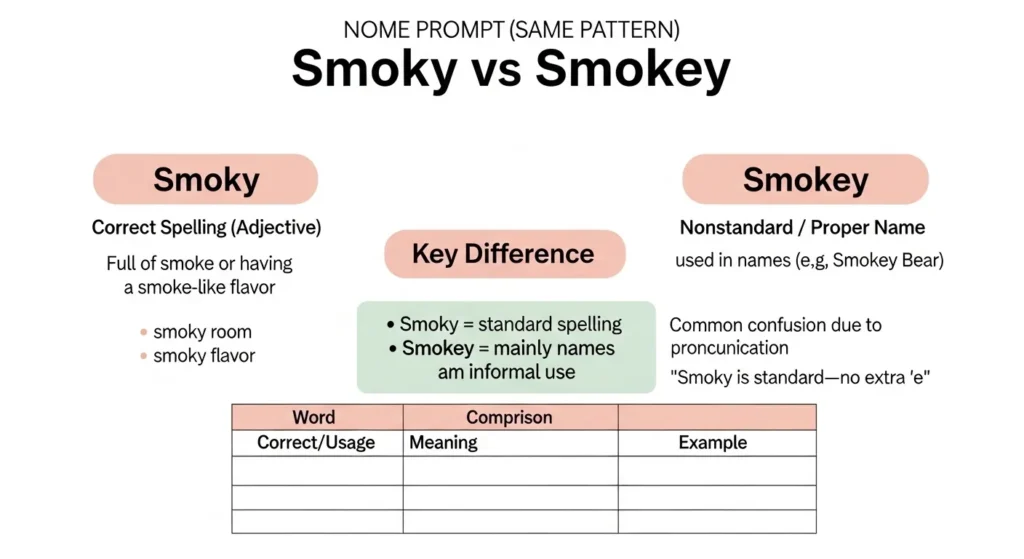
Even native speakers sometimes mix these spellings. Here are frequent errors:
- Incorrect: The room was smokey after the fire.
Correct: The room was smoky after the fire. - Incorrect: I love the smokey flavor of smoked cheese.
Correct: I love the smoky flavor of smoked cheese. - Incorrect: We visited Smokey Mountains in England.
Correct: If referring to the US mountains: Smoky Mountains. (Remember, proper nouns may keep Smokey based on the name’s history.) - Mixing up formal and informal writing: Always check the context to avoid looking unprofessional.
Smoky in Everyday Examples
Using smoky correctly in daily writing can make your content precise and professional. Here are examples from different contexts:
Emails
- Correct: Please be careful; the kitchen smells smoky after the barbecue.
- Incorrect: Please be careful; the kitchen smells smokey after the barbecue.
News Headlines
- Correct: Wildfire creates smoky skies across California.
- Incorrect: Wildfire creates smokey skies across California.
Social Media
- Casual posts sometimes use smokey for style or humor:
- “That smokey eye makeup is stunning!” (Here, the stylistic variant is often accepted.)
- “That smokey eye makeup is stunning!” (Here, the stylistic variant is often accepted.)
Formal Writing
- Use smoky consistently in essays, reports, and articles:
- “The smoky haze from the chimney affected air quality in the village.”
- “The smoky haze from the chimney affected air quality in the village.”
Smoky: Google Trends & Usage Data
A quick look at Google search trends shows that smoky is far more popular than smokey, especially in the UK, Canada, Australia, and other Commonwealth countries.
In the US, smokey appears occasionally, mainly due to proper nouns like Smokey Robinson or Smokey Bear.
| Country | Smoky Searches | Smokey Searches | Notes |
| USA | 70% | 30% | Smokey mainly in names. |
| UK | 95% | 5% | Smoky is dominant. |
| Australia | 90% | 10% | Standard spelling preferred. |
| Canada | 92% | 8% | Follows British rules. |
Insight: Stick to smoky for general writing, and reserve smokey for cultural references or trademarks.
Comparison Table: Smoky vs Smokey
| Feature | Smoky | Smokey |
| Standard spelling | ✅ Yes | ❌ No |
| Informal use | ✅ Yes | ✅ Yes |
| Names/Brands | ❌ Usually | ✅ Often |
| Dictionaries | ✅ Listed | ❌ Rare |
| Global readability | ✅ Easy | ❌ Confusing for non-US audiences |
| Example sentence | The sauce had a smoky flavor. | Smokey Bear is a popular mascot. |
FAQs about Smoky or Smokey
1. Is “smokey” ever correct?
Yes, in informal writing, names, or brands. For standard writing, always use smoky.
2. Why do some brands use “smokey”?
It’s often for stylistic appeal, easier pronunciation, or historical reasons. Example: Smokey Bear.
3. Can I use “smokey” in essays?
No, essays and professional documents should always use smoky.
4. Is “smoky” British or American?
It is standard in both British and American English, though Americans sometimes use smokey in names.
5. How do I remember which is correct?
Think of “smoke” + “-y” → smoky. Names and pop culture may break this rule.
6. Are there similar words with variants like this?
Yes, e.g., groggy/groge (rare), funky/funcky (rare). Most variants are informal or branded.
7. Does “smoky” apply to flavor, smell, or appearance?
Yes, it can describe all three: smoke in the air, flavor of food, or visual haze.
Conclusion
The difference between smoky and smokey may seem minor, but knowing when to use each is important for clear, professional writing.
Smoky is the correct, widely accepted form for adjectives, standard writing, and formal content. Smokey survives mainly in names, pop culture references, or informal writing.
Always consider your audience: global readers expect smoky, whereas Americans might recognize smokey in certain brands.
When in doubt, remember: if it’s not a name, choose smoky. This choice keeps your writing professional, clear, and universally understandable.
By mastering this small but common spelling issue, you avoid errors in essays, reports, online content, and social media.
Tracking trends shows that smoky dominates searches worldwide, reflecting general preference and readability.
Using smoky consistently demonstrates attention to detail, improving both credibility and readability.
Discover More Posts!
Colon or Semicolon:How to Use Them Punctually ✍️
Person, Place, or Thing: Understanding the “Host” in Grammar 📝
Liason vs Liaison: What Is the Difference?

englifiy.com is my English grammar comparison website where I simplify confusing words, spelling differences, and usage rules through clear explanations and examples. My goal is to help learners, writers, and students understand English easily and use correct grammar with confidence.