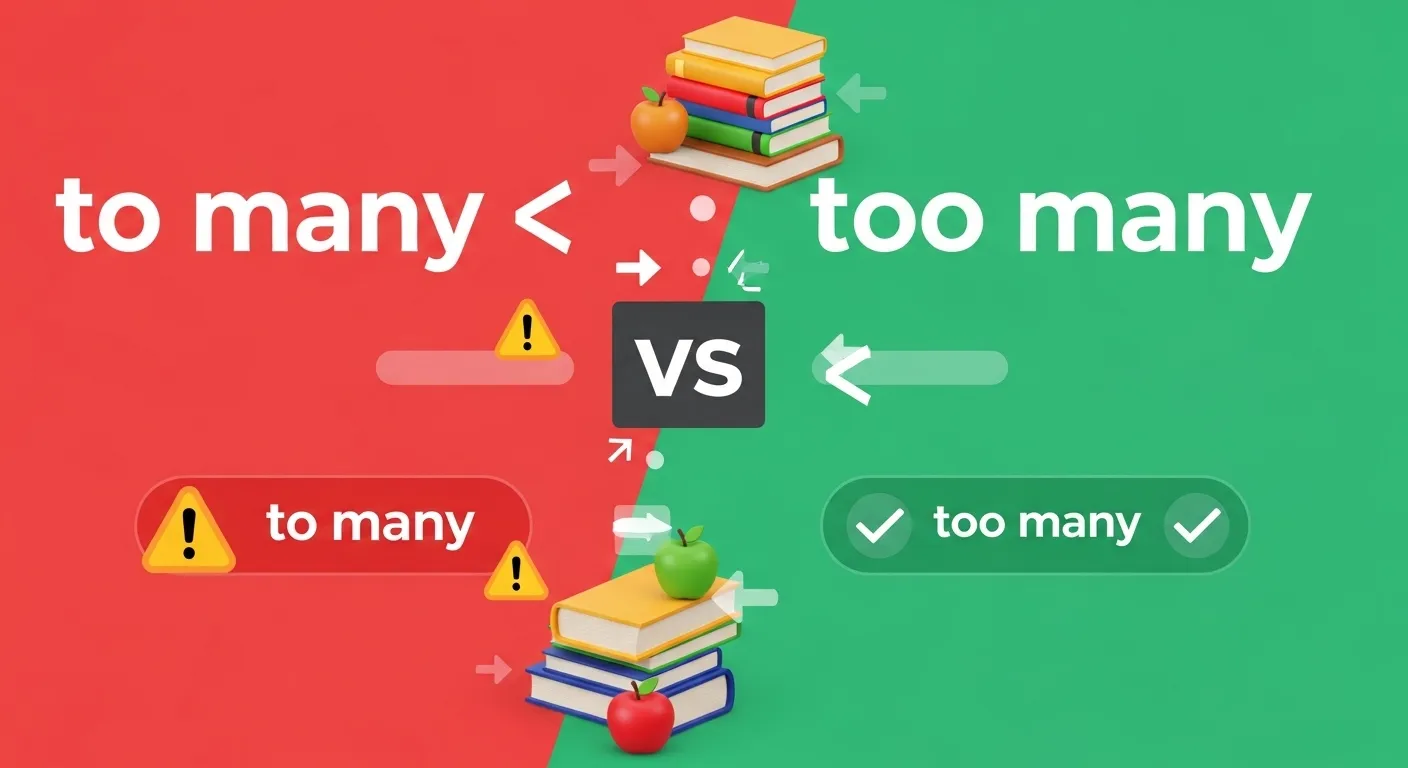
“Too many” is correct when you mean an excessive number, while “to many” is usually part of a phrase and has a different meaning.
Many people feel confused about these two forms because they look similar but work differently in sentences.
Writers, students, bloggers, and professionals often search this topic to avoid mistakes that can weaken clarity.
One small spelling change can change meaning completely. This guide removes that confusion in simple steps.
You will learn how each form works, why people mix them up, and how to choose the right one quickly. Clear examples, tables, and practical advice make this guide easy to follow and useful for everyday writing.
To Many or Too Many: Quick Answer
The difference is simple.
- Too many = more than needed or more than desired. It shows excess.
- To many = “to” (a preposition) + “many” (people or things). It often begins a phrase.
Examples:
✅ Too many people joined the meeting.
✅ There are too many emails in my inbox.
✅ He made too many mistakes.
✅ The speech was inspiring to many listeners.
✅ The news mattered to many students.
Quick tip:
- If you mean “excess,” choose too many.
- If you mean direction or relation, use to many.
The Origin of To Many or Too Many
Understanding history helps reduce confusion.
The word “too” comes from Old English tō, meaning “in addition” or “more than enough.” Over time, it developed meanings such as “also” and “excessively.”
When writers say “too many,” they express that something goes beyond a comfortable or acceptable amount.
The word “to” is much older. It is one of the most common English prepositions. It shows direction, purpose, or relation.
Examples include “go to school” or “give to others.” When combined with “many,” it simply describes a relationship between an action and a group.
The confusion exists because:
- Both words sound similar.
- Fast typing causes mistakes.
- Spell check tools may not detect context errors.
English developed through many influences. Short function words like “to” and “too” evolved differently but kept similar sounds. That is why learners and even native speakers mix them up.
British English vs American English Spelling
Good news: there is no spelling difference between British and American English for this pair. Both systems use to many and too many in the same way.
The confusion is about meaning, not regional spelling.
Examples:
British style:
- There are too many cars on the road.
- The issue matters to many citizens.
American style:
- We received too many requests today.
- The change was important to many voters.
Comparison Table
| Usage Type | Correct Form | Meaning | Example |
| Excess quantity | Too many | More than needed | Too many files slow the computer |
| Direction/relationship | To many | Refers toward many people | The message was clear to many readers |
| Negative tone | Too many | Often shows problem | Too many delays happened |
| Neutral phrase | To many | No excess meaning | The topic matters to many |
So, regardless of region, the rule stays the same.
Which Spelling Should You Use?
Choosing the right form depends on your audience and message.
For US readers:
Use too many when talking about excess. Readers expect clear direct wording. Keep sentences short.
Example:
- Too many ads reduce user trust.
For UK or Commonwealth readers:
The same rule applies. Avoid overthinking spelling differences.
Example:
- Too many meetings waste time.
For global audiences:
Use simple sentences. Avoid long structures. If your meaning is “excess,” always use too many.
Quick decision rule:
- Replace with “excessive number.”
- If it fits, choose too many.
- If it fits, choose too many.
- If you can say “important for many,” then use to many.
Common Mistakes with To Many or Too Many
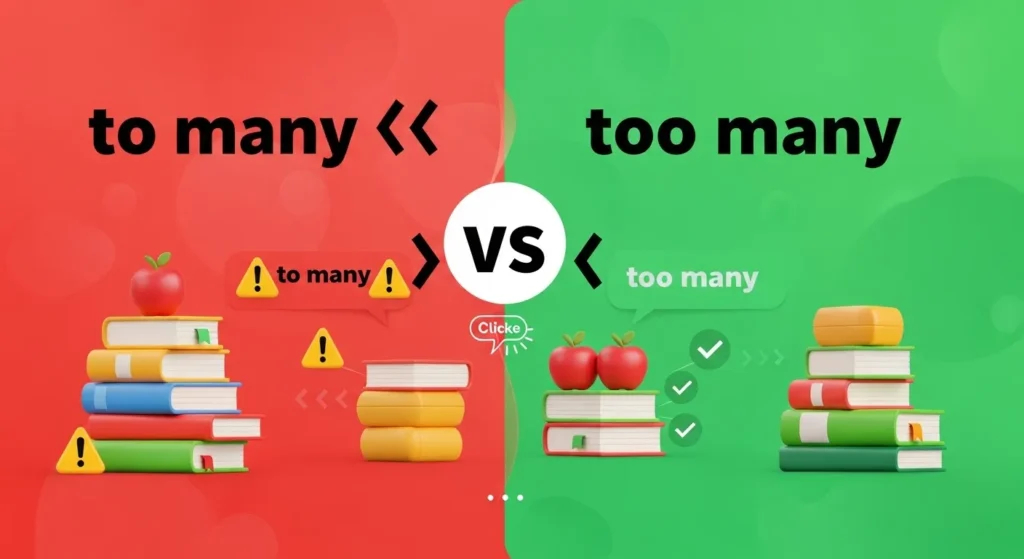
Many writers confuse these forms. Here are frequent errors.
Mistake 1: Using “to many” for excess
❌ There are to many errors.
✅ There are too many errors.
Why? Because you mean excess.
Mistake 2: Overusing “too many”
❌ This idea is too many people.
✅ This idea matters to many people.
Here, you show relation, not excess.
Mistake 3: Ignoring context
Sometimes grammar tools fail to detect meaning errors. Always check intent.
Mistake 4: Typing fast
Writers often type “to” because it is shorter. Slow down when editing.
Quick correction checklist:
- Does it mean “more than enough”? → too many
- Does it connect action with people? → to many
To Many or Too Many in Everyday Examples
Real life examples help you remember faster.
Emails
- We received too many complaints this week.
- The update was helpful to many users.
News Writing
- Too many delays affected the project.
- The announcement brought hope to many families.
Social Media
- Too many notifications distract me.
- This video speaks to many viewers.
Academic or Formal Writing
- Too many variables reduce accuracy.
- The study results were meaningful to many researchers.
Notice how the meaning changes based on context.
To Many or Too Many: Google Trends & Usage Data
Usage patterns show interesting trends.
- “Too many” appears more often in daily language because people talk about problems, limits, and overload.
- Countries with strong online business culture search this phrase often because clear writing matters.
- Students search it during essay writing periods.
- Bloggers and content creators search it while editing posts.
In English speaking regions like the United States, United Kingdom, Canada, and Australia, both forms appear frequently, but too many dominates because it expresses strong emotion and clear evaluation.
Context matters:
- Productivity discussions → too many tasks
- Communication topics → message important to many people
- Technology content → too many notifications
Comparison Table: Keyword Variations Side by Side
| Phrase | Meaning | Grammar Role | Example |
| Too many | Excess quantity | Adverb + determiner | Too many tabs open |
| To many | Preposition phrase | Shows relation | Useful to many readers |
| Too much | Excess amount (uncountable) | Quantity | Too much noise |
| Many | Large number | Determiner | Many users joined |
FAQs About To Many or Too Many
1. Is “to many” ever correct?
Yes. It is correct when “to” connects an action or idea with many people or things.
Example:
- The advice helped to many beginners.
2. Why do people confuse these words?
They sound alike. Fast typing and autocorrect mistakes increase confusion.
3. Can both appear in one sentence?
Yes.
Example:
- Too many messages were sent to many customers.
4. Is “too many” informal?
No. It works in formal and casual writing.
5. How can I remember the rule easily?
“Too” has an extra “o.” Think of it as extra quantity.
6. Is the meaning always negative?
Often yes, but not always.
Example:
- Too many choices can be exciting.
7. Does pronunciation change?
Usually not. That is why confusion happens.
Conclusion
Choosing between “to many” and “too many” becomes easy when you focus on meaning instead of spelling alone. “Too many” shows excess. It tells readers that something goes beyond a comfortable limit.
This form appears often in daily speech because people discuss overload, mistakes, or large quantities.
“To many,” on the other hand, simply connects an action or idea to a group. It does not suggest excess. Both forms are correct, but they serve different purposes.
Short sentences help avoid mistakes. Always check context before deciding. If you can replace the phrase with “more than needed,” use “too many.” If the phrase shows relation or direction, use “to many.”
Remember that regional English styles follow the same rule, so you do not need to change spelling based on country.
With practice, you will recognize the difference instantly. Clear grammar improves confidence, strengthens communication, and makes your writing easier for readers to understand.
Discover More Posts!
Each Other or Eachother: Which One Is Correct?
Family’s or Families: What’s the Difference 👨👩👧👦
Their vs There vs They’re: What Is the Difference?