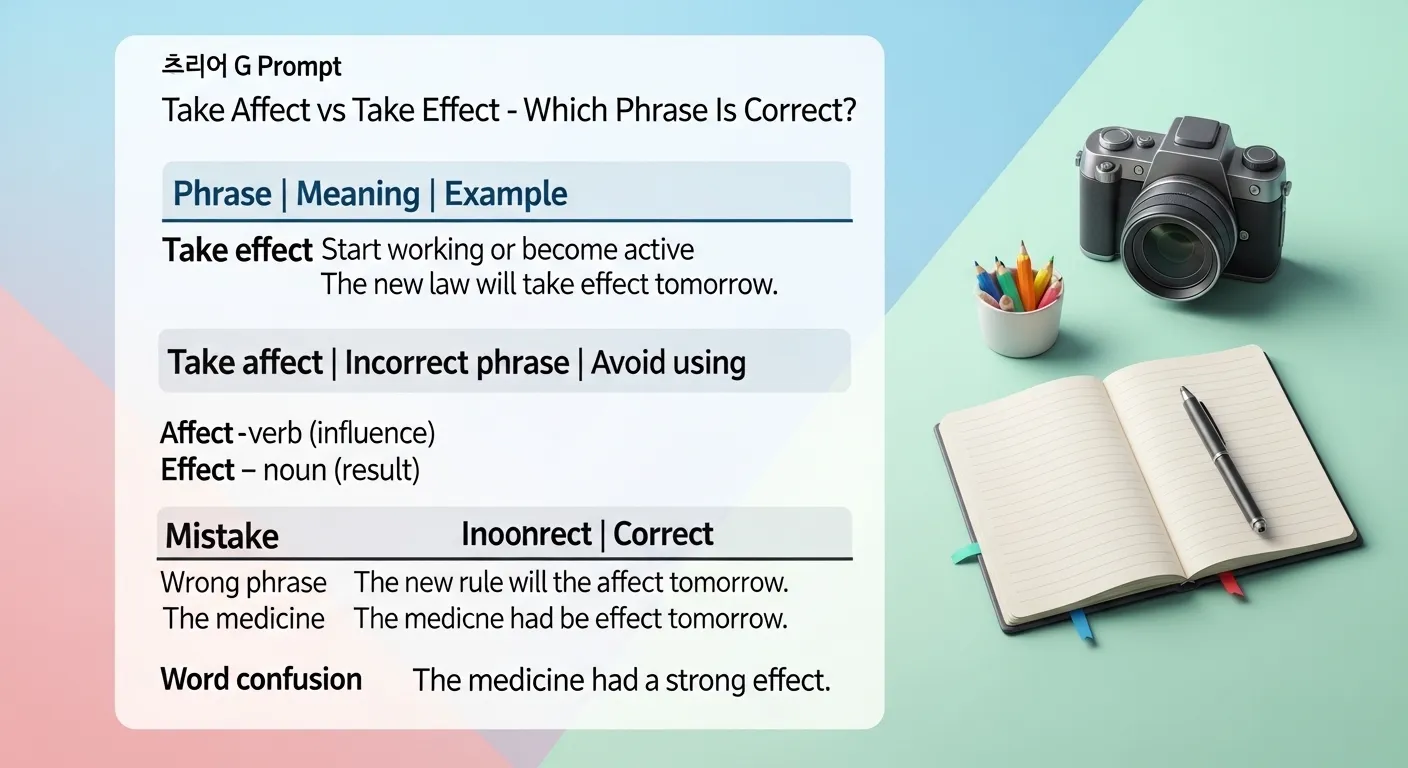
Take effect is correct. “Take affect” is incorrect in standard English.
Many people search for “take affect vs take effect” because the two words sound almost identical in speech. This makes them easy to confuse in writing.
The mistake often appears in emails, business documents, academic papers, and news articles.
The confusion comes from the words affect and effect, which have related meanings but different uses. In this phrase, only one word works correctly.
This guide explains the quick answer, origin of the words, spelling differences, grammar rules, common mistakes, real life examples, and usage trends so you can confidently use the correct phrase.
⚡ Take Effect or Take Affect: Quick Answer
The correct phrase is: take effect ✅
The incorrect phrase is: take affect ❌
What Does “Take Effect” Mean?
“Take effect” means to start working or become active.
Simple Examples
- The new law will take effect next month.
- The medicine will take effect in thirty minutes.
- The policy takes effect tomorrow.
This phrase is common in legal, medical, and official contexts.
📜 The Origin of Affect and Effect
Understanding the history of these words makes the difference clearer.
Origin of Affect
“Affect” comes from the Latin word afficere, meaning “to influence or impact.”
It is usually used as a verb.
Example:
- Stress can affect health.
Origin of Effect
“Effect” comes from the Latin word effectus, meaning “result or outcome.”
It is usually used as a noun.
Example:
- The effect of the medicine was immediate.
In the phrase take effect, “effect” means the result or impact beginning.
🇬🇧🇺🇸 British English vs American English Spelling
There is no spelling difference between British and American English.
| Phrase | British English | American English | Correct? |
| Take effect | Take effect | Take effect | Yes |
| Take affect | Take affect | Take affect | No |
The rule remains the same in all English speaking countries.
🌍 Which Phrase Should You Use?
Always use:
Take effect
This phrase is correct in:
- United States
- United Kingdom
- Canada
- Australia
- India
- Pakistan
“Take affect” is considered a grammar mistake.
❌ Common Mistakes with Take Affect or Take Effect
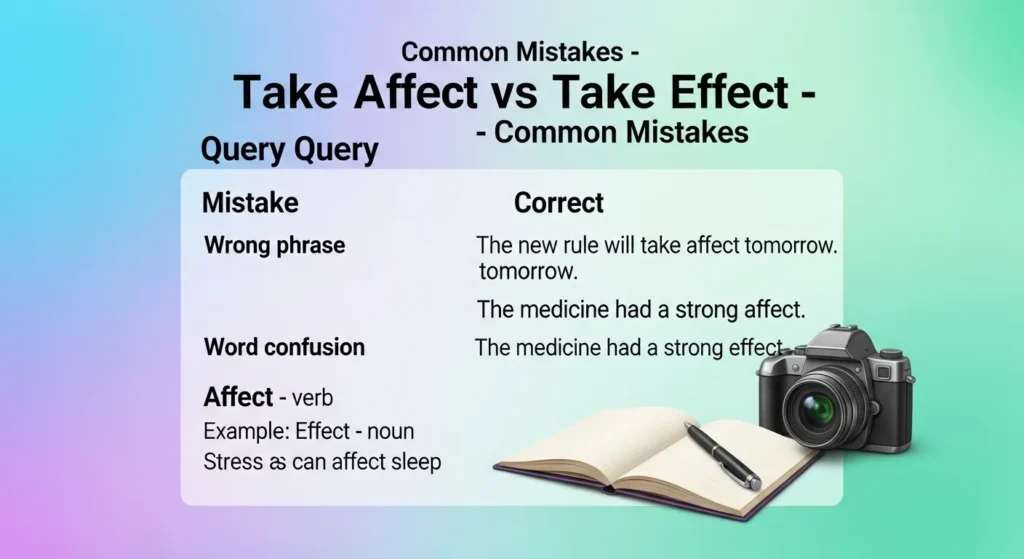
Many writers confuse these words because they sound similar.
1. Writing “Take Affect”
Incorrect:
- The new rule will take affect tomorrow.
Correct:
- The new rule will take effect tomorrow.
2. Confusing Affect and Effect
Incorrect:
- The medicine had a strong affect.
Correct:
- The medicine had a strong effect.
3. Using Affect as a Noun
In most cases, “affect” is used as a verb, not a noun.
Example:
- Stress can affect sleep.
📘 Understanding the Grammar Rule
A simple rule helps avoid confusion.
| Word | Type | Meaning | Example |
| Affect | Verb | Influence | Lack of sleep affects mood. |
| Effect | Noun | Result | The effect was positive. |
Since the phrase means “start producing a result,” it uses effect.
So the correct phrase is take effect.
✍️ Take Affect or Take Effect in Everyday Examples
📧 Email Example
“The updated schedule will take effect on Monday.”
📰 News Example
“The government announced that the new tax law will take effect next year.”
📱 Social Media Example
“This update will take effect after the next system restart.”
📄 Formal Writing Example
“The agreement will take effect once both parties sign the document.”
This phrase is widely used in professional communication.
📊 Take Affect or Take Effect: Google Trends & Usage Data
Search data shows that “take effect” is the correct and dominant phrase.
However, many people search “take affect” to confirm the correct spelling.
Common search countries include:
- United States
- India
- United Kingdom
- Pakistan
The phrase appears frequently in:
- Legal documents
- Government announcements
- Medical instructions
- Business contracts
Because of its importance in formal writing, accuracy is essential.
📋 Comparison Table: Affect vs Effect
| Word | Grammar Role | Meaning | Example |
| Affect | Verb | Influence something | Stress affects health. |
| Effect | Noun | Result or outcome | The effect was immediate. |
| Take effect | Phrase | Begin to work | The rule takes effect today. |
| Take affect | Incorrect phrase | Grammar error | Avoid using |
This comparison makes the difference clear.
🧠 Memory Tricks to Remember the Difference
Simple tricks can help you remember.
Trick 1: RAVEN Rule
RAVEN stands for:
- Remember
- Affect = Verb
- Effect = Noun
Example:
- Sleep affects energy.
- The effect is tiredness.
Trick 2: Effect = End Result
“Effect” starts with E for End result.
Example:
- The new law takes effect tomorrow.
📖 Advanced Usage Examples
Legal Context
- The contract will take effect after approval.
Medical Context
- The medication should take effect within an hour.
Business Context
- The new pricing policy will take effect next month.
Technology Context
- System changes will take effect after rebooting.
The phrase appears in many professional fields.
🧾 Professional Writing Advice
Correct usage is important in official communication.
Correct:
- The changes will take effect immediately.
Incorrect:
- The changes will take affect immediately.
Small grammar errors can reduce credibility in professional documents.
Always proofread important writing.
🌎 Why This Confusion Happens
This mistake occurs because:
- Affect and effect sound very similar.
- English pronunciation does not always match spelling.
- Both words relate to impact or change.
Many English learners struggle with this pair of words.
Understanding the verb vs noun rule helps solve the problem.
❓ FAQs About Take Affect or Take Effect
1. Is “take affect” ever correct?
No. It is always incorrect.
2. What does “take effect” mean?
It means to begin working or become active.
3. What is the difference between affect and effect?
Affect is usually a verb. Effect is usually a noun.
4. Is there a UK vs US spelling difference?
No. Both use “take effect.”
5. Where is the phrase commonly used?
It is common in legal, business, and medical contexts.
6. Is this mistake common?
Yes. Many writers confuse affect and effect.
7. Can “effect” be used as a verb?
Yes, but rarely. It means “to bring about a change.”
🏁 Conclusion:
The confusion between take affect and take effect is very common because the words sound almost identical in speech.
However, the correct phrase is always “take effect.” It means that something begins to work or becomes active.
The word “effect” represents a result or outcome, which fits perfectly with the meaning of the phrase.
“Affect,” on the other hand, is usually used as a verb meaning to influence something. Because of this difference, “take affect” does not make grammatical sense.
Understanding the basic rule that affect is usually a verb and effect is usually a noun helps prevent this mistake.
This phrase appears frequently in official writing, including legal documents, medical instructions, and business policies.
Using the correct form ensures clarity and professionalism. With practice and awareness of the difference, you can confidently use “take effect” and avoid one of the most common English grammar mistakes.
Discover More Articals!
Used To or Use To: Meaning and Everyday Examples📚
📝That or Which: The Complete Guide to Using Them Correctly in English Writing
Something to That Effect or Affect: Correct Usage Explained Simply