Wicker furniture has a way of making any outdoor space feel instantly more welcoming. It softens the hard edges of a patio, adds texture that stone and metal simply cannot deliver, and gives your backyard that relaxed, resort-like atmosphere that people build entire vacations around. Yet for every homeowner who invests in a woven lounge set and lives happily with it for years, there is another who watches their new pieces sag, fade, or fall apart within a single season. The difference rarely comes down to luck. It almost always comes down to a handful of avoidable mistakes made at the moment of purchase or during the first months of ownership. Before you spend another weekend browsing patio showrooms or scrolling through online catalogs, it is worth understanding exactly where things tend to go wrong, so your investment ends up being the centerpiece of your outdoor life rather than a cautionary tale you post about later.
Mistaking Every Weave for the Same Material
The single biggest pitfall shoppers fall into is assuming that all wicker is created equal. Wicker is a weaving technique, not a material. Traditional rattan wicker is a natural fiber best suited to covered porches or fully indoor rooms, while modern outdoor pieces are almost always woven from synthetic resins engineered to withstand sun and moisture. Buyers who confuse the two end up dragging delicate indoor-grade sets into direct weather and wondering why the strands crack, unravel, or grow mildew within weeks. Before you fall in love with a silhouette, verify the fiber type, the UV rating, and whether the manufacturer explicitly recommends the piece for exterior use. Reputable brands such as CHITA LIVING publish this information plainly because they know informed buyers become repeat customers.
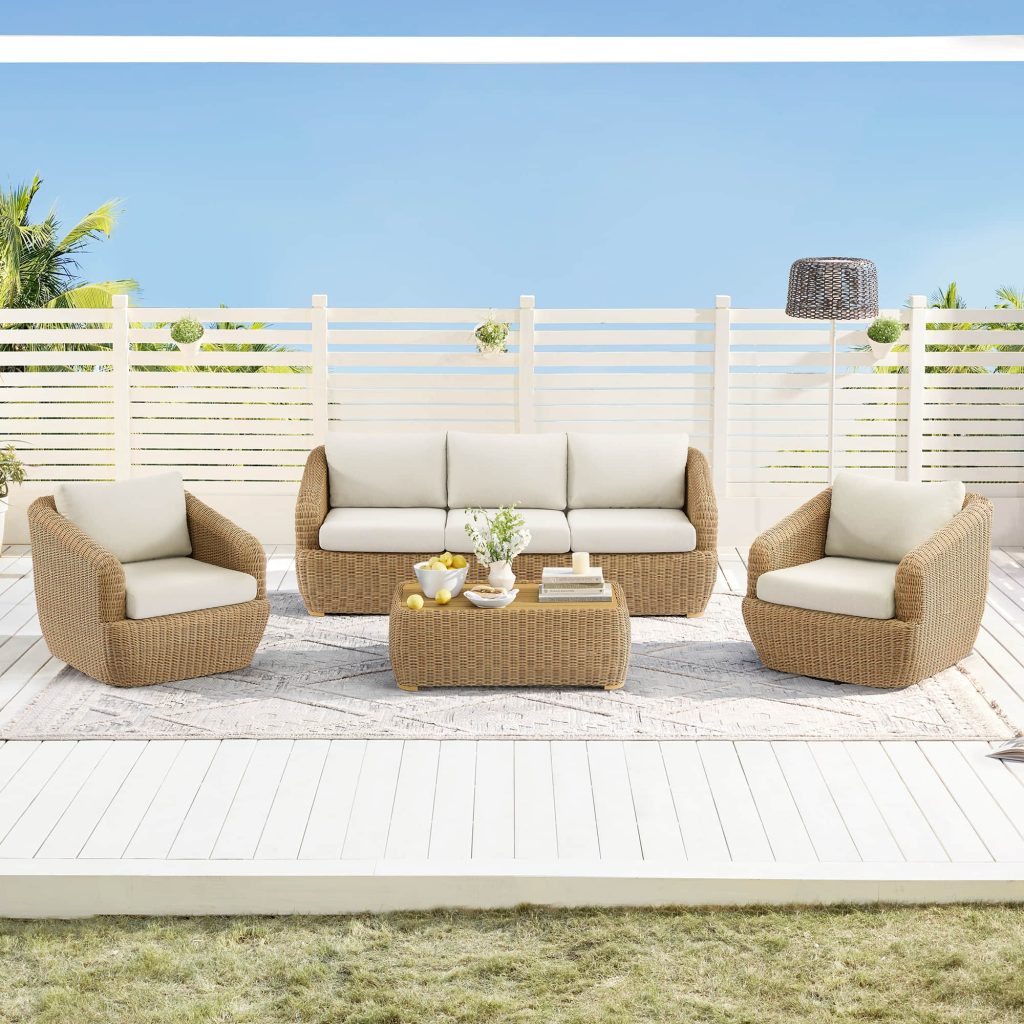
The next trap is ignoring the frame hiding beneath the weave. A gorgeous exterior means very little if the skeleton underneath is made of thin, untreated steel or lightweight plastic that flexes every time someone sits down. Aluminum frames are the gold standard for outdoor use because they resist rust even in humid or coastal climates, and powder-coated finishes add another layer of protection. When you shop for weather-ready wicker furniture, gently press on the arms and seat rails before you commit. If the piece creaks, wobbles, or feels hollow, walk away. A solid frame is what turns a pretty chair into a decade-long fixture of your backyard.
Underestimating How Much the Weather Really Matters
Even the best woven sets have limits, and homeowners routinely underestimate how brutal their local climate can be. Constant sun exposure fades color, extreme cold can make resin brittle, and standing humidity encourages mildew inside cushion cores. The mistake is assuming that outdoor-rated automatically means maintenance-free. In reality, position and protection are what determine longevity. Placing a lounge set directly in the path of afternoon sun without any overhead cover accelerates aging, no matter how premium the material. Similarly, leaving cushions outside during a rainstorm, then closing them into a storage box while still damp, is a fast track to mold. Think of your patio the way you would a piece of exterior architecture. Shade, drainage, and airflow all matter.
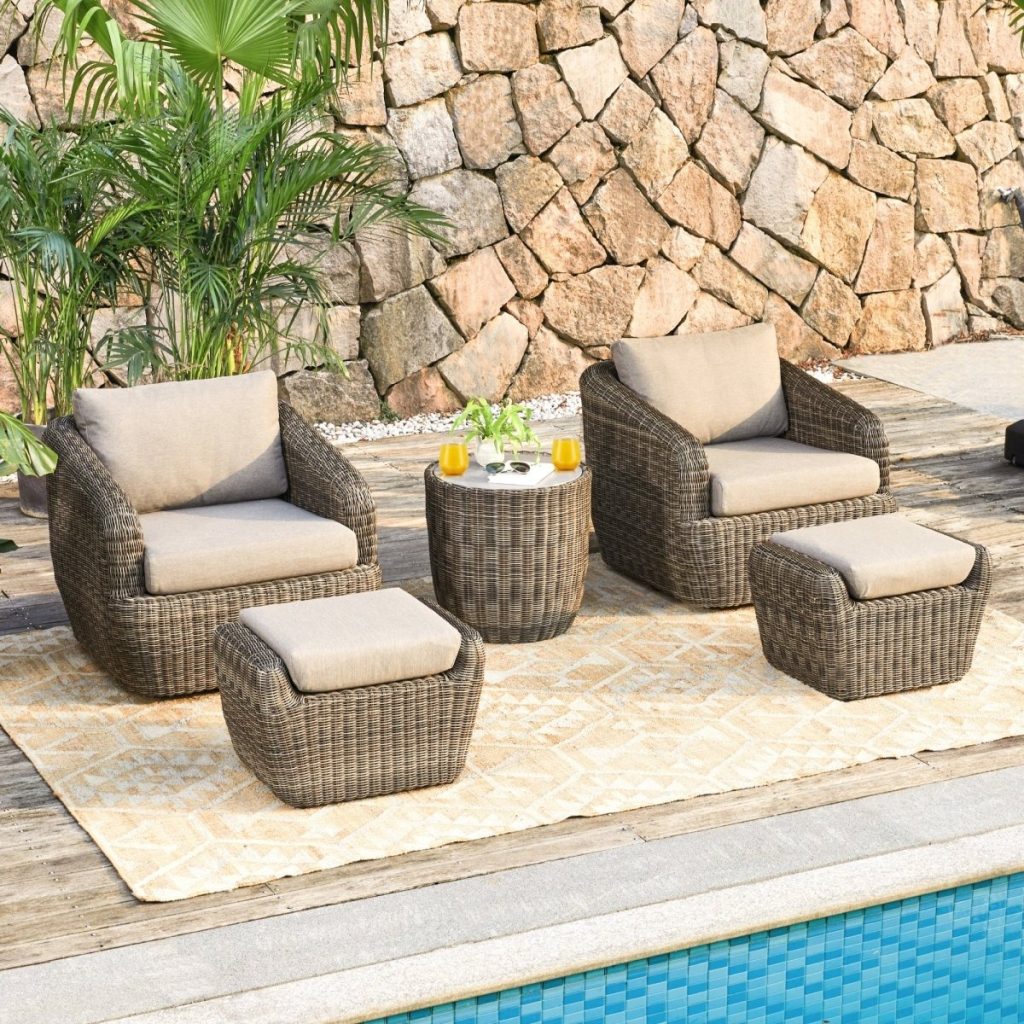
Another climate-related error is ignoring seasonal storage. Buyers in mild regions often skip covers or off-season storage entirely, only to discover that even gentle winters leave a residue of grit, tree sap, and organic debris that dulls the weave. A breathable cover, ideally one designed with vented panels, keeps water out while letting trapped humidity escape. If your winters are harsh, moving pieces into a garage or shed is not overcautious. It is simply extending the life of something you paid good money to enjoy. The homeowners who get twenty seasons out of a woven sectional are almost always the ones who treat storage as part of the purchase, not an afterthought.
Choosing Style Over Scale and Comfort
Beautiful photos on a manufacturer’s website can hypnotize even experienced shoppers into forgetting the basics. A common mistake is buying a piece that photographs beautifully but does not fit the space, the household, or the way people actually gather outdoors. Measure the entire footprint of your patio, including the swing radius of doors and the space needed for people to walk around seated guests without turning sideways. If you love hosting, prioritize modular sets that can be rearranged for conversation clusters. If your outdoor life is quieter, an intimate bistro grouping often serves better than an oversized sectional that dominates the whole yard. The wrong scale is one of the most common regrets among patio owners, and it is almost always avoidable with a tape measure and ten minutes of planning.
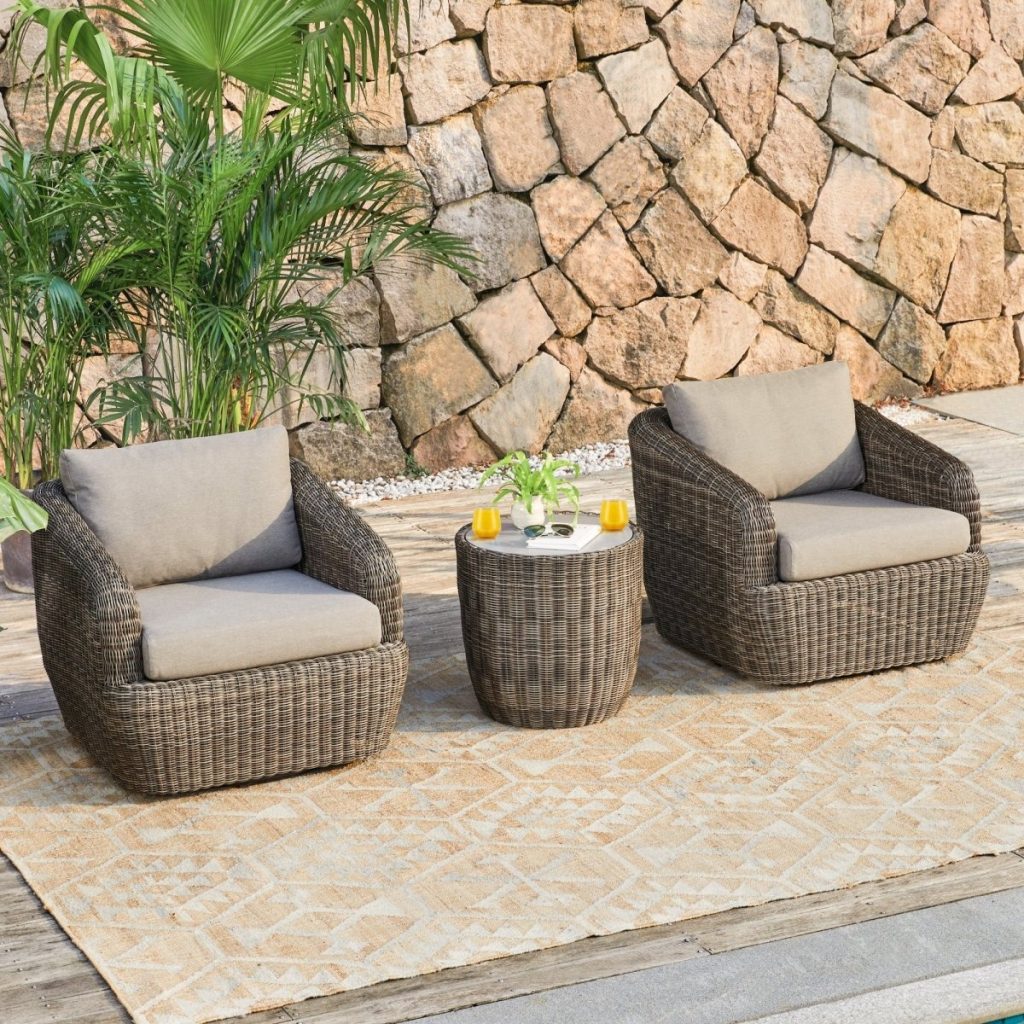
Comfort deserves equal weight. A stunning chair that forces guests to sit upright at an awkward angle will quietly sabotage every dinner party. Sit in the piece if you can, and if you are shopping online, read carefully how the cushions are constructed. Quick-dry foam wrapped in solution-dyed fabric is the combination that keeps seating usable even after a summer downpour, while cheap polyester covers hold moisture and grow mildew within weeks. Pay attention to arm height, seat depth, and back angle. These small details determine whether your patio becomes the room everyone gravitates to or the pretty space nobody actually uses.
Cleaning Habits That Do More Harm Than Good
Maintenance mistakes cause almost as much damage as poor purchase decisions. Pressure washers, stiff wire brushes, and harsh solvents can strip protective coatings, warp fibers, and force water into places it should never go. The correct routine is refreshingly simple. Rinse gently with a garden hose, wipe with a soft sponge and mild soap when needed, and let everything air dry completely before covering. Twice a year, tighten any exposed hardware and inspect the weave for loose strands that can be trimmed or gently tucked back into place. Skip these gentle rituals, or overcorrect with aggressive chemicals, and you will accelerate exactly the wear you were trying to prevent.
Building a Patio That Actually Lasts
Wicker has earned its place as the defining look of relaxed outdoor living, but the pieces that survive year after year are the ones chosen with clear eyes rather than impulse. Verify the fiber, inspect the frame, plan for real weather, size the set to the space, prioritize genuine comfort, and treat gentle maintenance as part of ownership rather than an occasional chore. Get these fundamentals right and the woven sofa or bistro grouping you buy today will still be gathering friends, holding morning coffee, and softening the light on your patio long after the trends of this season have faded. The mistakes above are common, but they are also entirely avoidable, and dodging them is what separates a patio you love from one you quietly wish you had shopped for more carefully.