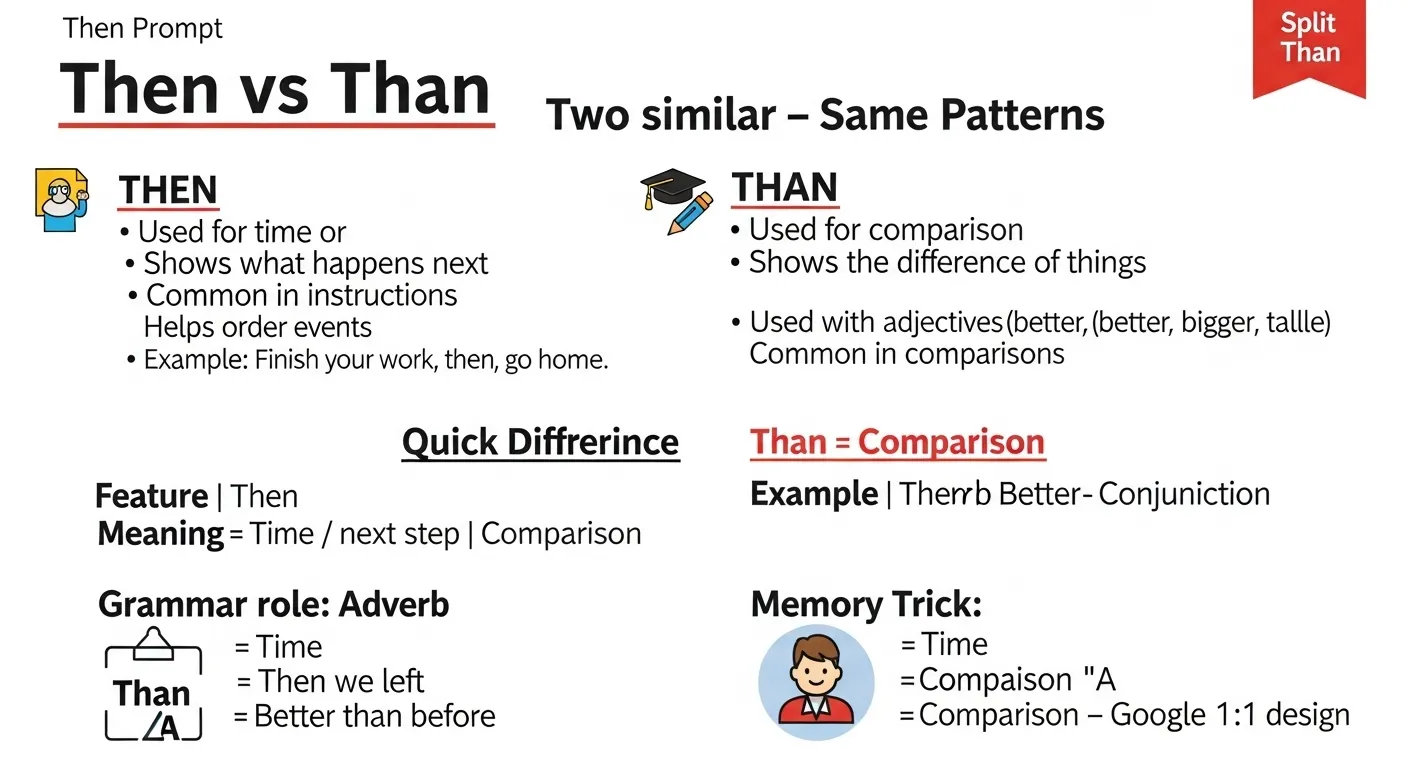
Then is used for time or sequence, while than is used for comparison.
Many people search for than vs then because these two words look similar and sound almost the same.
This makes them easy to confuse, especially in fast writing like exams, emails, or social media posts.
A small mistake can completely change the meaning of a sentence. The confusion happens because both words are short, common, and used in everyday English.
This guide explains the quick answer, word origins, grammar rules, common mistakes, real life examples and simple memory tricks so you can clearly understand the difference between then and than.
⚡ Then And Than: Quick Answer
The rule is simple:
- Then = Time or sequence
- Than = Comparison
Examples
- Finish your homework, then watch TV.
- She is taller than her brother.
Simple Explanation
Use then when talking about when something happens.
Use than when comparing two things.
📜 The Origin of Then or Than
These words come from Old English but developed different meanings over time.
Origin of Then
“Then” comes from Old English þanne, meaning at that time or next.
Example:
- We ate dinner, then we went home.
Origin of Than
“Than” also comes from Old English þonne, but it became a word used for comparison.
Example:
- This book is better than that one.
Even though both words share similar roots, their meanings became different in modern English.
🇬🇧🇺🇸 British English vs American English Spelling
There is no spelling difference between British and American English.
| Word | British English | American English | Meaning |
| Then | Then | Then | Time |
| Than | Than | Than | Comparison |
Both countries follow the same grammar rules.
🌍 Which Word Should You Use?
Your choice depends on the meaning of your sentence.
Use Then for Time or Order
Examples:
- We will eat, then leave.
- Back then, life was simple.
- Finish this task, then start the next one.
Here, “then” shows sequence or time.
Use Than for Comparison
Examples:
- She is faster than me.
- This phone is better than that one.
- He is older than his sister.
Here, “than” compares two things.
❌ Common Mistakes with Than or Then
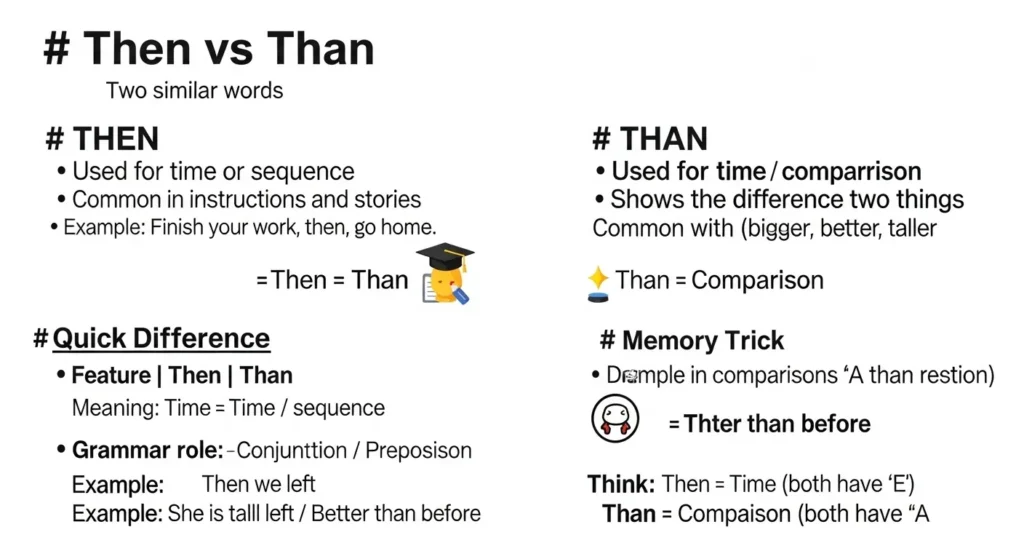
These words are often mixed up.
1. Using Then Instead of Than
Incorrect:
- She is taller then me.
Correct:
- She is taller than me.
2. Using Than Instead of Then
Incorrect:
- Finish your work, than go home.
Correct:
- Finish your work, then go home.
3. Mixing Them in Complex Sentences
Incorrect:
- If you study, than you will pass.
Correct:
- If you study, then you will pass.
📘 Understanding the Grammar Difference
Here is a clear comparison.
| Word | Type | Meaning | Example |
| Then | Adverb | Time or sequence | We ate, then slept. |
| Than | Conjunction | Comparison | Better than before |
This table makes the difference simple.
✍️ Then vs Than in Everyday Examples
📧 Email Example
“Complete the report, then send it to me.”
📰 News Example
“The new model is faster than the previous version.”
📱 Social Media Example
“I liked this movie more than the last one.”
📄 Formal Writing Example
“The results were better than expected.”
These words appear often in daily communication.
📊 Then vs Than: Google Trends & Usage Data
Search data shows that then vs than is one of the most searched grammar topics online.
Popular related queries include:
- difference between then and than
- then vs than examples
- when to use then or than
- then vs than grammar rule
- how to remember then vs than
Countries where this query is common:
- United States
- United Kingdom
- India
- Pakistan
Students frequently check this rule before writing exams or assignments.
📋 Comparison Table: Then vs Than
| Feature | Then | Than |
| Meaning | Time or sequence | Comparison |
| Grammar role | Adverb | Conjunction |
| Example | Eat, then sleep | Better than before |
| Usage type | Order of events | Comparing things |
This table clearly shows the difference.
🧠 Easy Memory Tricks
Simple tricks can help you remember.
Trick 1: Then = Time
Both then and time relate to when something happens.
Example:
- We will talk then.
Trick 2: Than = Compare
“Than” is used in comparisons.
Example:
- Bigger than
- Smaller than
Trick 3: E vs A
- Then (E) → Event
- Than (A) → Compare (think “A” for “against”)
📖 Advanced Usage Examples
Using Then
- If it rains, then we will stay home.
- Back then, people wrote letters.
Using Than
- This car is cheaper than that one.
- She works harder than before.
These examples show how context determines the correct word.
🧾 Then vs Than in Professional Writing
Correct usage is important in formal writing.
Correct:
- Complete the task, then submit it.
Correct:
- This solution is more effective than the previous one.
Incorrect:
- This solution is more effective then the previous one.
Mistakes can reduce clarity and professionalism.
🌎 Why This Confusion Happens
There are several reasons:
- The words sound similar.
- The spelling difference is small.
- Both are very common in English.
Because of this, many writers confuse them while typing quickly.
Understanding their meanings solves the problem.
❓ FAQs About Then vs Than
1. What is the difference between then and than?
Then relates to time. Than is used for comparison.
2. Can then be used for comparison?
No. Use “than” for comparisons.
3. Can than be used for time?
No. Use “then” for time or sequence.
4. What is the easiest rule?
Then = time
Than = comparison
5. Is this mistake common?
Yes. It is very common in writing.
6. Are the spellings different in UK and US English?
No. Both use the same spelling.
7. Why do people confuse them?
They look and sound similar but have different meanings.
🏁 Conclusion:
The difference between then and than becomes simple once you understand their roles. “Then” is used to talk about time, order, or sequence of events.
It helps describe when something happens or what comes next. “Than,” on the other hand, is used for comparison. It connects two things to show difference in size, quality, or amount.
This confusion is very common because both words are short, sound similar, and are used frequently in everyday English.
However, remembering a simple rule then for time and than for comparison can help you avoid mistakes.
These words appear in all types of writing, including emails, academic work, and professional documents.
Using the correct word ensures that your message is clear and accurate. With practice, you can quickly recognize the correct usage and write confidently without confusion.
Discover More Articals!
Affect vs Effect: What Is the Difference?
Their vs There vs They’re: What Is the Difference?
Family’s or Families: What’s the Difference 👨👩👧👦