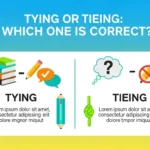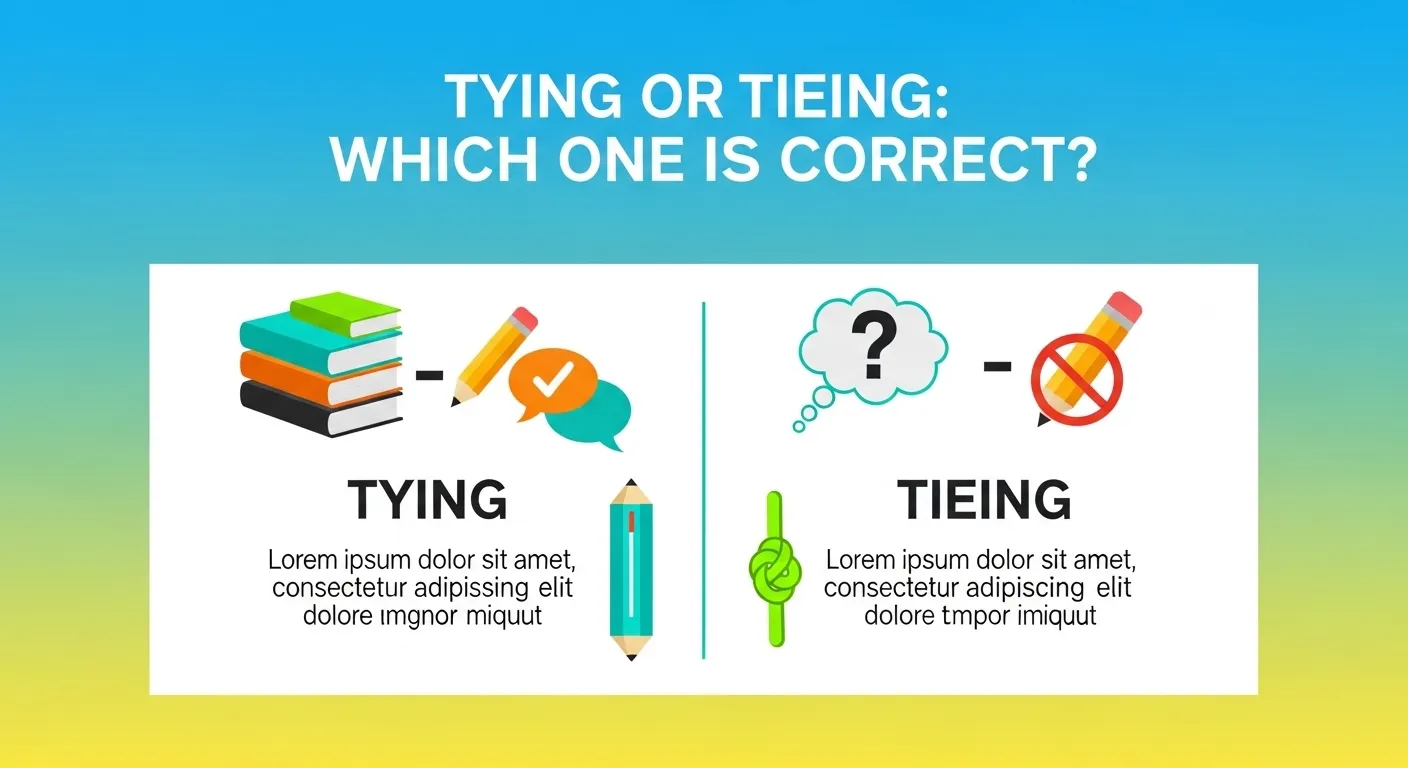
The correct spelling is “tying,” not “tieing.” Many people pause while writing and feel unsure about how to spell this common verb form. The confusion usually appears in emails, school work, instructions, or casual messages.
People search for “tieing or tying” because both spellings look possible at first glance. English spelling rules can be tricky, especially when a word changes form.
Writers want to avoid mistakes that make their work look careless. This article clears the confusion in a simple way.
You will learn the correct spelling, why the mistake happens, and how to use the word properly in daily writing.
Tieing or Tying: Quick Answer
Short answer:
✅ Tying is correct
❌ Tieing is incorrect
Explanation:
When the verb “tie” changes into its continuous or gerund form, the final “e” is dropped, and “-ing” is added. This creates the word “tying.”
Examples:
- Correct: “She is tying her shoes.”
- Incorrect: “She is tieing her shoes.”
- Correct: “He spent time tying the rope.”
There is no standard situation in modern English where “tieing” is correct.
The Origin of Tieing or Tying
The verb “tie” comes from Old English tīegan, meaning “to bind or fasten.” Over time, English developed clear spelling rules for verbs ending in -e.
One important rule is:
When a verb ends in a silent “e”, drop the “e” before adding -ing.
Examples:
- make → making
- write → writing
- tie → tying
The spelling “tieing” appears when writers mistakenly keep the silent “e.” This happens because people pronounce the word slowly in their minds and assume all letters stay. Historically, English never accepted “tieing” as a standard form.
British English vs American English Spelling
Both British and American English follow the same rule for this word. There is no regional difference in spelling.
| Feature | British English | American English |
| Correct form | tying | tying |
| Incorrect form | tieing | tieing |
| Grammar rule | Drop “e” + add “ing” | Drop “e” + add “ing” |
| Common usage | Daily writing | Daily writing |
Key point:
No matter where your audience is, “tying” is always correct.
Which Spelling Should You Use?
Your choice is simple because there is only one correct spelling.
- For US readers: Use tying
- For UK readers: Use tying
- For global readers: Use tying
You should never use “tieing” in:
- Professional writing
- School assignments
- Articles
- Instructions
- Emails
If you want your writing to look correct and confident, always choose “tying.”
Common Mistakes with Tieing or Tying
Many writers make mistakes with this word because English has exceptions and patterns that feel confusing.
Common Errors:
- ❌ “I am tieing my tie.”
- ❌ “They are tieing the knot.”
- ❌ “He was tieing the rope tightly.”
Correct Forms:
- ✅ “I am tying my tie.”
- ✅ “They are tying the knot.”
- ✅ “He was tying the rope tightly.”
Why this mistake happens:
- Writers forget to drop the silent “e”
- The base word “tie” looks complete on its own
- People rely on sound instead of spelling rules
Tieing or Tying in Everyday Examples
Emails
- Correct: “I will be late because I am tying up some loose ends.”
- Correct: “She is tying the package securely.”
Social Media
- “Just finished tying my shoelaces after tripping 😅”
- “Love the way you’re tying that scarf!”
News Writing
- “The sailor was tying the rope to the dock.”
Formal Writing
- “The process involves tying the material carefully to prevent damage.”
Across all writing styles, tying fits naturally and correctly.
Tieing or Tying: Google Trends & Usage Data
Search behavior shows that “tying” is used far more often than “tieing.” Most searches involving “tieing” happen because people want to confirm if it is correct.
Usage Patterns:
- “Tying shoes” : common worldwide
- “Tying a tie” : popular in formal contexts
- “Tying the knot” : common idiom
Observation:
People do not search for “tieing” to use it. They search to check if it is wrong. This shows that “tying” is the accepted and trusted spelling.
Comparison Table: Tieing vs Tying
| Form | Correct | Usage | Notes |
| tying | ✅ Yes | All writing styles | Correct spelling |
| tieing | ❌ No | None | Spelling mistake |
FAQs About Tieing or Tying
1. Is tieing ever correct?
No. Tieing is always incorrect in standard English.
2. Why is the “e” removed in tying?
Because English drops the silent “e” before adding -ing.
3. Does British English allow tieing?
No. Both British and American English use tying.
4. Is tying a verb or noun?
It can be both.
- Verb: “She is tying the rope.”
- Noun: “The tying of knots takes skill.”
5. What about words like “dyeing”?
“Dyeing” keeps the e to avoid confusion with “dying.” “Tie” does not need this exception.
6. Is tying used in idioms?
Yes.
- “Tying the knot”
- “Tying up loose ends”
7. How can I remember the correct spelling?
Think of make → making.
Tie follows the same rule → tying.
Conclusion
The spelling “tying” is the only correct form in modern English. The confusion with “tieing” comes from forgetting a simple spelling rule: drop the silent “e” before adding -ing. This rule applies to many common verbs and helps keep English writing consistent.
Both British and American English agree on this spelling, which makes the choice easy for writers everywhere. Using “tying” improves clarity and avoids mistakes that can distract readers.
If you remember just one thing, remember this: tie + ing = tying. There are no exceptions for this word.
By using the correct form in emails, messages, articles, and formal writing, you show care and confidence in your language. Clear spelling always strengthens communication.
Related More Posts!
Master’s Degree or Masters Degree: Which One Is Correct?
In To or Into: Which One Is Correct? With In 30 Seconds
Worshipping or Worshiping: Spelling Difference.In(2026)
Girlie or Girly: Which Spelling Is Correct?