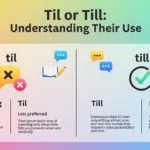
Both “til” and “till” exist, but “till” is the correct and traditional spelling in standard English. Many writers stop while typing and ask: til or till which one should I use?
The confusion happens because both forms appear online, in text messages, and in informal writing.
Some people believe “til” is a shorter modern version, while others think “till” looks old-fashioned.
This mix creates doubt, especially for students, bloggers, and professionals who want clear writing.
The truth is simple, but many do not know the history behind these spellings. In this guide, you will learn the meaning, common mistakes, and practical examples so you can use the right form with confidence.
Til or Till – Quick Answer
The short answer is simple:
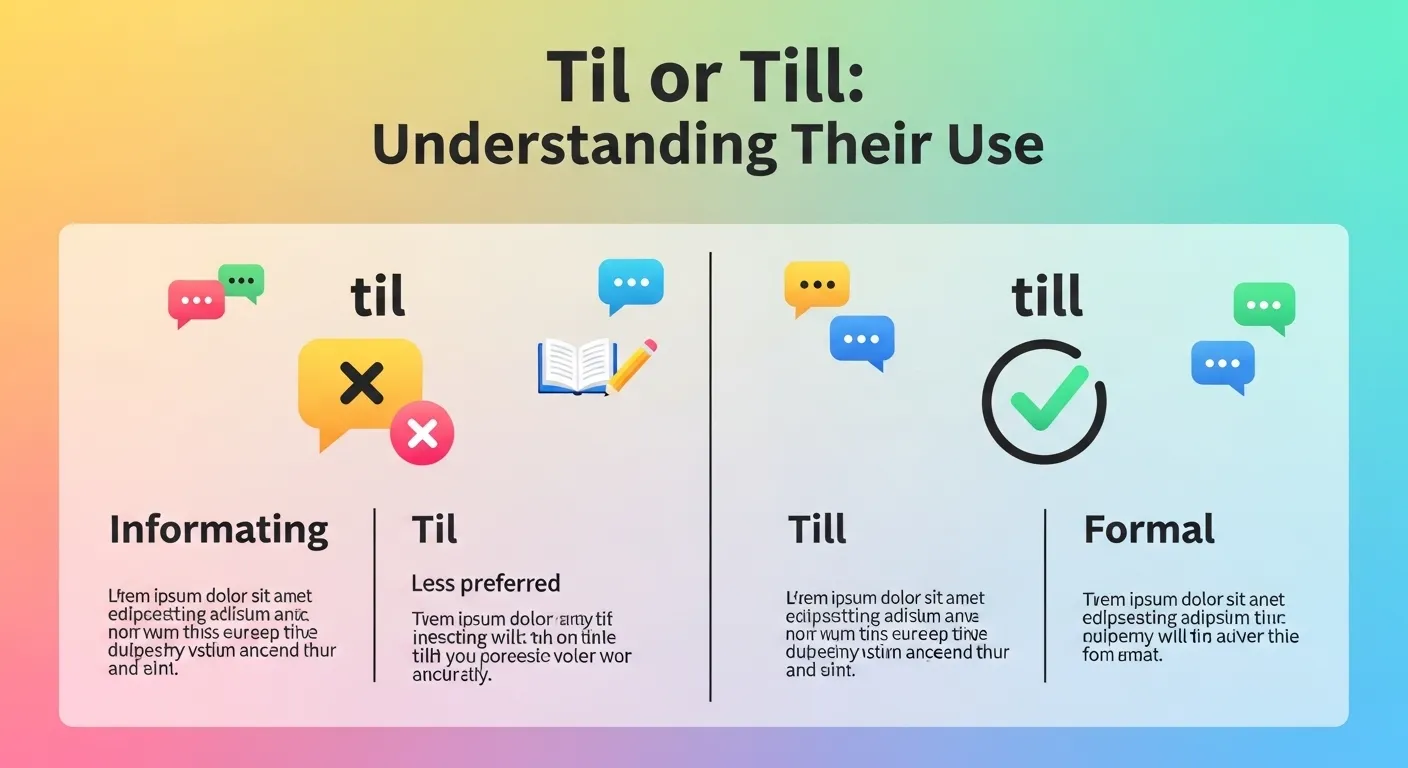
- Till ✅ is a correct word in English.
- Til ⚠️ is usually an informal or shortened form and is less accepted in formal writing.
- The most widely accepted abbreviation is ’til (with an apostrophe), which shows missing letters from “until.”
Examples:
- I will wait till tomorrow.
- Stay here till I come back.
- We talked ’til midnight. (informal but acceptable)
Many people think “till” is just a short version of “until,” but that is not true. “Till” existed first in English history. Understanding this removes most confusion.
The Origin of Til or Till
The story behind these words is interesting and helps explain why spelling differences exist.
The word till comes from Old English. It appeared long before the word “until.” Early writers used “till” to show time limits or endings, like “wait till morning.” Over time, English added the word “until,” which combines “un” and “till.” Because of this, many people assume “till” must be shortened from “until,” but history shows the opposite.
The form ’til came later as a shortened version of “until.” The apostrophe marks removed letters. Writers started using it in casual communication, poetry, and creative writing.
The spelling til without an apostrophe became popular in informal online spaces. However, many language experts still consider it less standard compared to “till” or “’til.”
Timeline overview:
- Old English period: “till” used widely.
- Middle English: “until” appears.
- Modern writing: “’til” emerges as abbreviation.
- Digital age: “til” spreads in casual communication.
Knowing this history helps writers choose the most appropriate form.
British English vs American English Spelling
One reason for confusion is the idea that different regions prefer different spellings. In this case, both British and American English accept till. The difference is not as strong as with other spelling variations.
Both regions use:
- “until” in formal writing
- “till” in both formal and informal contexts
“’til” appears mostly in casual writing in both regions. “Til” without the apostrophe is more common in informal online writing.
Comparison Table
| Form | British English | American English | Formal Writing | Informal Writing |
| till | Common and accepted | Common and accepted | Yes | Yes |
| until | Very common | Very common | Yes | Yes |
| ’til | Less formal | Less formal | Sometimes | Yes |
| til | Rare in formal contexts | Rare in formal contexts | No | Mostly informal |
Because both major English varieties accept “till,” writers do not need to worry about regional rules in most situations.
Which Spelling Should You Use?
Choosing the right spelling depends on your audience and context.
For US readers
Use “until” or “till.” Both sound natural and clear. Avoid “til” in professional writing.
For UK and Commonwealth readers
“Ttill” and “until” both work well. Traditional style guides often prefer “until” in formal contexts, but “till” is still correct.
For global audiences
If you want maximum clarity, choose:
- “until” for formal writing
- “till” for neutral tone
- “’til” only for relaxed or creative tone
General advice:
- Business writing → until
- Academic writing → until
- Casual blogs or social media → till or ’til
- Text messages → till or til (informal)
Understanding your audience helps you decide quickly.
Common Mistakes with Til or Till
Many errors come from misunderstanding the history of these words. Here are frequent mistakes and corrections:
Mistake 1: Thinking “till” is incorrect
Some writers avoid “till” because they think it is slang. This is false. “Till” is fully correct English.
Mistake 2: Using “til” in formal writing
While common online, “til” without an apostrophe may look careless in professional documents.
Mistake 3: Mixing apostrophes incorrectly
Correct form: ’til
Incorrect form: til’ or other variations.
Mistake 4: Overusing abbreviations
In formal contexts, writing “until” keeps the tone clear.
Mistake 5: Confusing with other meanings
“Till” can also mean a cash register or farming soil. Context determines meaning.
Correct examples:
- Wait till noon.
- The store counted money in the till.
- Farmers till the soil.
Til or Till in Everyday Examples
Seeing real-life examples makes usage easier to understand.
Emails
- Please wait till Monday for confirmation.
- I will be away until next week.
News writing
- The event continues till the end of the month.
- Officials extended the deadline until Friday.
Social media
- Can’t wait ’til the weekend!
- Stay awake till midnight challenge.
Formal writing
- The agreement remains valid until further notice.
- Participants must stay until the program ends.
Casual conversation
- Stay here till I return.
- We talked till late at night.
These examples show that context shapes the best choice.
Til or Till – Google Trends & Usage Data
Language usage changes over time, and online search patterns show how people use different spellings.
In many English-speaking countries:
- “Until” remains the most searched and widely used in formal contexts.
- “Till” shows strong usage across both the United States and the United Kingdom.
- “Til” appears more often in social media posts and casual communication.
Popularity by region:
- United States: strong usage of “until” and “till.”
- United Kingdom: traditional acceptance of “till.”
- Australia and Canada: similar patterns to UK usage.
- Global online communities: increased appearance of “til” due to fast typing habits.
Context matters:
- Educational websites prefer “until.”
- Creative writing often includes “’til.”
- Messaging apps show more “til.”
Language evolves with technology, but traditional forms remain dominant in professional writing.
Comparison Table: Keyword Variations
| Word | Meaning | Formal Acceptance | Example |
| till | time limit or ending point | High | Wait till tomorrow |
| until | full form showing time limit | Very high | Stay until noon |
| ’til | shortened informal form | Medium | Talked ’til midnight |
| til | casual shortened form | Low in formal writing | See you til later |
FAQs About Til or Till
1. Is “til” a real word?
It appears in informal writing, but many guides prefer “till” or “’til.”
2. Is “till” older than “until”?
Yes. “Till” existed earlier in English history.
3. Can I use “till” in professional writing?
Yes. It is correct and widely accepted.
4. Which looks more formal: till or until?
“Until” usually sounds more formal and traditional.
5. Is ’til correct with an apostrophe?
Yes. The apostrophe shows letters removed from “until.”
6. Why do people think till is wrong?
Many assume it is shortened slang, but history shows it is original.
7. Should students use till in essays?
Yes, but many teachers prefer “until” for a more formal tone.
Conclusion
Understanding til or till becomes simple once you know the history and usage differences. The main takeaway is clear: “till” is a correct and traditional English word, not a mistake or shortcut. It existed long before “until,” and both forms remain widely accepted today.
The shortened version “’til” works in relaxed or creative contexts, while “til” without an apostrophe appears mostly in informal online communication.
When writing for professional or academic audiences, choosing “until” keeps the tone clear and polished. For everyday writing, emails, or casual conversation, “till” feels natural and correct.
The best choice depends on your audience, tone, and purpose. By understanding these simple rules, you can avoid common mistakes and write confidently.
Language continues to evolve, but knowing the background behind words helps writers make better decisions.
With practice, selecting the right form becomes automatic, improving clarity and readability in every type of communication.
Related More Posts!
Deep-Seated or Deep-Seeded: Meaning and Examples 🔍
Setup vs Set Up: Improve Your Writing Skills ✨