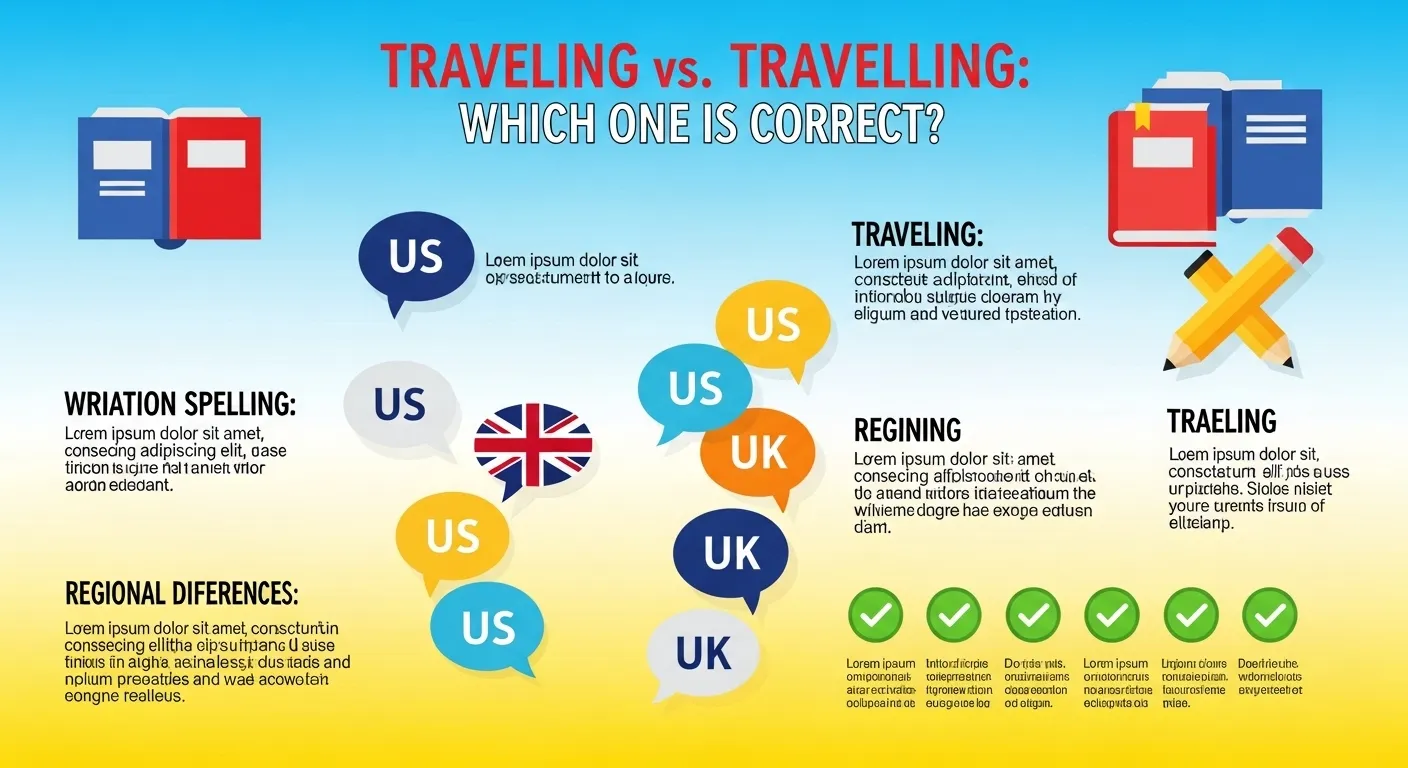
Both traveling and travelling are correct, depending on the region. Many people search for “traveling or travelling” because they are unsure which spelling to use in, articles, or social media posts.
Choosing the wrong form can make writing look unprofessional or inconsistent. This article explains the difference, and gives tips for British and American English.
You will also learn common mistakes, regional usage, Google Trends data, and professional advice.
By the end, you will confidently know when to use traveling or travelling in any context. This guide is simple, clear, and practical.
Traveling or Travelling: Quick Answer
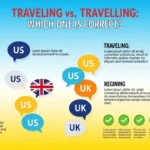
- Traveling: Standard in American English ✅
- Travelling: Standard in British English ✅
Examples:
- I am traveling to New York next week. (US) ✅
- She is travelling across Europe this summer. (UK) ✅
Simple Rule:
Use traveling for US audiences and travelling for UK and Commonwealth audiences.
The Origin of Traveling or Travelling
Word Origin
The word travel comes from Old French travailler, meaning to toil or journey. It entered English in the 14th century.
Over time, the present participle evolved into traveling and travelling as different regional forms.
Why Spelling Differences Exist
In the 19th century, American English simplified spelling by dropping extra letters. British English kept traditional forms. This created the double ‘l’ in travelling for the UK and single ‘l’ in traveling for the US.
British English vs American English Spelling
British English
- Spelling: travelling (double ‘l’)
- Used in formal writing, media, government, and academia
American English
- Spelling: traveling (single ‘l’)
- Common in newspapers, academic papers, and official documents
Comparison Table
| Feature | British English | American English |
| Spelling | Travelling | Traveling |
| Region | UK, Commonwealth | US |
| Double L | Yes | No |
| Dictionaries | Oxford, Cambridge | Merriam-Webster |
| Formal Writing | Travelling | Traveling |
Which Spelling Should You Use?
- US Audiences: Use traveling
- UK & Commonwealth Audiences: Use travelling
- Global English: Consider your audience
- Professional Writing: Stick to one spelling per document
Pro Tip:
Always maintain consistency in one text, webpage, or report.
Common Mistakes with Traveling or Travelling
Mistake 1: Mixing Spellings
❌ I am travelling today and traveling tomorrow. ✅ Use one spelling consistently.
Mistake 2: Assuming One Is Wrong
❌ Only traveling is correct. ✅ Both are correct, depending on region.
Mistake 3: Using British Spelling for US Audience
❌ Travelling tips for US readers. ✅ Traveling tips for US readers.
Mistake 4: Ignoring Audience Expectations
❌ Using traveling in UK formal reports. ✅ Use travelling for UK or Commonwealth contexts.
Mistake 5: Inconsistent Targeting
❌ Mixing both spellings on a single website page. ✅ Pick one spelling per page for regional .
Traveling or Travelling in Everyday Examples
Emails
- I am traveling for work next week. (US)
- She is travelling to London tomorrow. (UK)
News Articles
- American: He is traveling to Japan for business.
- British: The minister is travelling to Brussels.
Social Media
- Enjoying my travelling adventures! (UK)
- Loving traveling around the USA! (US)
Formal Writing
- The study examines international travelling trends. (UK)
- The report analyzes traveling patterns in North America. (US)
Traveling or Travelling: Google Trends & Usage Data
Popularity
- Traveling dominates in the US
- Travelling dominates in the UK, Australia, Canada, and India
Usage Context
- Travel blogs: region-specific preference
- Academic papers: follow local English standards
- Social media: users may mix, but brands favor consistency
Comparison Table
| Feature | Traveling | Travelling |
| Region | US | UK & Commonwealth |
| Popularity | High in US | High in UK |
| Formality | Standard | Standard |
| Social Media | Mixed | Mixed |
FAQs
Is travelling correct?
Yes, in British English, travelling is correct.
Is traveling American English?
Yes, traveling is standard in American English.
Can I use traveling in UK writing?
You can, but travelling is preferred.
Why do Americans drop the extra L?
To simplify spelling and make writing faster.
Which spelling is better for content?
Depends on your audience: US → traveling, UK/Commonwealth → travelling.
Can both forms appear on one website?
Yes, but keep one form per page for professionalism.
Are there other words with double L differences?
Yes, examples include canceling/cancelling, modeling/modelling, labeling/labelling.
Conclusion
The choice between traveling or travelling depends on your audience. Traveling is standard in American English, while travelling is standard in British English. Always maintain consistency in emails, articles, social media posts, reports, and websites.
For, match the spelling to the audience’s region. Both spellings are correct, but using the wrong one in the wrong context can appear unprofessional.
Stick to one spelling per document or page. With this guide, you can confidently use traveling or travelling, avoid common mistakes, and improve clarity.
confidently use traveling or travelling, avoid common mistakes, and improve clarity, professionalism, and reader trust.
Related posts!

I am Oliver H. Grant. I am a English language writer and editor my focuses on grammar, word usage, and common English mistakes.
I specializes in explaining the differences between British and American English in a clear and practical way.
my writing style is simple, learner-friendly, and designed to help readers understand English with ease.
My work is also SEO-focused, making it especially useful for online learners and readers.