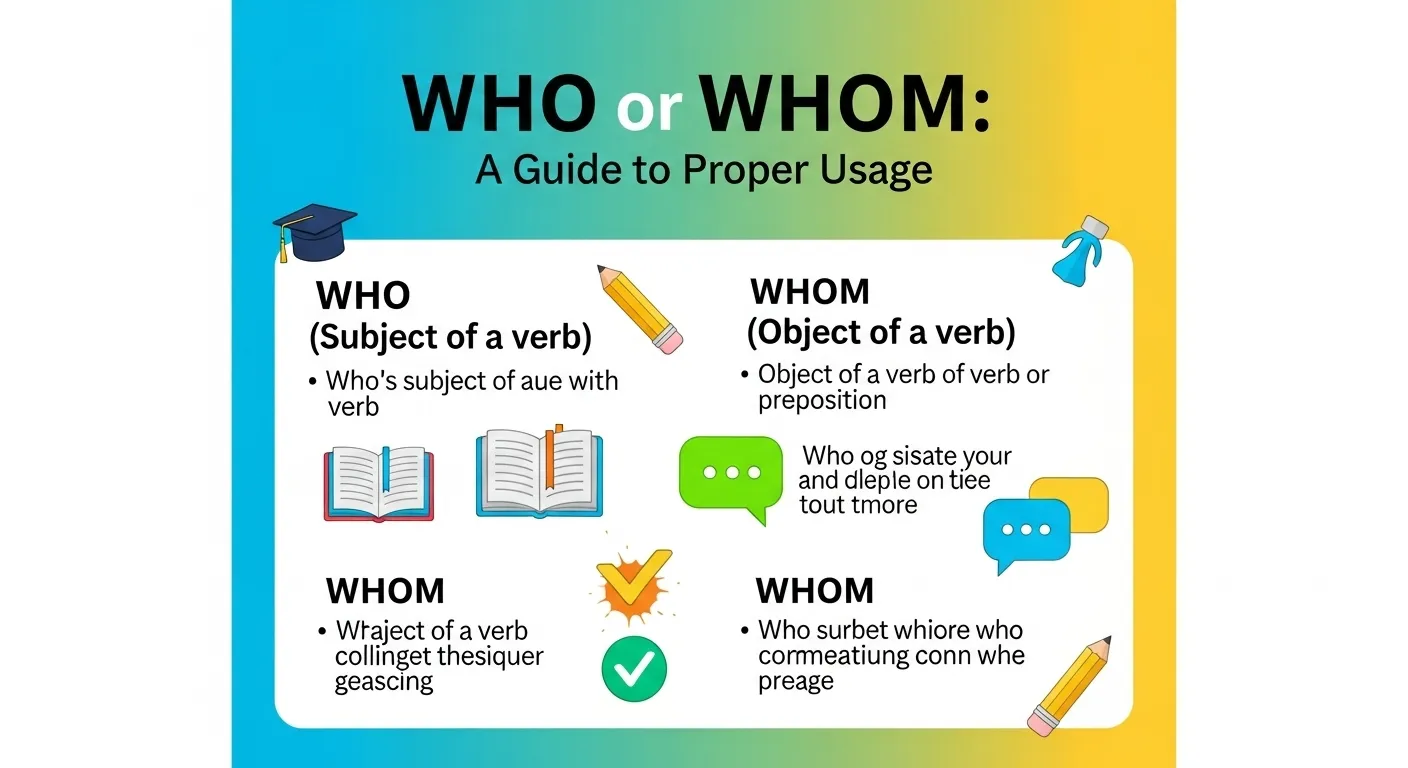
Who is used as a subject, while whom is used as an object, and this simple rule answers the main question right away. Many people search for “whom or who” because these two words cause confusion even for advanced English speakers.
In daily conversation, emails, exams, and professional writing, writers often hesitate before choosing the correct form. The confusion exists because modern spoken English often avoids whom, while formal writing still expects correct grammar.
This article solves that problem clearly. You will learn the difference between who and whom, their origin, British and American usage, common mistakes, real-life examples, usage trends, FAQs, and expert advice to help you choose the right word with confidence.
Whom or Who: Quick Answer
Who is used as a subject (the person doing the action).
Whom is used as an object (the person receiving the action).
Examples:
- Who called you last night? ✅
- Whom did you call last night? ✅
❌ Whom called you last night? (Incorrect) ❌ Who did you call last night? (Incorrect in formal English)
Easy rule:
If you can answer with he/she, use who. If you can answer with him/her, use whom.
The Origin of Whom or Who
Historical Background
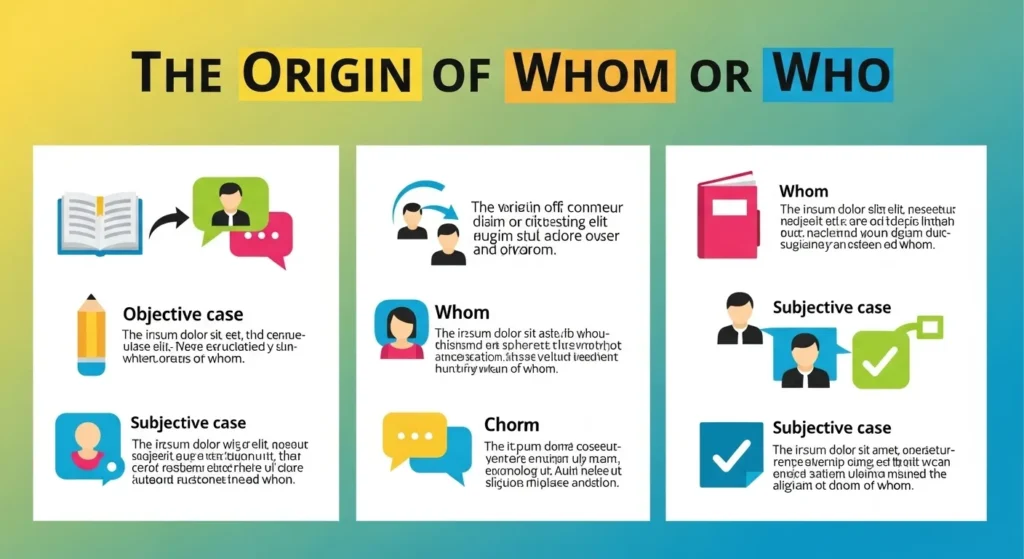
The words who and whom come from Old English and have roots in Germanic languages. Early English used clear case distinctions, similar to modern German. Different forms existed for subjects, objects, and possessives.
Why Two Forms Exist
- Who developed as the nominative (subject) form
- Whom developed as the objective (object) form
This distinction helped speakers clearly identify sentence roles.
Why Confusion Exists Today
Modern English has dropped many case endings. Words like him/her survived, but whom became less common in spoken language. As a result, people often avoid whom or use it incorrectly.
British English vs American English Spelling
There is no spelling difference between British and American English for who and whom. The difference lies in usage and formality, not spelling.
British English Usage
- Who is common in both spoken and written English
- Whom appears mainly in formal writing, exams, and legal text
Example:
- Who are you speaking to? (spoken)
- To whom are you speaking? (formal)
American English Usage
American English uses whom even less in speech. In everyday conversation, who often replaces whom.
Example:
- Who did you send the email to? (common US usage)
Comparison Table
| Feature | British English | American English |
| Spelling | who / whom | who / whom |
| Spoken usage | whom (rare) | whom (very rare) |
| Formal writing | whom used | whom used |
Which Spelling Should You Use?
For US Audiences
Use who in conversation and informal writing. Use whom in formal documents, exams, and professional emails.
For UK & Commonwealth Audiences
The same rule applies. Whom is expected in formal grammar but often avoided in speech.
For Global English Users
If clarity matters more than formality, who is acceptable. In academic or professional writing, whom shows grammatical accuracy.
Professional advice:
When in doubt in formal writing, test with him/her. If it fits, use whom.
Common Mistakes with Whom or Who

Mistake 1: Using “Whom” as a Subject
❌ Whom is calling me? ✅ Who is calling me?
Mistake 2: Using “Who” as an Object in Formal Writing
❌ Who did you invite? ✅ Whom did you invite?
Mistake 3: Overusing “Whom” to Sound Formal
Using whom incorrectly can sound unnatural.
Mistake 4: Ignoring Prepositions
- Correct: To whom it may concern
- Incorrect: To who it may concern
Whom or Who in Everyday Examples
Emails
- Who is responsible for this task?
- Whom should I contact for support?
News Writing
- The senator who proposed the bill spoke today.
- The candidate whom voters trusted won the election.
Social Media
- Who’s watching this movie tonight? 🎬
- Whom did you tag in this post?
Formal and Academic Writing
- The professor whom the students admired retired.
- The manager who leads the team was promoted.
Whom or Who – Google Trends & Usage Data
Search data shows that “whom or who” is a common grammar query worldwide.
Countries with High Search Interest
- United States
- United Kingdom
- Canada
- India
- Pakistan
Usage by Context
- Who dominates spoken English and online writing
- Whom appears mainly in exams, legal writing, journalism, and academic texts
This shows that whom is declining in speech but remains important in formal grammar.
Comparison Table: Whom vs Who
| Feature | Who | Whom |
| Grammar role | Subject | Object |
| Used in speech | Very common | Rare |
| Used in writing | Common | Formal writing |
| Example | Who called you? | Whom did you call? |
Frequently Asked Questions
Is “whom” still correct English?
Yes. Whom is grammatically correct and used in formal writing.
Can I avoid using “whom”?
In informal writing and speech, yes. In formal writing, no.
Is “to whom it may concern” correct?
Yes. It is a fixed and correct formal phrase.
Is “who did you talk to” wrong?
Not in conversation. In formal English, whom is preferred.
Do native speakers still use “whom”?
Rarely in speech, often in formal writing.
Which is more common today?
Who is far more common in modern English.
Does British English use “whom” more than American English?
Slightly, but it is declining in both.
Conclusion
The difference between whom or who is based on grammar role, not spelling or region. Who functions as a subject, while whom functions as an object.
Although modern spoken English often avoids whom, it remains an important part of correct grammar, especially in formal writing, academic work, and professional communication.
British English and American English follow the same rules. There is no spelling difference—only a difference in usage and formality.
If you are writing an email to a friend, using who is usually fine. If you are writing a formal letter, report, exam answer, or legal document, using whom correctly shows precision and strong language skills.
The easiest way to decide is the him/her test. If the answer fits him or her, use whom. If it fits he or she, use who. By applying this simple rule and practicing with real-life examples,
you can confidently choose the correct word every time and improve the clarity and professionalism of your English writing.
Related posts!
Ensure or Insure: Quick Answer