Worst case is correct; worse case is incorrect in standard English.
Many people search “worse case vs worst case” because the words sound similar. They often type the wrong form in emails, exams, or social media.
The confusion happens because worse and worst both compare bad situations. But they are not used the same way. One is correct in this phrase. The other is a grammar mistake.
This guide explains the quick answer, grammar rules, history, spelling facts, common errors, examples, and usage trends. After reading, you will know exactly which phrase to use and why.
⚡ Worse Case and Worst Case: Quick Answer
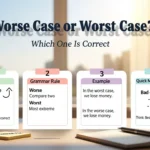
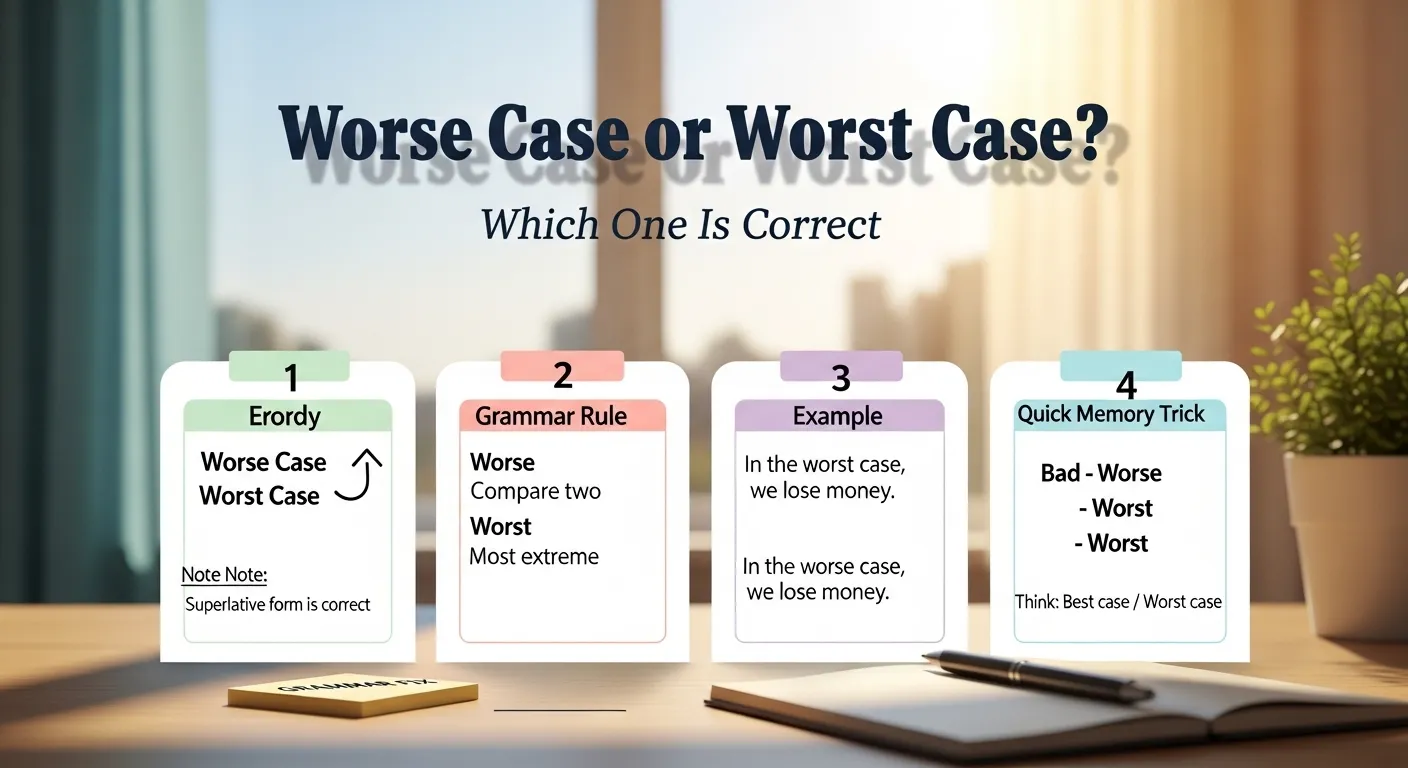
The correct phrase is: worst case.
❌ Worse case
✅ Worst case
Why?
- Worse = comparative form (compares two things)
- Worst = superlative form (the most bad situation)
“Worst case” means the most negative possible situation.
Examples:
- “In the worst case, we lose money.”
- “Worst case scenario, we try again.”
You cannot say “worse case” because it breaks grammar rules.
📜 The Origin of Worse and Worst
Both words come from Old English.
- Worse comes from wiersa (comparative form).
- Worst comes from wiersta (superlative form).
English uses comparison levels:
| Form | Example |
| Positive | Bad |
| Comparative | Worse |
| Superlative | Worst |
Since “case” refers to the most extreme situation, we must use the superlative form → worst case.
There is no spelling difference between regions for these words.
🇬🇧🇺🇸 British English vs American English Spelling
Good news: there is no spelling difference for worse or worst.
Both British and American English use:
- Worse
- Worst
- Worst case
Here is a comparison table showing spelling patterns:
| British English | American English | Same? |
| Worse | Worse | Yes |
| Worst | Worst | Yes |
| Worst case | Worst case | Yes |
| Colour | Color | No |
The phrase stays the same everywhere.
🌍 Which Spelling Should You Use?
Always use:
Worst case
It works in:
- United States
- United Kingdom
- Canada
- Australia
- India
There is no regional difference.
The only rule is grammar accuracy.
❌ Common Mistakes with Worst Case or Worse Case
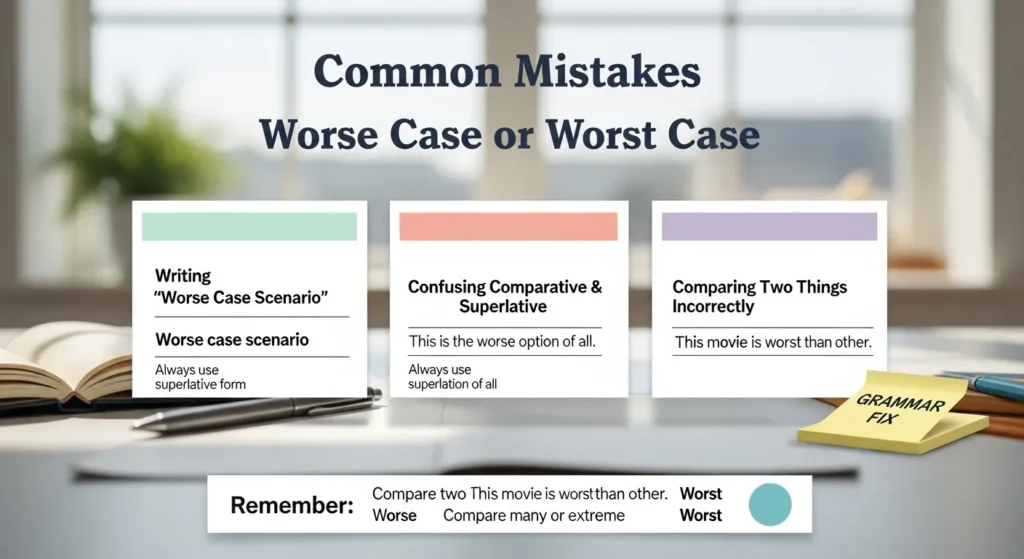
1. Writing “Worse Case Scenario”
Incorrect.
Correct: Worst case scenario
2. Confusing Comparative and Superlative
Wrong: This is the worse option of all.
Correct: This is the worst option of all.
3. Using “Worst” for Comparing Two Things
Wrong: This movie is worst than the other.
Correct: This movie is worse than the other.
Remember:
- Compare two → worse
- Compare many or extreme → worst
✍️ Worse Case or Worst Case in Everyday Examples
📧 Email Example
“Worst case, we delay the project by one week.”
📰 News Example
“Experts prepare for the worst case scenario.”
📱 Social Media Example
“Worst case? I start again tomorrow.”
📄 Formal Writing Example
“The report analyzes the worst case financial outcome.”
The phrase appears often in business, planning, and risk discussions.
📊 Worse Case or Worst Case: Google Trends & Usage Data
Search data shows that:
- “Worst case scenario” is searched far more often.
- “Worse case” is commonly searched as a mistake.
Countries with high searches:
- United States
- United Kingdom
- India
- Pakistan
Many students search it before exams to confirm the correct grammar.
“Worst case scenario” is common in:
- Business planning
- Emergency management
- Risk analysis
- Everyday speech
📋 Comparison Table: Worse vs Worst
| Word | Grammar Type | Meaning | Example |
| Worse | Comparative | More bad | This plan is worse. |
| Worst | Superlative | Most bad | This is the worst plan. |
| Worst case | Fixed phrase | Most negative situation | Worst case, we lose time. |
| Worse case | Incorrect phrase | Grammar error | Avoid using |
This makes the rule clear and simple.
🧠 Understanding the Grammar Rule
English comparison works like this:
| Positive | Comparative | Superlative |
| Good | Better | Best |
| Bad | Worse | Worst |
Since “case” refers to the most extreme possibility, it must use the superlative form.
Think of it like this:
- Good → Best case
- Bad → Worst case
We never say “better case” or “worse case.”
❓ FAQs About Worse Case or Worst Case
1. Is “worse case” ever correct?
No. It is always incorrect.
2. Why do people say “worse case”?
Because the words sound similar in fast speech.
3. What is the full phrase?
Worst case scenario.
4. Can I say just “worst case”?
Yes. It is correct and common.
5. Is the phrase formal?
It works in both formal and informal contexts.
6. What is the opposite of worst case?
Best case.
7. Is this mistake common?
Yes. It is one of the most searched grammar confusions.
🏁 Conclusion:
The confusion between worse case or worst case is simple to solve. “Worst case” is the only correct phrase.
It uses the superlative form of “bad,” which describes the most extreme negative situation. “Worse case” is grammatically incorrect and should not be used in writing or speech.
The rule is easy to remember: when talking about the most negative possibility, always choose the superlative form.
Think of similar examples like best case or highest level. English comparison rules stay consistent. Worse compares two things. Worst describes the extreme.
This phrase appears often in business, planning, risk management, and daily conversation. Using the correct form improves clarity and professionalism. Now you can confidently write and say “worst case” without confusion.
Discover More Articals!
In-Person or In Person: What Dictionaries Say 📖
Realize or Realise: Which Spelling Is Correct and When to Use Each?
To vs Too: What Is the Difference?(2026)

englifiy.com is my English grammar comparison website where I simplify confusing words, spelling differences, and usage rules through clear explanations and examples. My goal is to help learners, writers, and students understand English easily and use correct grammar with confidence.