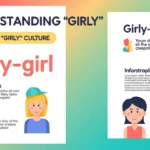
The correct spelling is “girly”, not “girlie.” Many people wonder If to add an “-ie” or just use “-y” when describing things associated with girls.
This confusion arises because English often allows multiple suffixes for adjectives, but usage depends on style, region, and tradition.
People search for this term to ensure proper spelling in emails, social media posts, academic writing, or creative content.
Knowing the correct form helps avoid mistakes and ensures your writing looks polished and professional. This guide clears the confusion and explains when to use “girly” confidently.
Girlie or Girly – Quick Answer
Short Answer: Use “girly”.
Explanation: “Girly” is an adjective describing something that has qualities stereotypically associated with girls, such as pink colors, frills, or delicate patterns. “Girlie” is less common and considered informal or outdated in modern English.
Examples:
- Correct: “She wore a girly dress with lace and ribbons.”
- Incorrect: “She wore a girlie dress with lace and ribbons.”
- Correct in informal writing: “That’s such a girly vibe for the party!”
In almost all contemporary writing online content, emails, or print girly is the preferred choice.
The Origin of Girlie or Girly
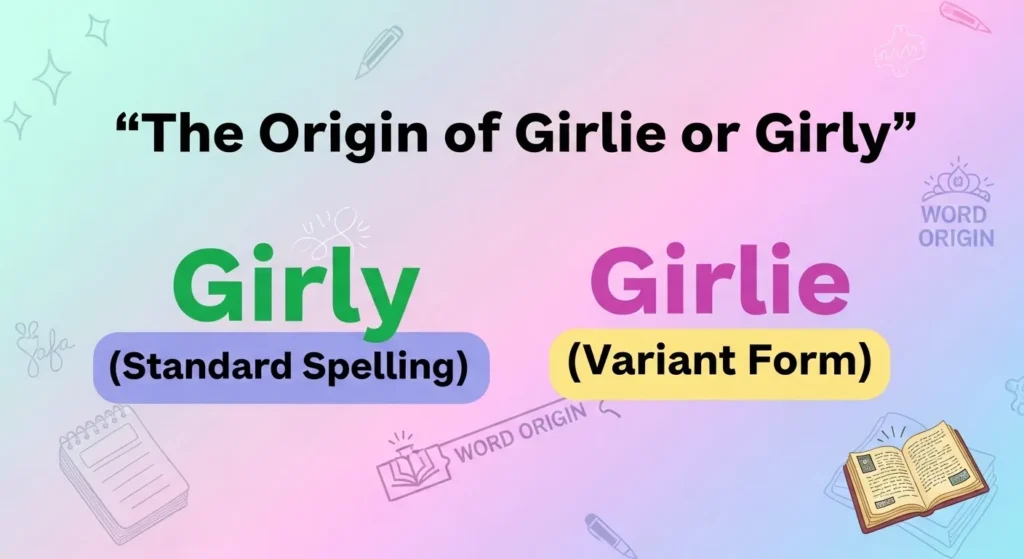
The word “girly” comes from “girl” + “-y”, a suffix commonly used in English to form adjectives meaning “characteristic of” or “related to.” This suffix has been standard in English for centuries.
- “Girly” appeared in written English around the early 20th century.
- “Girlie” is an alternate form influenced by similar patterns like “boyish” vs “boyie” or “ladie” vs “lady.” Over time, “girlie” became less popular and is now mostly informal.
The spelling difference exists due to English orthographic history:
- -y suffix indicates characteristics (funny, lucky, girly).
- -ie suffix was historically used for diminutives or nicknames (doggie, birdie).
Thus, “girly” emphasizes adjective use, while “girlie” feels more like a nickname or playful variant.
British English vs American English Spelling
Both British and American English recognize “girly” as the correct form. However, the confusion with “girlie” often arises from informal speech or older British texts.
| Feature | British English | American English | Notes |
| Correct Adjective | girly | girly | Standard in both forms |
| Informal Variant | girlie | girlie | Less common, considered informal |
| Examples | “She wore a girly dress.” | “She has a girly laugh.” | Both grammatically correct; “girly” preferred |
| Usage in Media | Widely used | Widely used | Modern publications almost always use “girly” |
Summary: Both dialects favor girly. “Girlie” is rarely used in formal writing anywhere.
Which Spelling Should You Use?
- United States: Always girly.
- United Kingdom/Commonwealth: Prefer girly; “girlie” may appear in informal writing.
- Global Audience: Stick with girly to ensure clarity and professionalism.
Tip: If your content is informal, playful, or mimics speech, “girlie” might be acceptable. For professional, academic, or online content, girly is the safest choice.
Common Mistakes with Girlie or Girly
Many people confuse girly and girlie because:
- The English language allows both suffixes in other words (doggie, birdie).
- Informal speech often pronounces “girly” as “girlie,” leading to spelling errors.
- Some writers assume “-ie” is correct because it looks cuter.
Frequent Errors:
- Wrong: “I love her girlie style.”
- Right: “I love her girly style.”
- Wrong: “That’s a very girlie choice of color.”
- Right: “That’s a very girly choice of color.”
Rule of Thumb: When using the word as an adjective, always write girly. Only use “girlie” in playful or informal contexts, never in professional writing.
Girlie or Girly in Everyday Examples
Emails:
- Professional: “The event theme is girly but elegant.”
- Casual: “Your outfit is so girly!”
Social Media:
- Instagram: “Loving this girly vibe 💖✨”
- Twitter: “Girly things make me happy 😍”
News Articles:
- “The boutique specializes in girly fashion for teenagers.”
Formal Writing:
- Academic or descriptive: “The novel’s protagonist prefers girly clothing, reflecting societal norms.”
These examples show that girly fits all contexts except highly playful or intentionally informal writing, where “girlie” may appear.
Girlie or Girly – Google Trends & Usage Data
Popularity:
- US & UK: “Girly” overwhelmingly dominates searches.
- Other English-speaking countries: “Girly” is standard; “girlie” appears in informal searches or blogs.
Trend Insights:
- Searches for “girly fashion” spike around spring and summer.
- “Girly hairstyles” and “girly party ideas” are popular globally.
Observation: People search for this term to confirm spelling, improve grammar, or check modern usage for writing or social media.
Comparison Table: Girlie vs Girly
| Variant | Correctness | Formality | Common Usage | Notes |
| girly | ✅ Correct | Standard | Professional, casual, social media | Preferred in all modern writing |
| girlie | ⚠ Informal | Playful | Informal writing, speech, vintage texts | Rarely used; can look outdated |
FAQs About Girlie or Girly
1. Is girly or girlie correct?
- Answer: “Girly” is correct for adjectives describing girl-like qualities.
2. Can I use girlie in writing?
- Answer: Only in informal, playful, or stylistic contexts. Avoid in professional writing.
3. Why do some people write girlie?
- Answer: Informal speech, mistaken analogy with words like doggie, or attempting a cute style.
4. Is girly British or American?
- Answer: Both. Standard in British and American English.
5. Can girly describe objects?
- Answer: Yes, it describes anything stereotypically feminine, like dresses, colors, or themes.
6. Is girly considered negative?
- Answer: Not usually. It’s neutral but can be playful or stereotype-based.
7. Are there other similar adjectives?
- Answer: Yes, boyish, ladylike, womanly, or masculine, depending on context.
Conclusion
In summary, girly is the correct and widely accepted spelling across all modern English contexts. The confusion with girlie comes from informal usage patterns, playful writing, or historical influences on spelling.
Understanding the origin “girl” + “-y” clarifies why girly is standard, while “girlie” remains an informal variant.
For professional writing, emails, articles, and social media posts, always use girly. Reserve girlie for casual, playful, or humorous contexts. Knowing the difference helps writers maintain credibility and avoid errors.
By remembering the basic rules, comparing regional usage, and observing current trends, you can confidently choose the correct form every time. Modern English favors simplicity, clarity, and consistency girly fits perfectly in all situations.
If describing clothing, themes, or personalities, using the right spelling ensures your writing is polished, professional, and widely understood.
Related More Posts!
Master’s Degree or Masters Degree: Which One Is Correct?

**Emily R. Dawson** I am a English language writer and editor i specializes in grammar clarity, sentence structure, and common writing mistakes.I focuses on helping readers write correct, natural-sounding English through simple explanations and practical examples. Emily mainly creates beginner-friendly and intermediate-level language guidesmy writing style is clear, supportive, and easy to follow.