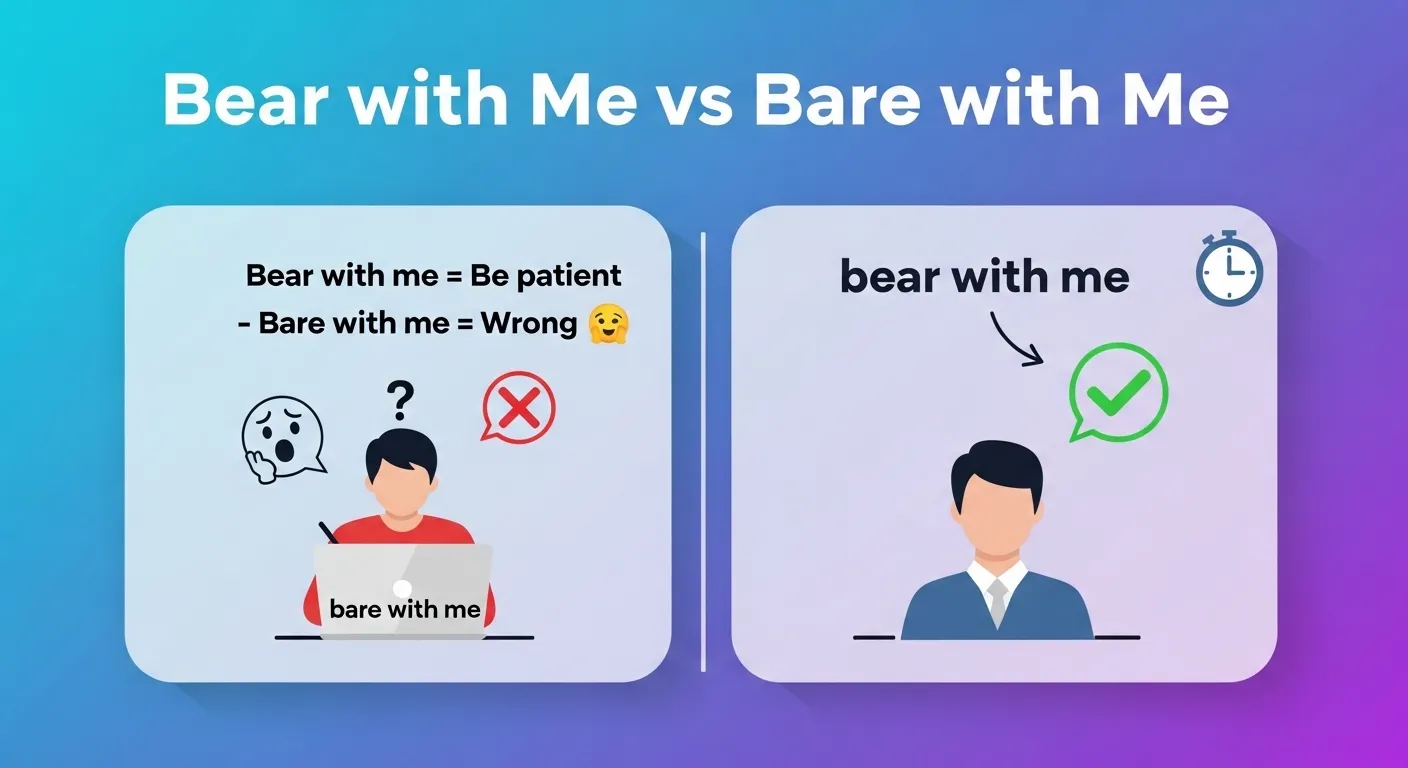
Bear with me is correct (means be patient), while bare with me is incorrect in normal use.
Many English users search for “bear with me or bare with me” because both phrases sound exactly the same when spoken.
This makes them easy to confuse, especially in emails, social media posts, and professional messages. A small spelling mistake can
completely change the meaning and sometimes create an embarrassing situation. People want to know which phrase is correct, why the other one feels wrong, and how to use the right form confidently.
This confusion happens because English has many homophones words that sound the same but have different meanings and spellings. This article solves that confusion clearly.
You will get a quick answer, the history behind both words, British vs American usage, common mistakes and professional advice.
By the end, you will always know when to use bear with me and why bare with me is almost always wrong.
Bear with Me or Bare with Me: Quick Answer
✅ Bear with me is the correct phrase.
❌ Bare with me is almost always incorrect.
Bear with me means “please be patient with me” or “please wait for a short time.”
Examples:
- Please bear with me while I check the details.
- Bear with me for a moment.
Bare with me would literally mean “get naked with me,” which is not what people usually intend.
The Origin of Bear with Me or Bare with Me
Understanding the origin of these words makes the difference very clear.
Origin of “Bear”
The verb bear comes from Old English beran, meaning to carry, tolerate, endure, or support. Over time, it developed figurative meanings, including tolerating inconvenience or waiting patiently.
That is why bear with me means:
- tolerate this delay
- endure this moment
- be patient with me
This usage has existed for centuries in English.
Origin of “Bare”
The word bare comes from Old English bær, meaning naked, uncovered, or exposed. It refers to physical openness, not patience.
Examples of bare:
- bare hands
- bare feet
- bare walls
Why the Confusion Exists
The confusion exists because bear and bare are pronounced the same. In spoken English, you cannot hear the difference, so writers often choose the wrong spelling when writing quickly.
British English vs American English Spelling
Unlike many spelling differences, bear with me does not change between British and American English.
American English
- Correct: bear with me
- Incorrect: bare with me
Example:
- Please bear with me while the system loads.
British English
- Correct: bear with me
- Incorrect: bare with me
Example:
- Bear with me for a moment, please.
Comparison Table
| Feature | American English | British English |
| Correct phrase | bear with me | bear with me |
| Alternative form | none | none |
| Meaning | be patient | be patient |
| Meaning change | no | no |
There is no regional difference in correctness.
Which Spelling Should You Use?
The answer is simple for all audiences.
For US Audience
Always use bear with me.
For UK & Commonwealth Audience
Always use bear with me.
For Global Audience
Use bear with me consistently in all professional and casual writing.
Professional Advice
If you are unsure, remember this rule:
If you mean “please be patient,” always choose “bear.”
There are almost no normal situations where bare with me is appropriate.
🔍 Is It “Bear with Me” or “Bare with Me”? (Meaning & Correct Usage)
Many people search “is it bear with me or bare with me,” “bear or bare with me,” or “please bear with me or bare with me.”
The correct answer is:
👉 Bear with me = correct
❌ Bare with me = incorrect (in almost all cases)
Meaning:
- Bear with me = please be patient
- Bare with me = be uncovered or naked with me (not intended in normal writing)
This also answers:
- “bear with me meaning”
- “why is it bear with me”
- “is it bear or bare with me”
- “which bear for bear with me”
Examples:
- Please bear with me while I check. ✅
- Just bear with me for a moment. ✅
❌ Please bare with me
💡 Tip: Anytime you ask for patience, always choose bear
Common Mistakes with Bear with Me or Bare with Me
Mistake 1: Using “Bare with Me” in Emails
❌ Please bare with me while I reply. ✅ Please bear with me while I reply.
Mistake 2: Thinking “Bare” Sounds Polite
❌ Bare with me for a second. ✅ Bear with me for a second.
Mistake 3: Assuming Both Are Acceptable
❌ Both spellings are fine. ✅ Only bear with me is correct.
Mistake 4: Auto-correct Errors
Some devices wrongly suggest bare. Always double-check.
Bear with Me or Bare with Me in Everyday Examples
Emails
- Please bear with me while I review your request.
- Bear with me, I will respond shortly.
Workplace Communication
- Bear with me during the system update.
- The team asked clients to bear with them.
News & Media
- Officials asked the public to bear with them during repairs.
Social Media
- Bear with me big announcement coming soon 🙏
Formal Writing
- Readers are requested to bear with the author during revisions.
In all cases, bear refers to patience, not exposure.
Bear with Me or Bare with Me: Google Trends & Usage Data
Search data shows that “bear with me or bare with me” is a highly searched grammar question.
Popularity by Country
- United States: very high searches
- United Kingdom: high searches
- India, Pakistan, Canada: growing searches
Why People Search This Keyword
- Fear of embarrassment
- Professional writing needs
- Confusion caused by homophones
Usage Context
- Business emails
- Customer support messages
- Public announcements
Search intent shows users want a quick answer plus explanation, which confirms why clarity matters.
Comparison Table: Bear with Me vs Bare with Me
| Phrase | Correct? | Meaning | Usage |
| Bear with me | ✅ Yes | Please be patient | All contexts |
| Bare with me | ❌ No | Get naked with me | Rare, literal only |
📖 Common Variations & Mistakes (Bear with Me vs Bare with Me)
Many incorrect variations appear in searches, such as:
- “bareing with me”
- “baring with me”
- “please bare with me”
- “just bare with me”
- “bearing with me”
❌ Incorrect Forms:
- bare with me
- baring with me
- bareing with me
- bearinf with me
✅ Correct Form:
- bear with me
Also Important:
- Bear with us = correct (asking patience from a group)
- ❌ Bare with us = incorrect
This section answers:
- “bear with us or bare with us”
- “can you bear with me”
- “just bear with me meaning”
- “bare with me meaning” (incorrect usage explanation)
Examples:
- Can you bear with me for a minute? ✅
- Please bear with us during maintenance. ✅
💡 Rule:
👉 Only bear works in this phrase — all other spellings are mistakes
FAQs
MeIs “bear with me” grammatically correct?
Yes. It is the only correct phrase for asking patience.
Is “bare with me” ever correct?
Only if you literally mean be naked with me, which is extremely rare.
Why do people confuse bear and bare?
Because they sound the same when spoken.
Is “bear with me” formal?
Yes. It works in both formal and informal writing.
Can I use it in professional emails?
Yes. It is common and polite in business communication.
Do native speakers make this mistake?
Yes. Even native speakers confuse it in writing.
Is there any regional difference?
No. Both British and American English use bear with me.
Conclusion
The difference between bear with me or bare with me is one of the most important small details in English writing.
Although both phrases sound identical, their meanings are completely different. Bear with me is the correct and polite expression used to ask for patience or understanding.
It comes from the verb bear, meaning to tolerate or endure. On the other hand, bare with me refers to being uncovered or naked, which is almost never what writers intend.
This mistake often appears in emails, customer messages, and social media posts, where speed leads to spelling errors. However, using the wrong form can cause embarrassment
and reduce professionalism. The good news is that the rule is simple and universal. There is no British or American difference, no formal or informal exception, and no alternative spelling to memorize.
If you remember just one thing, remember this: when asking someone to wait or be patient, always use “bear with me.”
Mastering this small detail will instantly improve your writing accuracy, confidence, and professional image.
Related posts!
Among vs Between: What Is the Difference?
Colon or Semicolon:How to Use Them Punctually ✍️